Let me be honest: I am not a professional demonstrator; in fact, I hate demonstrations. I am an observer. However, in October 2023, I did attend a demonstration to give a speech in solidarity with Israelis and Jews after the October 7 massacre, and since the mass massacre of unarmed demonstrators in Iran, I have taken part in a few demonstrations.
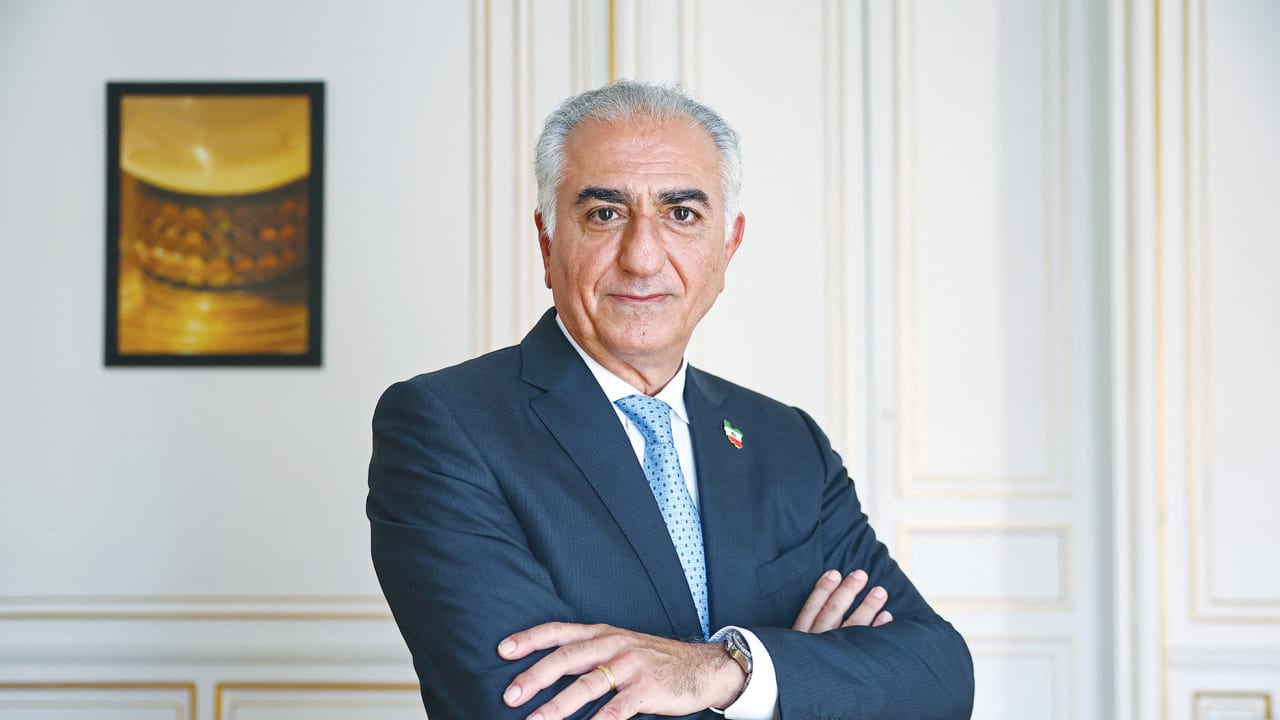
The demonstrators chant the name of Crown Prince Reza Pahlavi. I have not heard anyone expressing distrust of Pahlavi. On the contrary, I hear many distrustful questions about Pahlavi from Western diplomats. Some questions are driven by the European left and Marxist Iranians, while others are inspired by an affection for reform-minded ayatollahs such as ayatollah Khatami.
They forget that under all those so-called reformist ayatollahs, the demonstrators were also murdered: former president Mohammed Khatami murdered students in 1999, and former president Hassan Rouhani, in 2019, had 1,500 protesting Iranians shot in a week. Neither in Iran nor in the diaspora do Iranians believe in the good intentions of the so-called “moderate” factions in the regime.
I met Pahlavi at his request in Washington in 2008 during the American presidential elections. I told him that when I was seven or eight years old, I had seen him playing football in Saadabad Palace, waving to me and my friends. I also told him that, at the age of 13, I had taken part in demonstrations against the Shah. He laughed heartily and said, “You don't need to apologise for that”. Now you know why I am not a fan of demonstrations.
It was a heart-to-heart conversation.

On the way to the Netherlands, I wondered whether Iranians would ever take him to their hearts, given his gentle and open approach. While Western diplomats and intelligence services once considered the lack of popular support for Pahlavi to be an unavoidable problem, history proved them wrong. Pahlavi is supported by millions of people.
Anyone who wanted to see it could have seen in recent weeks how Iranians are prepared to give their lives for him. I support Pahlavi for these reasons:
1. Western politicians did not believe that Pahlavi could ever claim leadership. In the fantasy world, there are many leaders, but in reality, there was one person whose name was chanted by millions of people.
Ultimately, someone in a despotic state can be considered a leader of the opposition or a nation when the people are willing to go through fire for him. For now, that ended in the mass killing of civilians. Why did the regime carry out a massacre of unprecedented proportions?
Because, for the first time, the regime saw that the people had united under the leadership of one person.
Khamenei saw Pahlavi and the protesters as the end of his regime. That is why he called the protests a “coup d'etat”.
2. Why should Europe trust Pahlavi? That is ironic. They trust ayatollahs to strike a deal, but they do not trust Pahlavi and the people.
If they in Europe think that this regime is stable, then they must come up with an answer to the question of why the regime has carried out the most extensive massacre out of fear.
In reality, the regime is struggling with unsolvable problems: economic mismanagement, jihadist expansionism, the unforeseeable consequences of the mass killings, the change of leadership (Khamenei's succession), the contradiction between the wishes of the population and the regime, and so on.
3. But could he establish a dictatorship? If Pahlavi had only made promises, this question would have been justified. But he took several important steps that are unique in the history of Iran.
Forty-seven years ago, Khomeini managed to mislead part of Iranian society by appealing to Islam. No one knew exactly what an Islamic republic would be. He had no public programme except to extol Islam as a political ideology that would bring freedom and equality. Pahlavi made his plan for the transition public months ago and asked everyone to criticise and improve it. I have also worked on this.
I have made proposals on the constitutional part and transitional justice. The final improved version will be published in the coming days. A democrat acts in the spirit of democracy. Pahlavi embodies the democratic ideals of Iranians in all his actions.
4. Some politicians tell me that Pahlavi is a palace boy. That would prevent him from taking risks. He has already taken many risks.
Pahlavi and his family will never be safe again as long as this regime is in power. Moreover, he has stated that he is prepared to go to Iran even before the regime's total collapse. For the record, he has not lived in a palace since he was 17.
Pahlavi is not super-rich and lives a simple life. That is precisely why millions of people in Iran trust him.
5. It was also stated that he has no organisation. I am in frequent contact with his team. He is surrounded by capable and dedicated young men and women who work day and night.
That is part of his organisation. There are also organisations such as the 7-Aban Front that fully support his leadership.
There are also organisations that are understandably not public. If he were not supported by powerful Iranian organisations, he could never have come this far.
Do not underestimate Pahlavi and his ability to make difficult decisions. He has already made the difficult decision in the life of a leader: to call on unarmed civilians to demonstrate.
I support Pahlavi on the basis of common sense. He was the first Iranian leader to visit Israel and promote friendship between Iran and the Jewish people.
This is very important to me, because I know the price a man from the Middle East pays for friendship with Jews and striving for peace. I myself am hated and threatened by jihadists and the Iranian regime, largely because of my open friendship with Jews and my defence of the right of Jews to their own state.
I defend Pahlavi because he is a gentle, reasonable man who represents the democratic, constitutional ideals of Iranians. This is the only chance for our generation to fundamentally change Iran with a strong democratic leader.
Europeans are concerned Iran will become a democratic monarchy
Astonishingly, Europeans living under monarchies are concerned that Iranians would vote for a democratic monarchy at a referendum. Iranians are hoping for support from Israel and the United States. Do not abandon them. History will not forgive us.
What does Pahlavi actually embody? He is a kind of modern version of Prince William van Oranje (1533-1584), Pater patriae. Like William van Oranje, the Iranian father of the nation does not want to enforce a certain model of government.
Afshin Ellian is a professor of Jurisprudence (legal theory and legal philosophy) at the Faculty of Law, Leiden University