
In 2026, Israel is a nation recovering from war, having spent the past two years grappling with bereavement, mass reservist mobilization, the return of hostages, and the displacement of tens of thousands of citizens from their homes. Within this reality live approximately 115,000 Holocaust survivors, every single one of whom, without exception, is aged eighty and above.
This is a dwindling generation. A generation that carried the establishment of the state on its shoulders, and which today is required to prove time and again that they are worthy of assistance.
Most Holocaust survivors living today experienced the Holocaust as children. Their memories are not always of camps or ghettos, but rather of prolonged fear, separation, hunger, the loss of parents, or displacement. These experiences are etched into the body and soul, even when they cannot always be translated into a single, clear medical diagnosis.
In Israel today, the rights granted to Holocaust survivors consist of monthly stipends based on each individual’s medical condition, as defined by a list of illnesses that Israel approved decades ago. Many of these illnesses have a circumstantial connection to the war and are no longer relevant to the current generation of Holocaust survivors.
Holocaust survivors and bureaucracy
On the surface, this may seem reasonable; after all, this is an elderly population with high morbidity. Yet, in practice, this places an almost impossible burden upon them, because in order to procure their rights, Holocaust survivors are required to prove that they suffer from one of the specific illnesses recognized by the state.
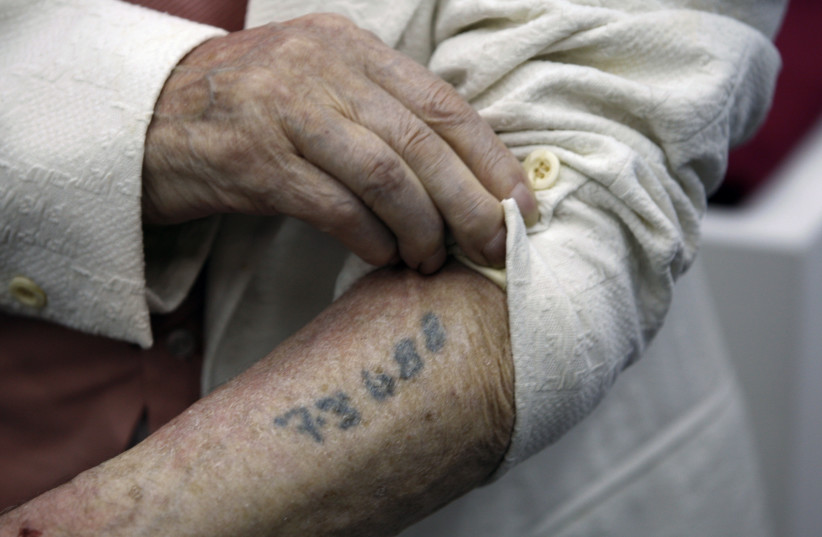
Given the advanced age of Holocaust survivors, a great absurdity had emerged: survivors over the age of eighty are required to navigate two parallel tracks. On the one hand, they must pursue their rights with the Authority for Holocaust Survivors’ Rights, based on recognition of illnesses and injuries deemed to have a circumstantial link to the Holocaust.
On the other hand, they must turn to the National Insurance Institute, where they submit new claims, appear before medical committees, and undergo additional complex procedures to gain recognition for other illnesses and their ramifications.
Each track is a world of forms, expert opinions, medical documents, rejections, and appeals. To this, they must add applications for foreign caregivers from the Immigration Authority, disabled parking permits, property tax discounts from their local municipality, and the exhaustion of rights regarding long-term care insurance.
In other words, an eighty-year-old individual must serve as a “project manager” for their rights procurement. This is nearly a full-time occupation for them, or for their children, at a stage of life when strength is waning, patience wears thin, and the ability to battle systems is diminishing, not to mention digital systems that are not well adapted for senior citizens.
The question here is not a legal one, for this is the letter of the law. The question is a moral one. Can a state that sees itself as the state of the Jewish people allow a reality in which Holocaust survivors are forced to fight for every right, to repeatedly prove their suffering for every additional percentage of disability, and to bounce from authority to authority as though they are seeking a favor?
In recent years, important amendments have been made: rights have been equalized, and gaps narrowed. Yet now, as this generation enters its final years, it seems we have come to a standstill. The security situation, wars, and crises have inadvertently pushed Holocaust survivors to the sidelines.
Of the 115,000 Holocaust survivors living in Israel, only one-third receive monthly stipends. The remaining two-thirds, due to the nature of their persecution and their year of immigration to Israel, receive only an annual grant of 7,250 NIS. In 2026, Israel must ask itself a simple question: do we want Holocaust survivors to be able to age with dignity, without facing a maze of bureaucracy, or will they be forced to spend their final years in an exhausting labyrinth of forms and applications?
There are ways to simplify the bureaucracy. It is possible to equalize and establish a uniform disability rating (above 50%) for all 35,000 Holocaust survivors who currently receive stipends. This would grant them a monthly pension that enables every Holocaust survivor to receive what should be a self-evident right: to live with dignity and well-being.
The writer is CEO of Aviv for the Elderly Organization.