It happened before. Spain reinstated its monarchy in 1975, France restored the House of Bourbon in 1815, and the crown that Britain restored in 1660 is intact to this day.
Understandably, then, the bloodbath in Iran elicits hope that the Persian nightmare will end with the restoration of the monarchy that the ayatollahs deposed.
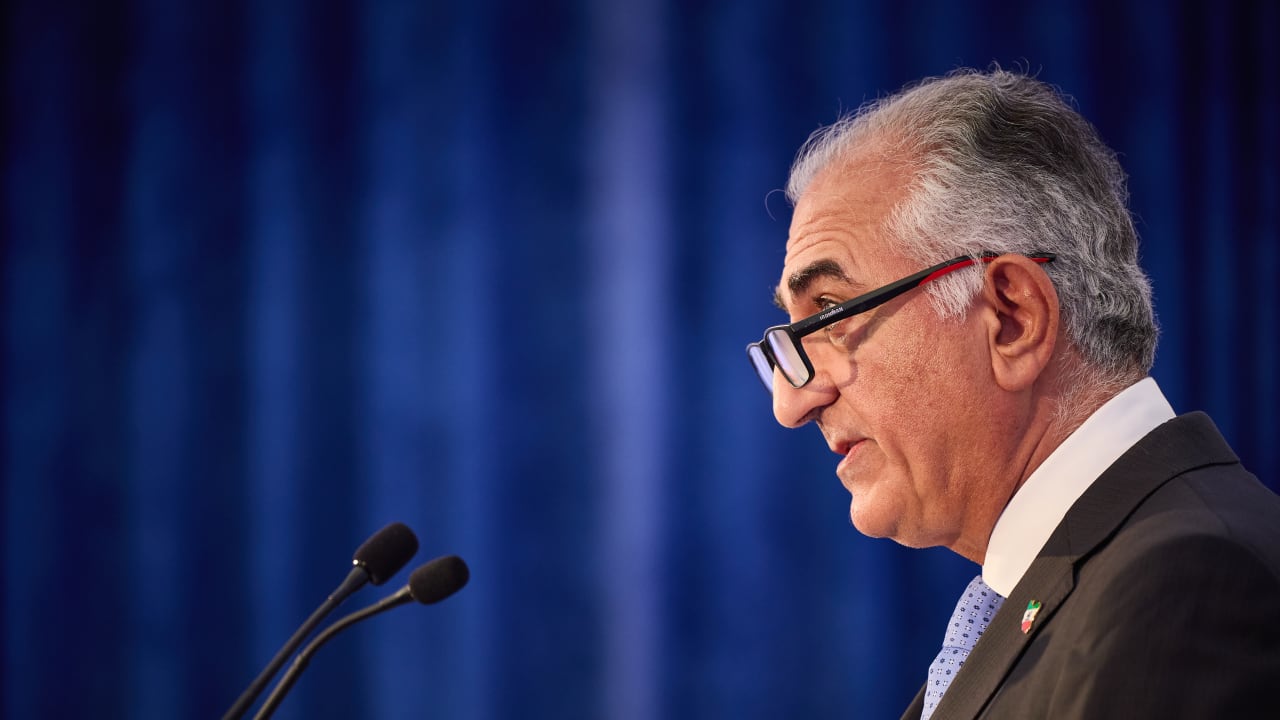
The first question this wish raises – is a royal restoration what Iran needs? – is only for the Iranian people to decide. But the second question it raises – what should Reza Pahlavi now do? – does not take an Iranian to answer. This non-Iranian’s answer is that the crown prince needs to do three things: win faith, present a vision, and lead the people’s war.
The Pahlavi legacy
The prince must win faith because of his father’s problematic legacy. Shah Mohammed Reza Pahlavi led Iran to prosperity and prominence, but he oversaw a police state. Fortunately, the prince was not part of his father’s operation. Having been abroad when the revolution began, as an air force cadet in an American airbase, he was barely 19 when the shah left Tehran.
Even so, millions of Iranians are aware of the shah’s autocratic legacy, and must now be persuaded that the son’s path will be different. The prince has been aware of this for years and thus promised a referendum that would decide the nature of its post-Islamist government.

That’s a reasonable statement, apparently intended to produce a constitutional monarchy. However, what the Iranian nation needs to hear, after nearly half a century of theocracy, is a national outcry and a humanistic vow that will open with a direct address to the clerics, who still think they should rule Iran. Something like:
What the Iranians need to hear
“You believe in God? The jobless Iranian you shot dead believed in God; the homeless Iranian you clubbed believed in God; the fearless student you murdered believed in God; the blameless Mahsa Amini you beat to death believed in God; I believe in God, and all of us Iranians believe in God – all of us, except you.
“How can you purport to believe in God if you slaughter your own people and flood Persia with Persian blood? You have hijacked a proud civilization in the name of God, and then assaulted innocent people near and far, claiming they are infidels. You are the infidels. You are the infidels, and we are the believers; you are the devil’s messengers, and we are God’s right arm.”
Spoken in Farsi from a truly Iranian heart, such words will enter any truly Iranian ear, and instill faith in a nation thirsting for a leader who will nurse the Iranian people’s pain and bereavement, and voice their insult and wrath.
Then again, such words of encouragement might disarm many royal discontents, but to win them over the prince would need not just to disarm, but to inspire them. That is why his admonition about the wretched present must be followed by a platform for national change.
“My fellow Iranians,” the prince will thus continue, “the day I return to the homeland, the mullahs’ modesty police will be abolished, their dress codes will be lifted, and all restrictions of speech and association will be summarily annulled.
“The following day, we will outlaw the Revolutionary Guards and confiscate that theft machine’s every conglomerate, company, and subsidiary and put them all on the bloc. Then we will place the Central Bank of Iran in the hands of economists, who will set interest rates independently, and rehabilitate the currency the mullahs destroyed. Then we will axe all budgeting of their military adventures in Lebanon, Libya, Gaza, Somalia, Yemen, and Iraq.
“Then we will invite the world’s big multinationals to establish production lines here for anything and everything, from sneakers and perfume to tractors and cars. Then we will issue tenders for desalination plants that will reinvent our water industry, so there will not be one waterless tap anywhere in Iran. Then we will issue tenders for 20 new power plants, so we too, like billions elsewhere, will have electricity anytime, any place.
“Iran’s long overdue march to economic liberty – will thus be sparked, while a free press makes all this known, and a freely elected government, supervised by a freely elected majlis – makes it happen.”
Will this happen overnight? It won’t, but in due course, the Iranian people will have jobs, confidence, dignity, and hope.
Yet announcing such a vision will inspire, but it will not affect reality unless coupled with deeds. And the deeds must be about the struggle the Iranian masses are waging, and their prince is compelled to watch from afar.
The prince's journey
The aspiring shah can seize leadership of the people’s heroic struggle, which lacks three essentials: leaders, organization, and arms.
The prince should get the free world to arm the rebels. They don’t need tanks, submarines, or jets. They need rifles, pistols, and grenades. The prince can obtain them and have them shipped into Iran’s hinterland through its extended and often porous borders.
The prince can also enlist volunteers who will undergo guerrilla training in the Iranian desert and surrounding countries. After returning home, the rebels will create cells and fight as organized guerrilla units, which the demonstrators over the past two weeks so glaringly lacked.
As these cells proliferate and mature, they will gradually become a proper underground organization and produce the leaders that the Pahlavi Revolution demands. Their targets will be the same as those of so many previous liberation movements: political prisons, police cars, military armories, TV stations, and key officials, like judges who ordered executions.
It will take time, but this journey’s path is navigable. And once it reaches its destination, the reinstated shah will be recalled as the Persian Revolution’s oracle, mastermind, and emblem, and every oppressed person’s hope.
www.MiddleIsrael.net
The writer, a Hartman Institute fellow, is the author of Ha’Sfar Ha’Yehudi Ha’Aharon (The Last Jewish Frontier, Yediot Sefarim 2025), a sequel to Theodor Herzl’s The Old New Land.