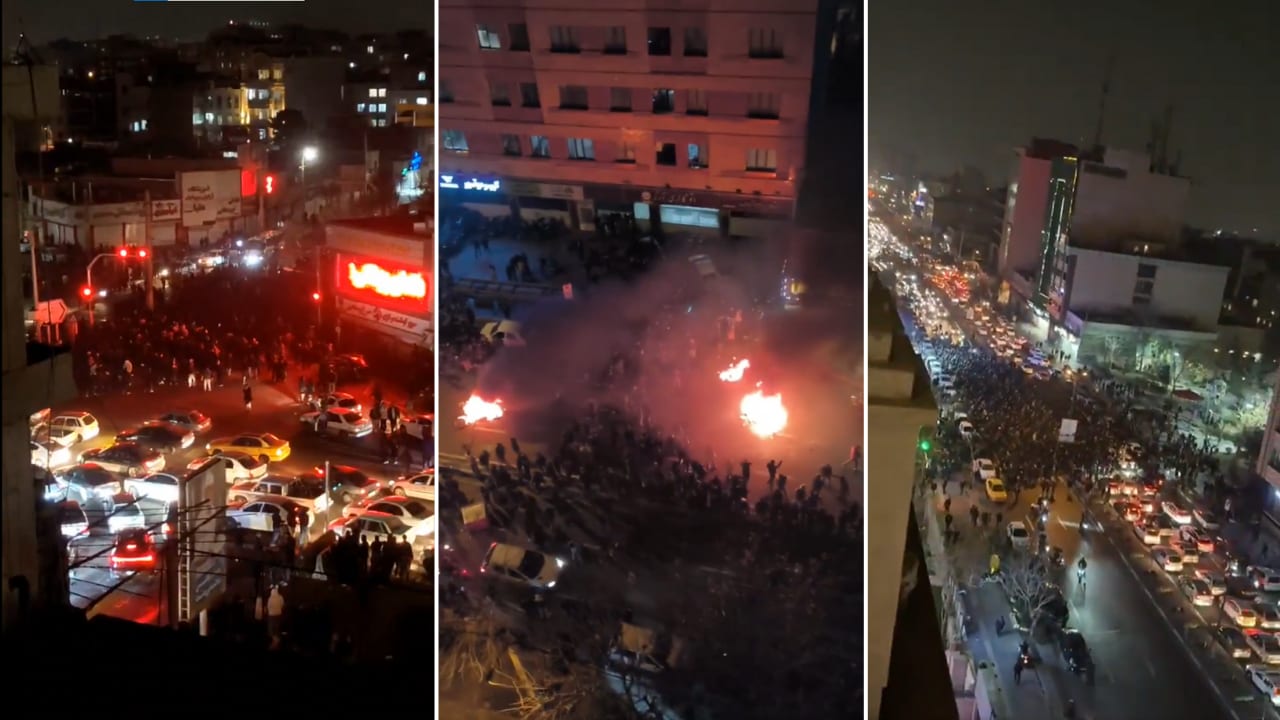
Iran has entered a decisive moment, and the clearest signal is not what we can see, but what we suddenly cannot.
The regime’s decision on January 8 to impose a near-total digital blackout is not a technical response to unrest, but, rather, a political act, taken because the regime believes control is slipping.
Authoritarian states do not shut down the Internet unless they think the alternative is worse. That alone tells us how serious this moment is.
Iran has used Internet shutdowns before. But this one is broader, harsher, and comes earlier in the protest cycle than usual. Cutting access, including reported interference with satellite systems and access to Starlink, suggests the regime is no longer trying to manage unrest but survive.
In modern protest movements, information is the lifeblood that allows coordination, and it is this coordination that creates momentum. The Iranian regime understands this. It has learned it through repeated confrontations with its own people over the past 47 years, and now this takes place in the digital era.

So the blackout is not mainly about silencing criticism; it is to break this cohesion among protesters. If cities cannot see each other, if people cannot tell whether protests are spreading or shrinking, then a nationwide movement becomes a collection of isolated flash points. Those can be dealt with one at a time, in darkness, and with far greater violence.
This is the bet the regime is making, relying above all on the Islamic Revolutionary Guard Corps and its auxiliaries to reimpose order incrementally.
But this strategy has a weakness that is often missed: repression also requires information. Even coercive systems need clarity about where pressure is building and where control is already failing.
Blackouts degrade that, too, which is why the next few days matter. Digital shutdowns compress time, forcing outcomes to harden quickly – being seen now on the streets.
The regime’s gamble
For protesters, the shutdown is designed to isolate the various groups. Protest movements draw strength from knowing others are also acting; so by removing that awareness, the likelihood of failure increases.
If demonstrations continue despite this, the strikes hold, and people keep taking to the streets, it signals something more dangerous for the regime than spontaneous anger. It suggests fear is no longer sufficient.
For now, state media control the domestic narrative, but when connectivity returns, the gap between official claims and lived reality will be obvious almost immediately. Each blackout deepens public cynicism. These effects accumulate, never reset.
Externally, the blackout also forces choices. Fragmented reports of repression, arrests, and killings continue to leak out through diaspora networks and satellite links. As that happens, it becomes harder for foreign governments to maintain comfortable ambiguity. As pressure builds in country, cries for help from the US and Israel increase.
The regime believes that as a centralized state, it can outlast a decentralized society, once that society is cut off from itself. Protesters believe their movement is already rooted deeply enough, locally, socially, and psychologically, to survive without national coordination long enough to matter.
That is why appeals are now directed not only outward to the US and Israel, but inward to police, Basij, and elements of the IRGC itself – defection will cause chasms to appear within the regime.
History offers no guarantees, but it is consistent on one point: Internet blackouts work against reform movements, not against legitimacy crises. Once people stop asking for change and start questioning the system itself, control becomes far harder to restore. We are now close to that moment.
When the connection comes back, Iran will not be where it was before, but how far it has already moved beyond the point of no return. Giving the Iranian people the courage to maintain their momentum is vital.
The writer is a military and security professional with direct experience countering Iranian state-sponsored threats in Europe and beyond. From 2020 to 2024, he served as director of security at Iran International TV.