What distinguishes today’s uprising in Iran from those that came before is not merely its scale but the convergence of internal resistance with unprecedented external pressure that has left the Islamic Republic exposed, fractured, and constrained in ways unseen in its 47-year history.
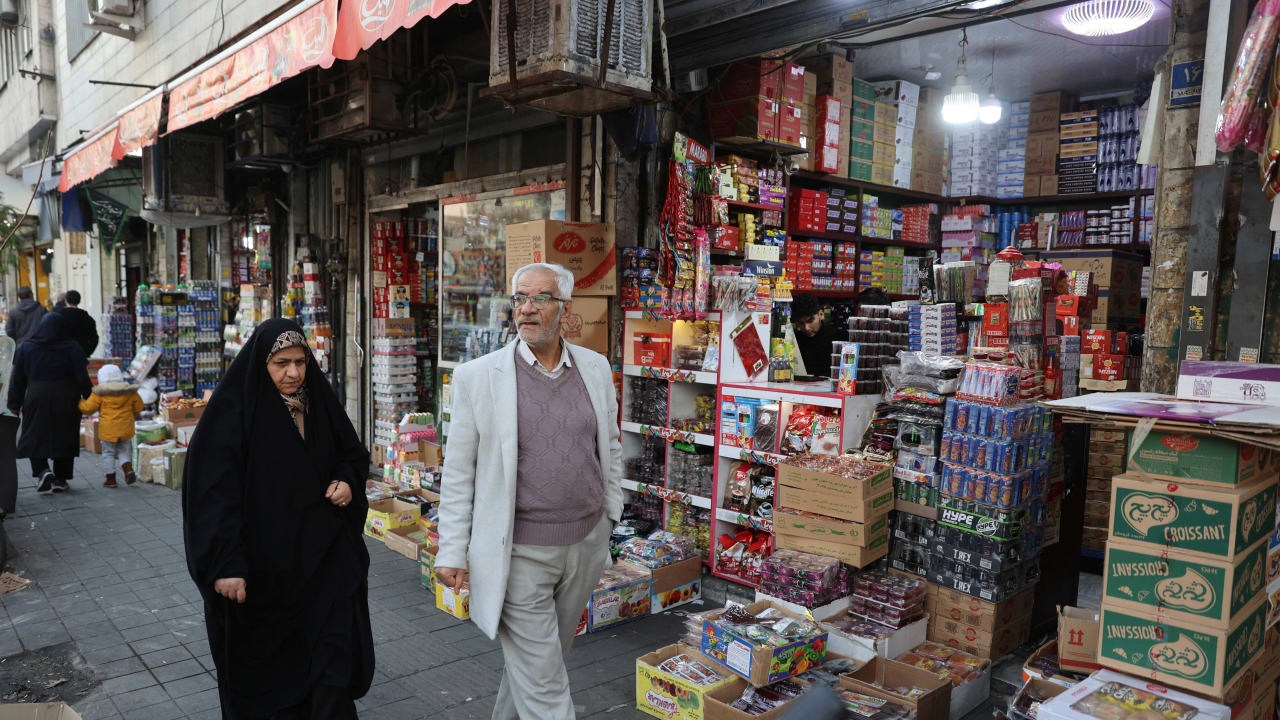
Iranian women and men, young and old, are once again in the streets demanding an end to the regime, but this time, they face a government stripped of the confidence, cohesion, and impunity it once relied on to survive mass dissent. Another key element of this moment is the role of the bazaaris, Iran’s merchant class, as the backbone of the country’s traditional economy.
For decades, the regime crushed protests through overwhelming force, mass executions, and fear, confident that its security apparatus would remain intact and unquestioned. That confidence has now been severely shaken.
Regime weakened by 12-day war
Recent US and Israeli actions, particularly during the latest 12-day war, delivered targeted, sustained blows to the regime’s core power structures, eliminating key commanders, striking military and repression-linked infrastructure, and degrading Hezbollah, Hamas, and other proxy forces that Tehran has long used for regional influence.
During uprisings, these forces have also served as reinforcements for internal repression. These strikes did more than weaken those forces; they exposed the fragility of the regime’s security architecture, eroding trust between commanders and rank-and-file forces and triggering visible signs of hesitation, defection, and internal mistrust.

Regionally, the collapse of Bashar al-Assad’s value as a reliable strategic asset has further destabilized Tehran’s position. Repeated Israeli strikes on Iranian targets in Syria and the erosion of regime control there have transformed what was once portrayed as a pillar of the so-called axis of resistance into a strategic liability.
Beyond the Middle East, Iran’s transnational networks are also under strain. In Latin America, the weakening of Nicolás Maduro’s support system has disrupted one of Tehran’s most critical sanctions-evasion corridors – an economic lifeline and, in moments of crisis, a fallback haven for senior regime figures – making it increasingly risky and unsustainable. Taken together, these developments have narrowed the regime’s room to maneuver at precisely the moment it needs it most.
Trump ultimatums
Equally significant is what the regime can no longer do with impunity. Clear ultimatums from US President Donald Trump, explicitly warning against mass slaughter and large-scale repression, have raised the cost for the Islamic Republic of killing protesters as it did in 2009, 2019, or even during the Women, Life, Freedom movement.
While the regime remains capable of brutality, it now operates under heightened international scrutiny and credible external deterrence, limiting its ability to deploy unrestricted violence without severe consequences. This constraint, combined with internal distrust, marks a fundamental break from past uprisings.
Iranians have recognized this shift. Each wave of resistance over the decades has grown more radical than the last, but the Women, Life, Freedom movement fundamentally transformed Iran’s political fabric to another level, rejecting reform as a dead end.
Allies must weaken repression, not aim for regime change
Today’s chants, including open calls for the Pahlavi dynasty as an alternative, reflect not nostalgia but a clear demand for systemic change. The regime’s continued willingness to exploit hospitals and commit crimes against humanity only underscores its desperation and moral bankruptcy, while the persistence of protest signals a society no longer governed by fear.
What the United States and Israel have done, and should continue to do, is not to dictate Iran’s future but to weaken the machinery of repression and regional coercion that has sustained the Islamic Republic for decades. Direct military intervention aimed at regime change would be both catastrophic and illegitimate, poisoning any future political order with the stigma of foreign imposition.
The opening that exists today was created by external pressure, but its outcome will be determined solely by the Iranians themselves. This time is different: The regime is weaker, its forces are divided, its violence is constrained, and the people, hardened by experience, are ready to reclaim their country.
The writer is the founder of the Iran-Israel Alliance of Nations.