For over four decades, the Iranian people have lived under a brutal dictatorship. The Islamic Republic survives through fear and violence. It jails, tortures, and executes dissidents, crushes women’s rights, censors the press, and violently suppresses protests. Meanwhile, ordinary Iranians face crushing poverty while the regime funnels resources into terrorism and proxy wars across the Middle East.
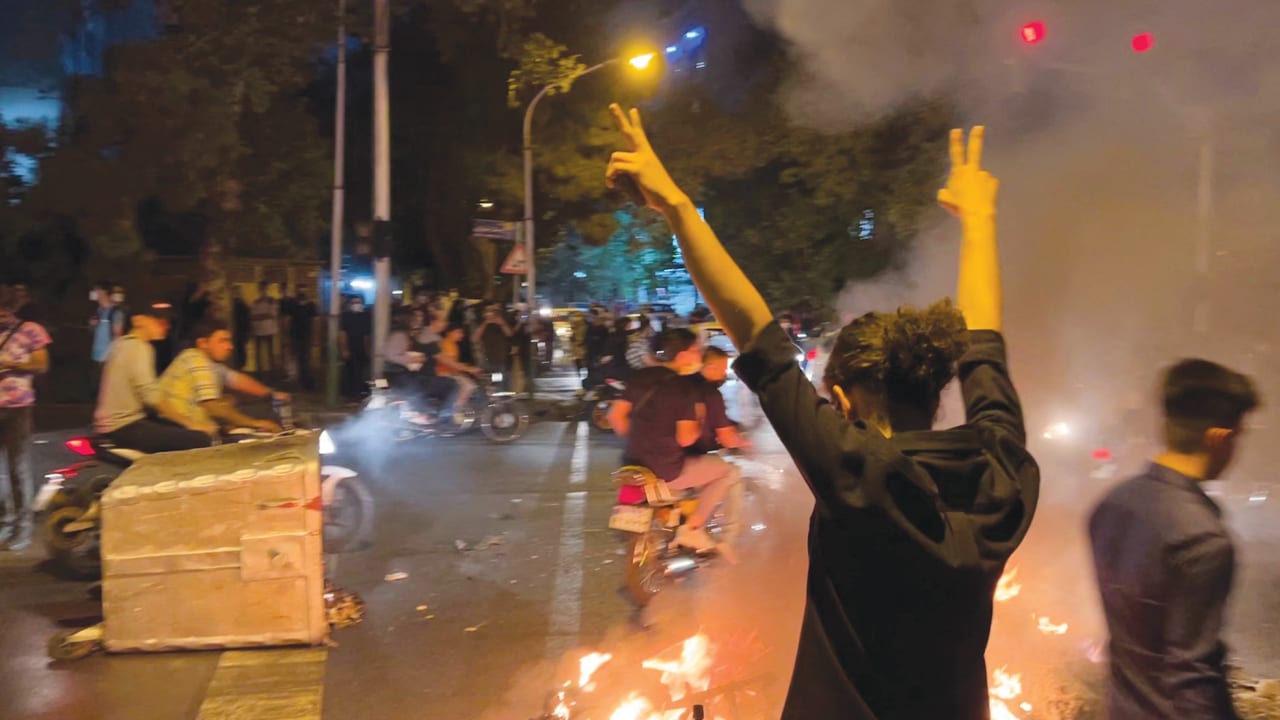
This regime does not represent the people of Iran. It has no legitimacy, no accountability, and no tolerance for freedom. Iranians are once again taking to the streets, risking their lives to demand something that every democratic society should recognize as sacred: their freedom.
The current protests began in Tehran and quickly spread across the country. Much of the media has focused on them in the context of an economic crisis. Iran’s currency has collapsed to near worthlessness, and videos show that it takes stacks of banknotes to equal just $100. But make no mistake: the chants on the streets are not about inflation, the cost of living, or an economic downturn.
The Iranians risking their lives are fighting against the regime itself. If you listen to the chants, protesters are calling for the end of the Islamic Republic, denouncing 47 years of oppression, and demanding that Iran stop supporting terror groups like Hamas and Hezbollah. Slogans such as “Until the mullahs are dead, we won’t be free” and “Death to the dictator” leave no ambiguity.
Protests in Iran are not new, so some people may be skeptical. We have seen time and again how the regime plays the long game, waiting for protests to fade from Western headlines before moving in to crush dissent. This attitude is a serious mistake.

Iran’s regime at an all-time low: a window of opportunity
What makes these protests different is the context. They are unfolding in the backdrop of Israel’s 12-day war with Iran, during which Israel’s historic military victory in June exposed the regime’s vulnerabilities and revealed just how weak it truly is. For the first time, Iranians in the streets can see that their rulers are not impenetrable. According to Israeli journalists, Israeli security assessments indicate that the regime’s stability is at a historic low.
So what can be done? What is the best way to support Iranians in their fight to topple their dictator? At a bare minimum, statements of support and solidarity from democratic leaders are crucial to sustaining protest momentum and ensuring continued media attention.
Israeli leaders, for example, sent messages of solidarity, and Israel’s Mossad published a post on X/Twitter in Farsi that read: “Let’s come out to the streets together. The time has come. We are with you. Not just from afar and verbally. We are with you in the field as well.”
Days later, as Basij officers began cracking down on protesters, US President Donald Trump posted a warning to the regime on Truth Social, urging it to stop killing peaceful demonstrators and stating that “the United States of America will come to their rescue. We are locked and loaded and ready to go.”
Even if he was bluffing, those words alone backed the regime into a corner, forced it to hesitate, and, at the very least, gave protesters hope. Imagine what it would look like if every democratic leader stood with the people of Iran in this way.
Words alone, however, are not enough. Iranians need practical, logistical, and cyber support. The regime routinely tries to silence protesters by shutting down the internet, making organization nearly impossible. Iranians need secure communication tools to evade surveillance, protection from cyberattacks, and real-time information from intelligence agencies so that they even stand a chance.
This is not about foreign interference. It is about standing with a population whose basic rights are systematically denied. Providing this kind of support gives the Iranian people the tools to choose their own destiny. If democracies truly stand for freedom, dignity, and sovereignty, the time to act is now.
The bravery of Iranian protesters cannot be overstated. In their country, participating in a demonstration risks imprisonment, torture, or death, something those of us in the West must never take for granted.
The people of Iran must know that they are not alone and that all of us, in Israel, in the United States, and across the free world, stand by their side.
The writer is a co-founder and CEO of Social Lite Creative, a digital marketing firm that specializes in geopolitics.