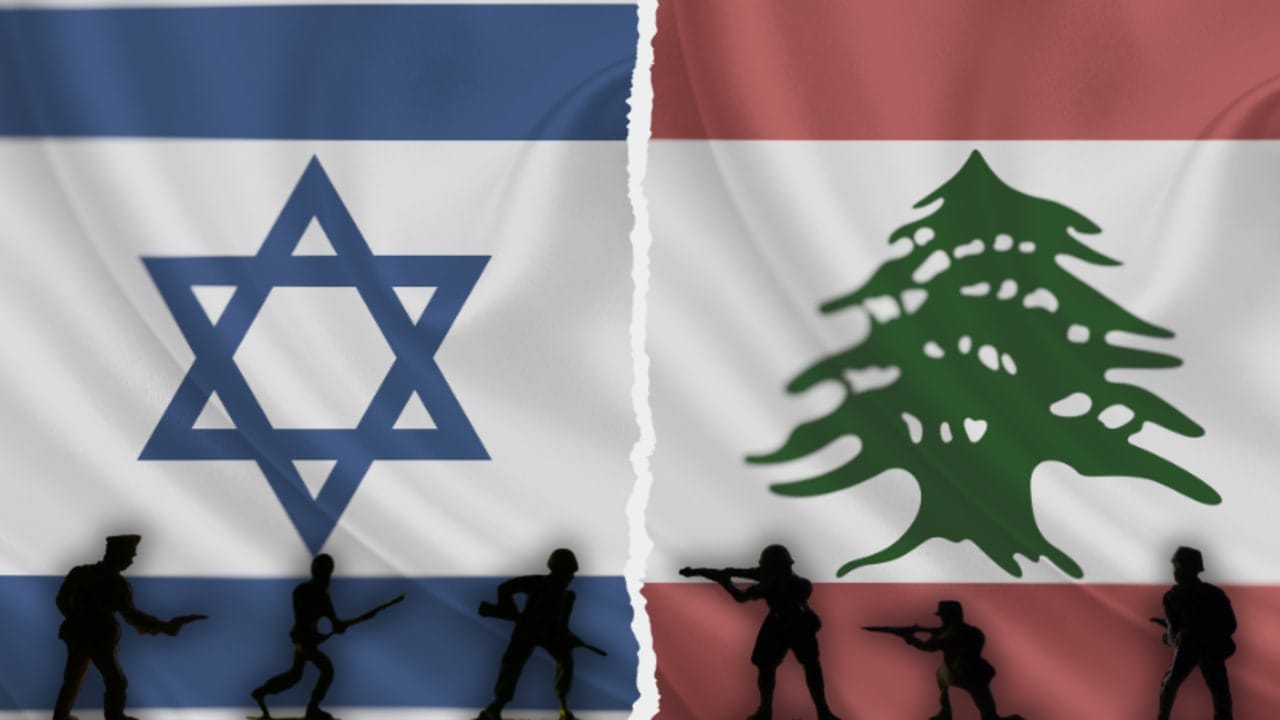
All signs indicate that the region is on the brink of a severe turning point, as Israel appears closer than ever to launching another major military operation against Hezbollah. In recent years, a firm belief has taken hold in influential world capitals, especially Washington, that the Lebanese state is fundamentally unable to exercise real sovereignty. It cannot meet its international obligations to control weapons, nor can it limit Hezbollah’s military spread within areas the group completely dominates.
Because of this, there are growing signals that the international community has given Israel a silent green light to target Hezbollah’s very framework – its operational hubs and the storage and protection facilities that form the core of its network. The global view is that letting the current situation continue is no longer an option.
Given this change in the world’s stance, it is crucial to understand the tactic Israel is likely to use in a future fight with Hezbollah. This is known as the “Dahiya doctrine.” It is a method of warfare that uses massive firepower to cause widespread, intentional destruction to the civilian infrastructure that supports and hides the enemy. This idea came into focus after 2006, when the southern suburbs of Beirut were seen not just as a Hezbollah stronghold, but as an essential part of its military machine.
Over time, this tactic has grown into a full theory of deterrence. It argues that hitting the enemy’s support system, meaning its economic and social networks, can change the course of a war faster and more completely than just attacking its fighters.
Current military signals suggest that if a new war comes, this doctrine will be used in a harsher, more total way. Israel sees these suburbs as the central nervous system for Hezbollah’s disguise, secrecy, and supply. Taking this layer out first is seen as the key to breaking the terrorist group’s ability to survive and rebuild.

Studies of city fighting explain that this suburban warfare strategy aims at the structures the enemy uses for cover and support. This includes hiding places, secret routes, and communication centers. The entire community that hosts Hezbollah, therefore, becomes part of the battlefield.
Military experts believe this strategy would not be limited to one spot, but would be applied across the whole zone that forms Hezbollah’s lifeblood. The expected campaign would involve precise, devastating attacks aimed at the complex web of deception the terrorist group has built over the years, exposing it immediately.
It is predicted that this civilian infrastructure would collapse quickly under such intense bombing. The resulting chaos in movement and supply would trigger huge waves of people fleeing, both inside Lebanon at great cost, and in a panicked, disorderly rush across borders.
Hezbollah weaving military forces into civilian life
The responsibility for this path falls directly on Hezbollah’s leaders. For years, they bet on weaving their military forces into the fabric of civilian life, thinking it would protect them. Instead, it has made those very communities a legitimate military target.
Research groups that follow the conflict say this total mixing of fighters and civilians has made the support system a direct part of Hezbollah’s warfighting. This makes it far more likely that the entire area will be hit, promising a cost much higher than in past wars.
Watching Hezbollah now reveals a stark contradiction. The group’s stubborn refusal to consider disarming or stepping back, which it calls strength, is actually what allows Israel to justify using the most extreme version of its destructive strategy. By blocking every path to a political deal, Hezbollah invites a scenario like the one in Gaza.
There, Israel pursued a strategy of total destruction above and below ground, through constant bombing, destroying tunnels, killing leaders, and hitting supply points so thoroughly that Hamas had no room to recover.
This was a profound shock to Hamas, which found that using urban areas for cover could no longer stop the Israeli military. The result was immense damage to Gaza’s foundations, a divided territory, and a historical burden for its leaders, notably Yahya Sinwar.
Hezbollah faces the same cliff edge. By staying stubborn and refusing to change course, the group may end up destroying its own base of support with its own decisions. From southern Lebanon to the Beqaa Valley, its network of hideouts and supply centers could become mountains of rubble. Ruin is forecasted to be the defining story of the next chapter.
Here is the painful twist: the more Hezbollah holds tightly to its choices, ignoring all the warnings, the more it helps its opponents and, strangely, even helps Lebanon. Such a strategy could break the internal deadlock and remove the shadow state that has crippled the country for generations.
Therefore, a coming battle would be the moment Hezbollah pays the bill for making its home territory a part of its war machine. The people living there will pay a terrible price for the actions of a group that acts as Iran’s closest partner, enforcing a model of violence and coercion first on Lebanon, and then on Israel and the Arab region.
Israel’s message, sent clearly in public and in private briefings, is plain and simple: Anyone attacking us will suffer a much heavier blowback, intense enough to deter any repeat.
The author is a UAE political analyst and former Federal National Council candidate.