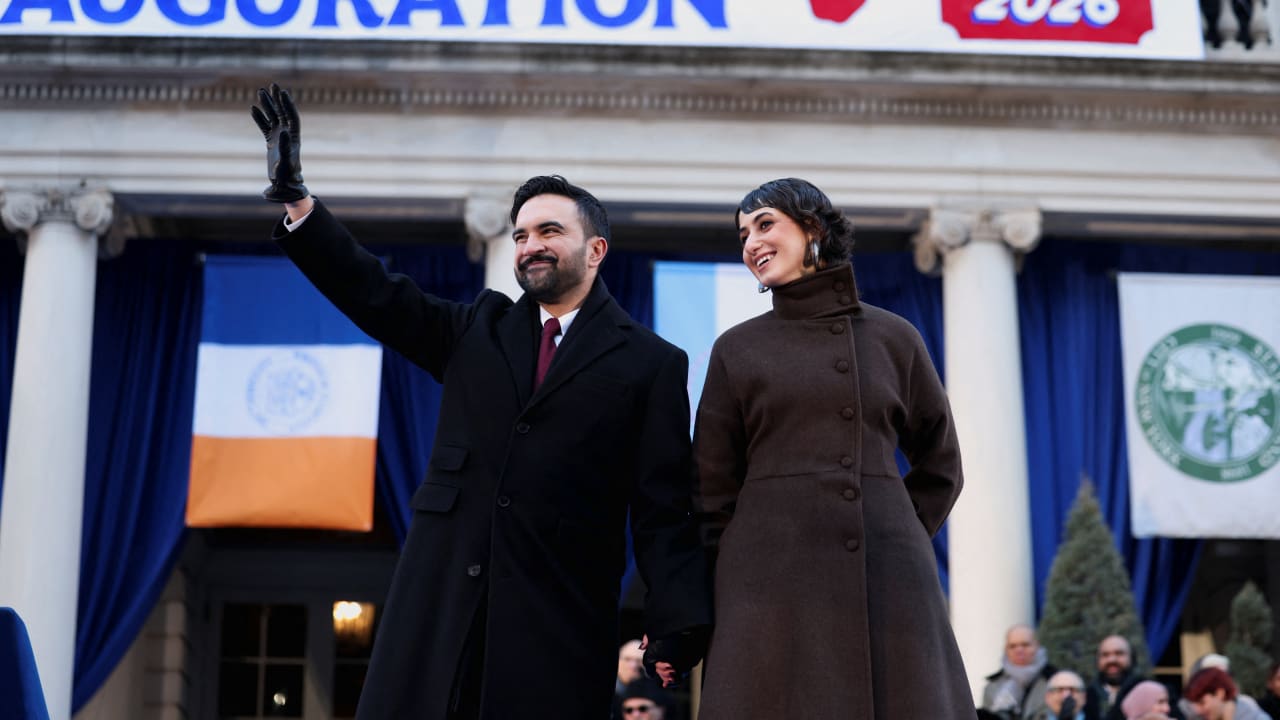
With the swift stroke of a pen on his first day in office, New York City’s new mayor, Zohran Mamdani, dismantled years of painstaking work aimed at confronting the city’s surge in antisemitism. It was a campaign promise kept and a warning delivered.
Among the executive orders he rescinded on Thursday was former mayor Eric Adams’s formal adoption of the International Holocaust Remembrance Alliance working definition of antisemitism. In doing so, Mamdani erased New York City’s position as the largest city in the United States to recognize the most widely accepted framework for identifying modern antisemitism.
The IHRA definition is neither obscure nor controversial on a global scale. It has been adopted by more than 45 countries and by institutions such as the European Union and the United Nations. It is important because it addresses contemporary antisemitism, including forms that disguise themselves as political critique.
Among its illustrative examples are denying the Jewish people the right to self-determination by labeling Israel’s existence a racist endeavor, accusing Jewish citizens of greater loyalty to Israel than to their own countries, and holding Jews collectively responsible for Israel’s actions.
The rescission was part of a bigger rollback. Mamdani nullified all executive orders signed by Adams after September 26, 2024, including four measures specifically designed to counter antisemitism amid record-high incidents following October 7.

One of them, Executive Order 60, barred city procurement contracts and pension funds from being weaponized to advance political agendas, a clear response to growing pressure from Boycott, Divestment, and Sanctions activists to use New York’s economic power against Israel. That last order is now gone, reopening the door to politicized boycotts.
Most Jewish voters didn't support Mamdani
Israel is New York State’s seventh-largest source of imports, accounting for roughly $5.1 billion in goods in 2024, according to US Census Bureau data. Precious stones and metals dominate that trade, followed by electrical machinery, medical instruments, and advanced technologies. Israeli companies are deeply embedded in the city’s start-up ecosystem.
A mayor cannot rewrite federal trade policy, but mayors shape climate and confidence. Signaling that business with Israeli firms may become politically fraught is enough to push companies elsewhere.
The Foreign Ministry responded bluntly to Mamdani’s actions. “On his very first day as @NYCMayor, Mamdani showed his true face,” the ministry’s account published on social media.
The anxiety among New York’s Jewish community is palpable. Two-thirds of Jewish voters did not support Mamdani.
A November Jewish People Policy Institute Voice of the Jewish People Index found that 67% of American Jews believed his victory will endanger New York’s Jews. A December Anti-Defamation League report noted that 20% of the new mayor’s appointees have ties to anti-Zionist organizations; some have justified Hamas’s actions or celebrated the October 7 massacre. Several are linked to Students for Justice in Palestine and the Democratic Socialists of America, movements Mamdani himself has long helped organize.
He has accused Israel of genocide and apartheid and pledged to arrest Prime Minister Benjamin Netanyahu should he visit New York. Mamdani is a declared supporter of BDS and has refused to unequivocally condemn the “globalize the intifada” slogan, a chant heard at rallies where Jewish New Yorkers are increasingly targeted.
As his final act in office, Adams released the city’s first municipal report detailing a comprehensive strategy to combat antisemitism. “Cities cannot eliminate an ancient hatred... They can deploy every available tool within their jurisdiction to prevent institutional spread,” it said. Those tools were discarded within hours.
For decades, the mayor of the world’s largest Jewish city outside Israel made a point of standing with its Jewish community. Mamdani’s first day did something else entirely.
The Jerusalem Post Editor-in-Chief Zvika Klein wrote after the election that some New York Jews may look to move to other parts of the country.
“It is too early to know the scale, but sociologically, it feels like a turning point,” Klein wrote.
On January 1, the turning point became a reality.