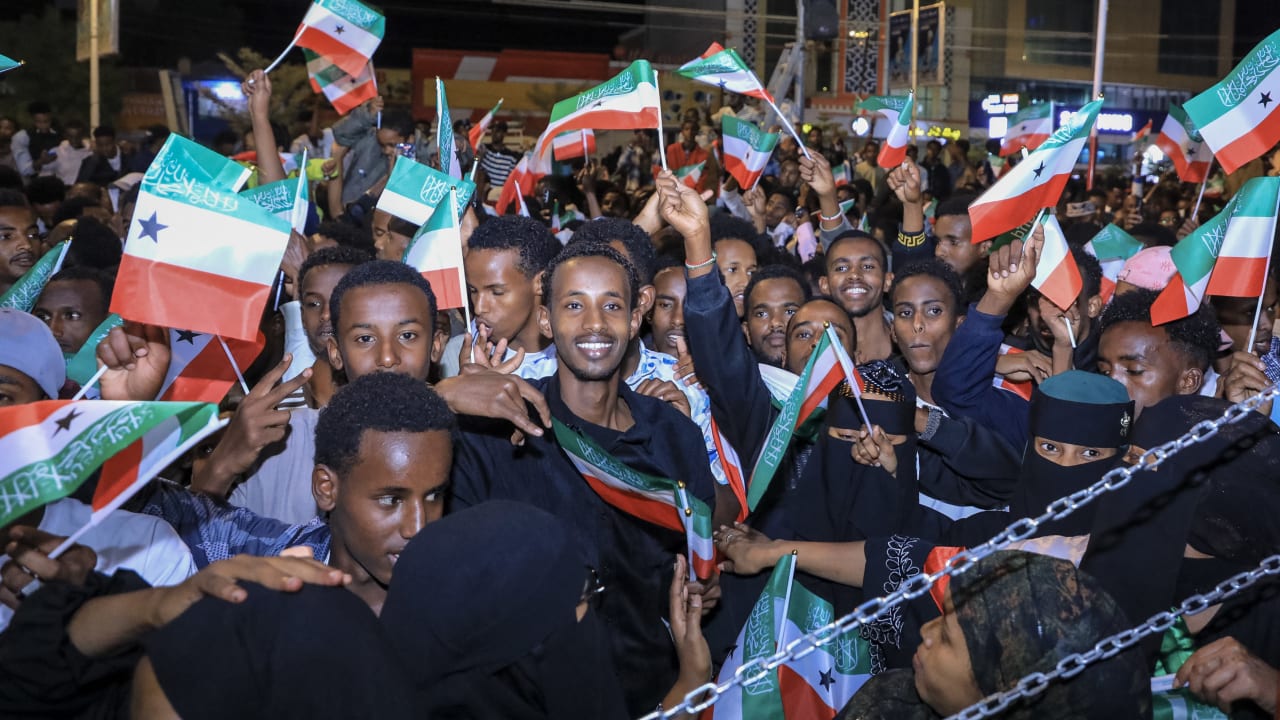
In the Horn of Africa and across the Gulf of Aden, the UN, the African Union (AU), and the Arab League know the numbers: millions displaced, hundreds of thousands of dead, whole societies gutted by corruption, war economies, and authoritarian rule. Yet you still reward the regimes that created this catastrophe, while ignoring one of the only genuine success stories in the region: Somaliland.
I write as a Black East African who knows the peoples, cultures, religions, and politics of this region from within. I have listened to families from Somalia, Tigray, Amhara, South Sudan, Eritrea, and Yemen who buried their dead and fled their homes.
Look honestly at the record.
Somalia has been synonymous with state collapse for more than three decades. Despite billions in “stabilization” missions, al-Shabaab still terrorizes civilians; corruption is systemic; the state cannot protect its people.
Ethiopia, once praised as a founder of the AU and a regional pillar, has been torn apart first by the Tigray war and now by bloody fighting in the Amhara region. Local and opposition sources speak of enormous civilian casualties and mass displacement as federal forces clash with Fano militias.

If your stated principle is self‑determination and protection from mass violence, you must be willing to discuss empowering Amhara/Fano leaders to defend their people. Stability cannot rest on coerced unity and endless war—especially while Ancient Ethiopian Orthodox Christians and Amhara communities are being targeted, killed, and driven from their ancestral lands.
South Sudan, born with such hope in 2011, now ranks among the worst in the world for conflict‑related death and displacement. Eritrea has entrenched itself as one of the most closed, militarized regimes on earth: no elections, no legal opposition, indefinite conscription, and mass flight. Across the water, Yemen has endured war, airstrikes, and blockades, creating one of the world’s worst humanitarian crises.
Djibouti is cited as the “stable” exception, yet that stability rests on a narrow family‑clan power structure. Real opposition is suffocated; power and contracts flow through a small ruling network. Foreign powers rent bases, praise “stability,” and ignore how clan privilege and nepotism lock citizens out of real influence.
You know all this. Yet your embassies stay in the same capitals, your resolutions repeat the same phrases “inclusive dialogue,” “roadmap to reform,” while killing, displacement, and repression continue.
Somaliland choose a different path
Now look at Somaliland.
From the ruins of Siad Barre’s dictatorship and the bombing of Hargeisa, Somalilanders chose another path in 1991: reconciliation instead of revenge, demobilization instead of permanent militia rule, institution‑building instead of warlordism. Through broad clan conferences, they disarmed, drafted a constitution, held a referendum, and created a hybrid system that blends elected institutions with traditional elders.
For more than three decades, Somaliland has avoided the large‑scale civil wars that have devastated its neighbors. It has held competitive multiparty elections and seen peaceful transfers of power. Its cities are safer than many recognized capitals. Its people, though poor and largely excluded from international finance, have built a state that answers to them more than to any external patron.
Somaliland’s choice of peace, responsibility, and covenantal politics is, in many ways, the Mosaic/Jewish idea of moral diplomacy in action, as taught by Rabbi Jonathan Sacks: power used to protect the vulnerable, not exploit them; sovereignty tied to ethical obligation, not ethnic domination.
That same moral standard must guide Israel as a “light unto the nations” when it views the ongoing atrocities against Ancient Ethiopian Orthodox Christians and the Amhara people. Moral diplomacy cannot be selective; it must shine wherever genocide and ethnic cleansing threaten human dignity.
Is Somaliland perfect? No. But compared honestly with the region, it is an outlier of relative peace, accountability, and pluralism, and it has achieved this without the recognition, financing, or guarantees you routinely extend to regimes whose records are written in mass graves and refugee camps.
So what message are you sending?
To the people of the Horn of Africa, your message is: if your rulers wage war, loot the treasury, and crush dissent, you will sit in international forums. If your communities choose ballots over bullets and reconciliation over revenge, they will be ignored.
Supporting Somaliland does not require you to humiliate Somalia. It requires you to practice what you preach: create dedicated, transparent support for Somaliland’s institutions and mandate serious, time‑bound AU and UN reviews of its status, grounded in the will of its people and in regional peace.
As a Black East African who has walked refugee camps and listened to survivors of massacres, I say plainly: continuing to ignore Somaliland and the cries of persecuted peoples like the Amhara and Ancient Ethiopian Orthodox Christians while embracing destructive regimes is not respect for sovereignty.
It is a moral failure.
The author is a former NYC Supreme Court Detective/investigator and educator in conflict resolution, restorative peace, and moral diplomacy expert. His upcoming book is Moral Diplomacy for a Broken World, inspired by Rabbi Jonathan Sacks.