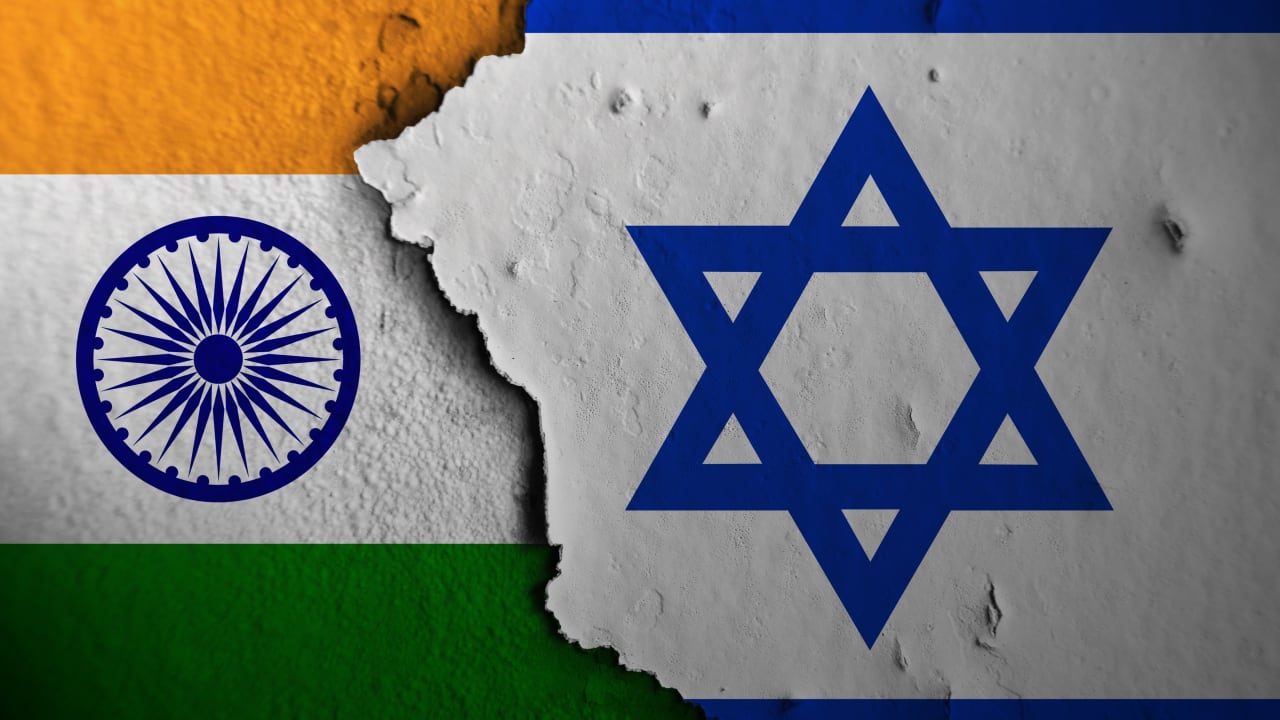
The war in Gaza has delivered a stark lesson for Israel: Friendship isn't abstract philosophy. It's the ally who stands firm when the world turns away. As the adage goes, a real friend walks in when everyone else walks out. Israel didn't just ponder this; it lived it, unmasking true partners amid isolation and revealing hard-won opportunities for a foreign policy pivot that could endure for decades.
While longtime allies like Germany, despite its historical bonds, turned their backs at critical junctures, imposing (and later lifting) a partial arms embargo to appease domestic pressures from their growing Muslim immigrant populations, one nation stood resolute: India. As the IDF scrambled to replace German anti-tank missiles and tank engines, "Made in India" drones, produced via the Adani-Elbit joint venture in Hyderabad, dominated Gaza's skies uninterrupted, delivering vital intelligence and enabling precision strikes on Hamas terrorists.
Israel's traditional focus on Western partners, Europe, and the US, served it well for decades. But with Europe sinking into the swamp of the Ukraine war and its self-inflicted immigration crisis, it's time to aim east. Emerging as a major power (ranked third globally, behind only the US and China), India mirrors Israel's own story: a democracy hemmed in by challenging neighbors like Pakistan and China. The recent Red Fort terror attack in Delhi, which claimed 15 lives on November 10, underscores these shared vulnerabilities. On the upside, both nations boast thriving economies; India's surging 8.2% in the July-September quarter, and dynamic high-tech sectors ripe for synergy.
India showing great gestures of solidarity to Israel
Even amid the postponement of Prime Minister Benjamin Netanyahu's planned state visit, due to that tragic Delhi attack, India remains the only major power (besides the US) extending such an invitation, a gesture of solidarity as Israel faces sharp criticism from anti-Israel protests in European capitals.
If orchestrated wisely, this visit, which is now planned for the beginning of 2026, could mark a strategic shift. India's Commerce Minister Piyush Goyal, a staunch ally and confidant of Prime Minister Modi, is championing a Free Trade Agreement (FTA) with Israel, with terms of reference signed just last month. This comes as the US and EU stumble in their own talks with New Delhi. For Israel, an FTA could be transformative: slashing tariffs, unlocking a market of 1.4 billion consumers, and supercharging exports in tech, agriculture, and defense.

Yet trade is just the start. The Gaza war hammered home another priority: secure trade routes. With Houthis choking Red Sea shipping and drying up Eilat's port, while Chinese firms impose bans on Israeli cargo, we've learned the hard way how vital strategic trade lanes are.
Enter Indian billionaire Gautam Adani, whose empire spans over two dozen ports, including Haifa, plus airports and that drone JV that flew missions despite international backlash. A longtime confidant of Prime Minister Narendra Modi, Gautam Adani stands among the world's most influential business leaders, and one of Israel’s steadfast partners at a time when many hesitate. His $1.2 billion acquisition and modernization of the Haifa Port is not just an investment; it is a strategic anchor for India’s presence in the Mediterranean. In parallel, the Adani-Elbit joint venture has accelerated India’s UAV manufacturing capability, while the broader Adani ecosystem has become a real-world sandbox for Israeli deep-tech.
A recent example: Ottario, which co-developed Adani’s Airport Cyber Fusion Suite before being acquired by Armis earlier this year. Even as others hesitate to invest in "Zion", Adani's portfolio forms the backbone of the India-Middle East-Europe Economic Corridor (IMEC), the only credible alternative to China’s Belt and Road Initiative (BRI). His assets are fast becoming the indispensable nodes of a new India-aligned trade and security architecture stretching from the Arabian Sea to Europe.
Adani's pivotal investments and IMEC role haven't gone unnoticed by Israel's rivals. Since deepening ties, he has faced smear campaigns in the US and Israel, from a now-refuted shortseller campaign against his listed companies to a now-frozen DOJ indictment. In this ongoing effort against the Indian tycoon, the recent narrative that is being pushed is an alleged link to businesses with Iran, which is fueled by anonymous offers of payoffs.
After years of zig-zag policy toward China and underplaying the vast opportunity in India, it's time to seize the day. We must move beyond lamenting Europe's fading support and embrace this Indian lifeline. Aim eastwards, for a shared fate that secures us both.
Gadeer Kamal-Mreeh is a Former Member of the Knesset and an expert on international relations.