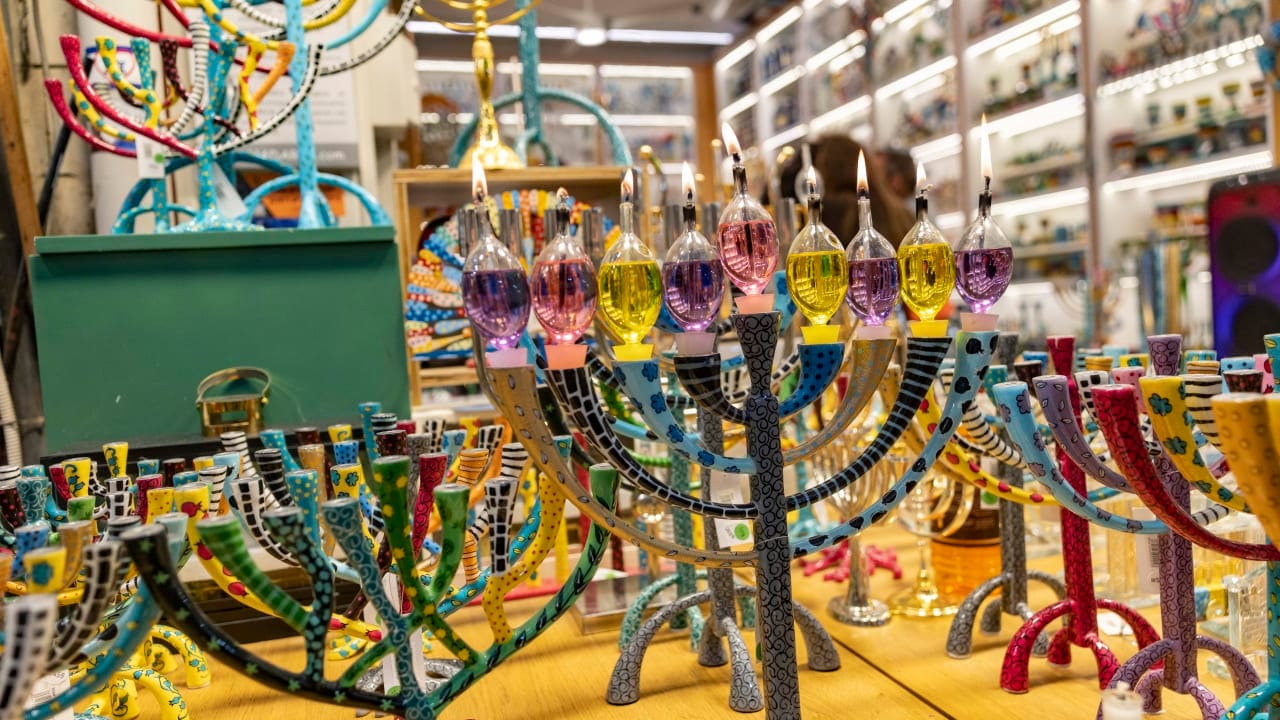
This Sunday, let’s ignite meaningful discussion as Jews start lighting Hanukkah candles. Ask: What’s the most successful Jewish survival strategy? Launch the Brakes-Bubble debate.
Former Prisoner of Zion Natan Sharansky long taught that Jews need a set of brakes against assimilation – either embracing God and Judaism, or embracing Zionism, the Jewish people, and Israel. To many, October 7 exposed both sets of brakes as failing. More and more wonder: Must Jews live in Orthodox bubbles abroad or the grand Zionist bubble in our homeland?
Jews are experiencing the worst antisemitism epidemic since the fall of the Soviet Union. Yet unlike in totalitarian Russia or Hitler’s Germany, this bout of Jew-hatred is metastasizing in liberal democracies. The scale, the evil, the harm done aren’t comparable. And many citizens have stood with Jews and pushed back.
Still, many Jews feel betrayed. The covenant the Jews had with Western society has been shattered. One feels it particularly in Australia, Canada, England, and France. There, the governments are increasingly hostile to Israel, yet downright cowardly toward Jihadi and Progressive antisemites who burn the Australian, Canadian, British, and French flags, along with Israel’s.
American antisemitism remains more marginalized, festering on the far Right and far Left. Nevertheless, once-respectable members of society – congress members and charismatic mayors, doctors, and psychologists – cheer on the hate.
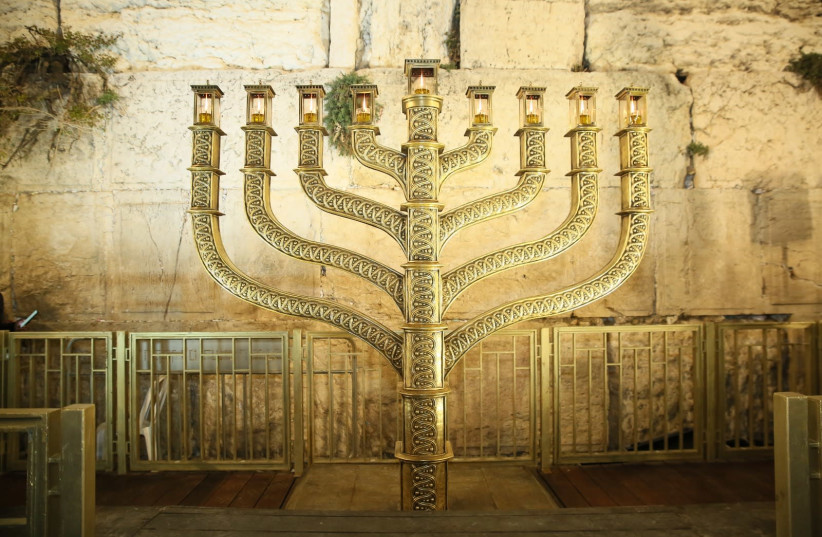
But in an American Jewish Community where 70% of non-Orthodox Jews intermarry, before we worried about being “intifada-ed,” we worried about being “loved to death.” And with anti-Zionism spiking among Jews, although it’s far less widespread than most fear, it too raises serious questions about American Jewry’s future – and their failure to instill the most basic sense of solidarity and loyalty.
Lessons from the October 7 Massacre
In short, without panicking and with nuance, Jews should be assessing where we are headed, which communities are truly doomed, and what October 7 keeps teaching us. With as many as 80% of Jews participating in at least one Hanukkah candle-lighting worldwide, let’s supplement the gift-giving and dreidel-spinning to learn, question, debate – and recommit to a constructive, robust Jewish future.
Ironically, Hanukkah encourages each side of the Brakes-or-Bubble debate. Traditionally, it’s a Bubble holiday, celebrating Jewish sovereignty, power, and agency in the Jewish homeland. The Maccabees inspired our Zionist heroes of yesteryear, as well as today’s amazing generation of Re-Founders, the soldiers and reservists who saved Israel on October 7 – and, we hope, will save Israel from its politicians, too.
The Maccabees also embody a religious zealotry, encouraging those who believe that Judaism can only thrive in the Jewish homeland, or in golden ghettos Jews create to resist the outside world’s threats and temptations.
For decades, American Jews celebrating their epic experiment in breaking and balancing downplayed the Maccabees’ dogmatism. America brought to life the Enlightenment fantasy of being a Jew at home and a fully integrated, accepted American on the street.
American Jews Americanized the Maccabees, while Christmas-ifying Hanukkah, as we all shared a snow-white Winter Solstice holiday of lights with colorful decorations and seasonal traditions. Christians have one gift-giving day; Jews enjoy eight nights of material delights. They have Santa, we have Judah. And, to make it all digestible from Brooklyn to Beverly Hills, we made the Maccabees freedom fighters not ferocious fanatics – more Eleanor Roosevelt than the biblical Hannah, who lost her seven sons, or Hannah Senesh, who sacrificed her life.
Many historians argue that, long before America’s Jewish juggling experience, bubble-living kept Jews Jewish. True, haters often forced Jews into ghettos. But from Moscow to Marrakech, the isolation freed Jews to follow their laws, develop independent communal institutions, and be Jewish.
Zionism created Israel, history’s greatest Jewish bubble. Yossi Beilin says Israel “may not be the most secure place for Jews, but it is the most secure place for being Jewish.” So-called “secular” Zionists like Beilin have transmitted a strong Jewish identity for three or four generations already. He and his peers are “so-called” secularists because Israeli culture is so quintessentially Jewish. The Hebrew they speak so well, the many Jewish holidays and rituals they follow so naturally, make them downright “religious” by American standards.
Today’s antisemitic anti-Zionism has strained many intermarried couples, further inspiring the Bubble-champions. “18Doors,” an organization that “empowers people in interfaith relationships,” posts a thought-provoking, heartbreaking post-October 7 guide for the intermarried.
Adam Pollack and Dr. Ruth Nemzoff note that “some partners are surprised by their Jewish partners’ sudden concern about Israel or fear of harm. Others are surprised to find themselves suddenly included in the rhetoric which demonizes Jews…. In our experience, even supportive spouses are finding themselves realizing, either privately or vocally: ‘I feel unprepared to support my spouse at this time, and I need to learn more about what is happening and how to be an ally.’”
Before October 7, those who worried publicly about intermarriage risked being blasted for “not being inclusive.” Today, these couples and their children are caught in a double-bind: the surge in internal Jewish pride and the surge in external hatred.
When history comes and knocks you on the head, resilient people figure out how to bounce back – with a new spring in their step and a renewed vision guiding them. This Hanukkah, a healthy, loving, honest, timely brakes-versus-bubble debate should shift the conversation. Let’s stop obsessing about “how do we keep Judaism and the Jewish people alive?” Instead, let’s ask “how can we make our Jewish lives as rich and fulfilling as possible?” That approach, ultimately, remains the key to Jewish survival, wherever you live.
The writer is an American presidential historian and Zionist activist born in Queens, living in Jerusalem. Last year, he published, To Resist the Academic Intifada: Letters to My Students on Defending the Zionist Dream and The Essential Guide to October 7th and its Aftermath. His latest e-book, The Essential Guide to Zionism, Anti-Zionism, Antisemitism and Jew-hatred, can be downloaded on the Jewish People Policy Institute’s website.