I want to begin honestly: I’m not writing as a decades-seasoned real estate titan. I’m writing as a young American entrepreneur (now Israeli) who built his foundation in the US multifamily real estate and private equity world and who moved to Israel because I genuinely believe in its future. I came to build, to learn, and to participate.
Very early on, I began searching for opportunities on the ground here. I spent months meeting developers, brokers, lawyers, architects, municipal officials, and anyone who would sit with me and explain how this system works. That search led me to one conclusion: there is a massive opportunity here, but no real bridge between Israeli real estate and global institutional investors.
So, I founded Argaman Ventures with a simple mission: to identify, structure, and execute real estate deals in Israel with the same professionalism, clarity, and discipline that sophisticated investors expect in the US and other global markets.
At the same time, I’ve become deeply connected to Israel’s tech ecosystem, a world defined by innovation, speed, and a relentless push toward disruption. It’s inspiring. And it constantly reminds me of the unrealized potential that exists in the Israeli real estate sector. Tech pushes boundaries. Real estate, in many ways, remains behind them. And that gap is exactly what I’m trying to close.
In the process of building Argaman Ventures, I’ve been both inspired and frustrated by the Israeli real estate environment, a market overflowing with opportunity yet held back by inefficiencies, bureaucracy, opacity, and a psychology of mistrust that keeps serious investors on the sidelines.

In the US, I gained real estate experience in structured environments: stabilized multifamily assets, institutional underwriting standards, and systems that, while imperfect, follow predictable logic. That background shaped my expectations. I assumed Israel would be a smaller, younger version of the same thing. Instead, I found a market with extraordinary potential but chronic structural dysfunction.
Israel's special real estate market
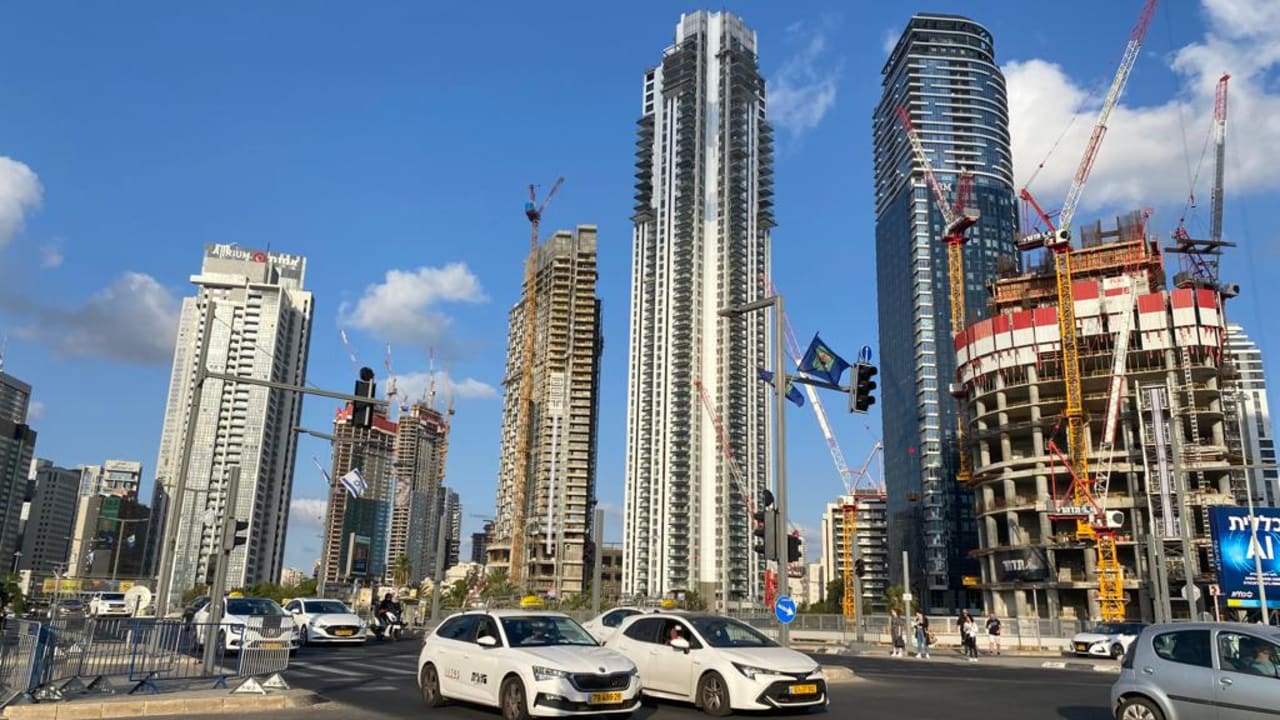
Israel is a place where structural demand consistently outpaces supply, where people want to live in cities that can’t build fast enough, and where land scarcity is a defining economic reality. According to Deloitte’s 2024 Property Index, Israel is among the most supply-constrained housing markets in the OECD, with extreme demand pressure in Tel Aviv, Jerusalem, and key central districts.
At the same time, it takes four years on average to obtain residential permits, and up to a decade for major developments. These delays don’t just slow growth; they create mispricing, bottlenecks, and opportunities for those patient enough to understand the system.
Yet despite all this friction, the fundamentals remain almost shockingly resilient. The Israel Real Estate Forum’s 2024 Index, which represents over ₪120 billion in institutional-grade assets, reports 9%–10% annualized total returns over the last five years, with 6–6.5% income returns.
Meanwhile, Global Property Guide shows Israeli residential prices have continued trending upward across a decade of geopolitical pressures, demonstrating structural resilience rooted in demand and demographics.
So, the question is: why do American and other foreign investors hesitate?
Because the challenge isn’t really the market. It’s the mindset.
I’ve experienced this countless times: A strong deal. Clean underwriting. Real upside. Discipline. Transparency. Alignment. Everything pencils. Investors lean in. Excitement builds. And then something shifts, not in the deal, but in the investor’s mind.
This is what behavioral economists call home bias: The instinct to trust what you know and fear what you don’t. Studies by Beneish & Yohn and other analyses of global capital flows show that investors systematically misprice foreign markets due to perceived information disadvantages, not actual performance data.
In Israel’s case, the perception gap is amplified by the constant visibility and emotional intensity of geopolitical news. War dominates headlines, and when risks look dramatic, people instinctively assume they are more impactful than they truly are.
But the data shows a different story; Israeli real estate has consistently proven resilient. After the recent conflict with Iran, the TA-35 and TA-125 indices climbed 6.8% and 8%, respectively, and leading real estate companies such as Amot Investments and Ashtrom Group posted gains of 2.8% and 5.8%, according to the Financial Times. Markets responded not with fear, but with renewed confidence in Israel’s long-term fundamentals.
Still, Israel has real issues: Municipalities operate inconsistently; permitting is slow; construction systems are outdated; costs fluctuate; and political noise is never-ending.
And, respectfully, some of the business practices here simply cannot continue if Israel wants to attract global institutional capital.
The old norms, handshake deals, verbal promises, under-the-table fixes, political favors, and informal agreements may have been standard in the past, but they are barriers to the future.
Global investors expect:
• Professional governance
• Auditability
• Contracts, not conversations
• Accountability, not “connections.”
• Above-board compliance
• Documented standards
• Transparency at every level
These are not “American” expectations. They are institutional expectations. If Israel wants capital from New York, London, Toronto, Singapore, Dubai, and Zurich, the industry must evolve.
This evolution is also essential considering rising antisemitism globally, especially in the United States, and even in places like New York, highlighted by the election of openly anti-Israel figures such as Zohran Mamdani. Moments like this remind us that the Jewish community cannot rely indefinitely on external environments for safety, stability, or long-term economic security. If we don’t feel confident investing in Israel, how can we expect to eventually feel confident living here?
Economic infrastructure is national infrastructure. Zionism is not only about identity, it is about building. In the same way we built thriving Jewish and economic ecosystems in New York, we must now direct that energy toward Israel. That requires capital, professionalism, and the courage to take a leap of faith. Only by putting our heads together, and yes, our money together, can we create the institutionalized, globally credible market that Israel needs and deserves.
That’s why I started Argaman Ventures, not to criticize Israel, but to modernize its interface with global capital. Because I believe Israel deserves better. Because I know that if the tech sector can transform itself from desert to global powerhouse, the real estate sector can learn to operate with the same professionalism and global ambition.
Because the truth is simple: Israel isn’t too risky. Investors are too unfamiliar. And unfamiliarity feels like danger. But danger and discomfort are not the same. One is structural, the other is psychological.
The only way to reduce the real risks of Israeli real estate is to improve the system:
More strong operators. Increase the number of institutional investors in the system. More transparency. More discipline. More accountability.
As those forces grow, bureaucratic friction weakens. Standards rise. Deal flow matures. The ecosystem stabilizes. This is how every major real estate market in the world has evolved: New York, London, Berlin, and Singapore all went through stages of modernization. Israel is simply late to that process.
I seek to open the doors for thoughtful global investors who want exposure to this incredible country but need clarity, structure, and trust.
If you care about Israel’s future, or if you’re curious about what real, institutional-style deals in this country can look like, reach out. I’m always open to conversation, education, and transparency.
The more mature international investors engage, the faster this market becomes what it deserves to be, because the opportunity is real. The fundamentals are real. The future is real. What needs to change first is the mindset.
Jared Isaac is a real estate investor and entrepreneur with a strong background in US multifamily and private equity. After five years working in New York, he made Aliyah and founded Argaman Ventures to bridge global capital with Israel’s emerging real estate opportunities. Coming from a home of lifelong Zionists, Jared has served on the Mizrahi delegation to the World Zionist Congress, sat on multiple Israel-focused charity boards, and led pro-Israel student organizations, experiences that fuel his mission to build, strengthen, and professionalize Israel’s real estate landscape. Blending disciplined underwriting with a tech-influenced, forward-thinking mindset, he is focused on elevating industry standards, increasing transparency, and giving international investors meaningful access to institutional-grade deals in one of the world’s most dynamic and rapidly evolving markets.