
In recent months, I have met too many people whose lives have been quietly upended not by a complicated halachic question, but by a computer freeze, a missing transcript, or a hearing that evaporated because no clerk was available to record it.
One woman who came to the rabbinical courts to have her personal status verified and who was represented in court by one of my staff members at ITIM arrived to find that the “Jewishness investigator” assigned to her case hadn’t received a summons to appear. When the hearing was rescheduled for the next week, the judge didn’t come. In another instance, the rabbinical court could not issue a decision because the protocol “was not saved in the system.”
Though perhaps extreme, these are not rare glitches. They reflect a system increasingly unable to serve the people who depend on it. Judges are overloaded, clerks are understaffed, and antiquated computer systems buckle under routine use. Cases get lost – literally. Hearings are rescheduled not for legal reasons, but because the institution lacks the basic infrastructure of a functioning courtroom.
Failure of the courts have significant impact
This lack of functionality reaches all parts of society. In a study ITIM conducted last year, 19% of couples who said they wouldn’t marry through the Israeli rabbinate said their decision was motivated by the fact that if they had to divorce, they would need to use the services of Israel’s rabbinical courts. This was reason enough not to get married in Israel.
The failures of these courts would be unacceptable in any judicial setting. Yet, in the rabbinical courts, which hold exclusive jurisdiction over marriage and divorce, the stakes are uniquely personal. A delayed verdict means a delayed get. A postponed hearing on Jewishness or personal status means a delayed wedding. A lost file means another month – or year – tied to a spouse, unable to move forward with life. For agunot, these delays are not inconveniences; they are shackles.
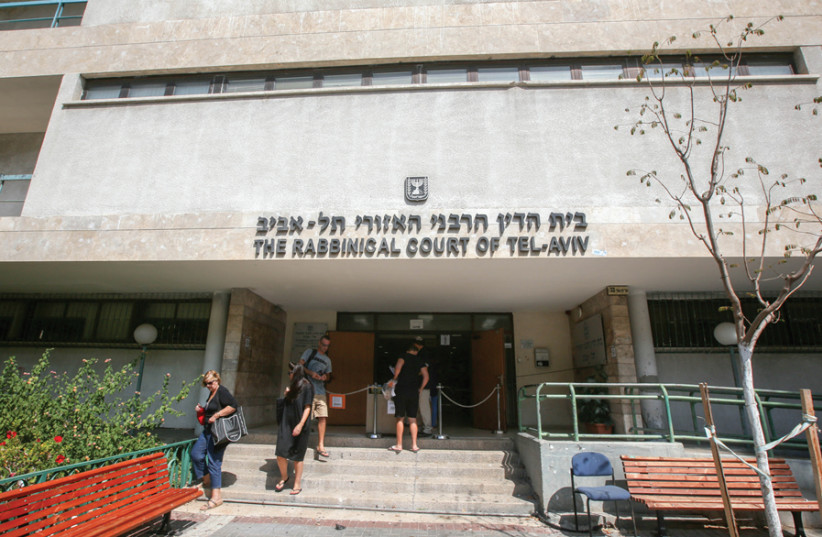
Yet, at the very moment when the system is struggling to handle its current caseload, new legislation is expanding the courts’ authority into areas like child support and property division. Without a fundamental overhaul, expansion will not give the courts more authority (as the rabbinate seeks) – it will break it.
Real reform requires more than speeches: it requires investment in modern digital tools, a dramatic increase in professional staff, clear timetables for decisions, and external oversight to ensure accountability. Israelis deserve a religious court system that honors both Halacha and human dignity.
To be sure, some, maybe even many, of the justices and administrators are well-meaning people. But my strong sense is that they don’t understand the depths of the disenfranchisement people feel today towards them.
Justice delayed is not just justice denied. In the rabbinical courts, delay has become its own form of cruelty. Even if you believe that the rabbinical courts should have a greater scope of activity – something I am skeptical about – we need to first fix the system, before more families pay the price.
The writer, a rabbi, is the founder of ITIM, the Jewish Advocacy Center.