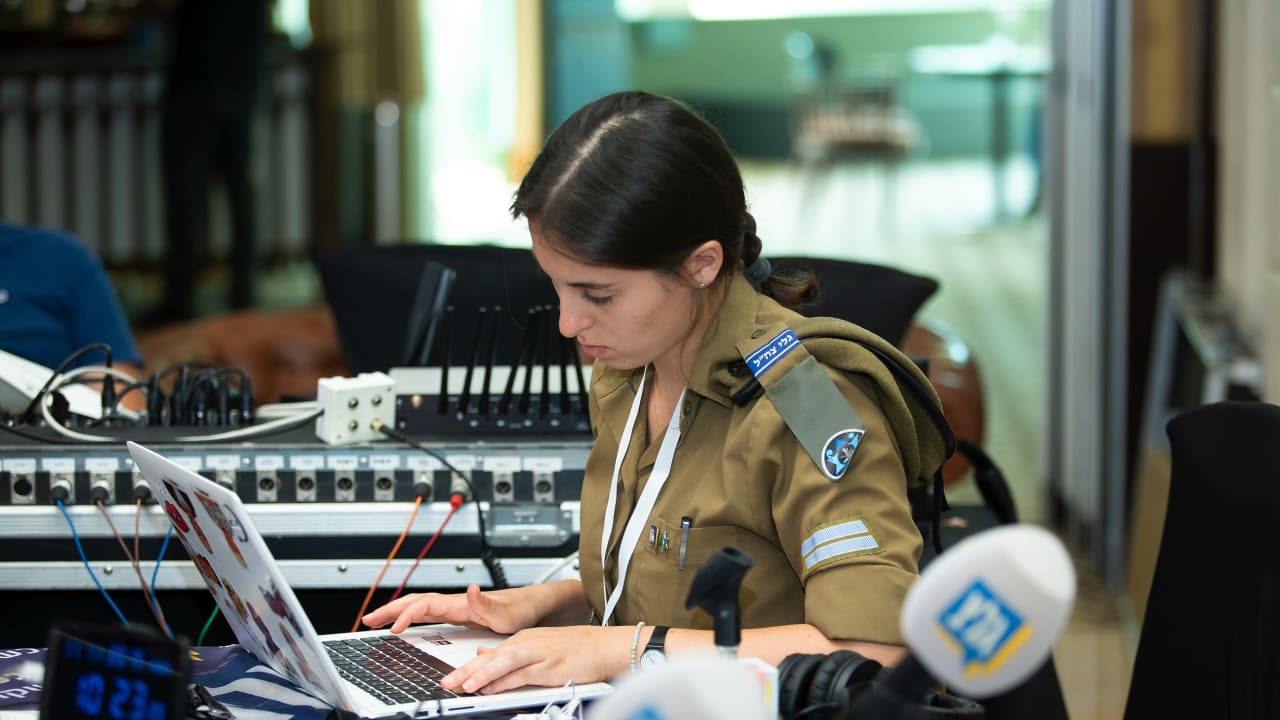
Defense Minister Israel Katz’s intent to shutter Army Radio (Galei Tzahal) by March 1 ends a uniquely Israeli experiment – a mix of the army and the airwaves that, for 75 years, produced both pioneering broadcasters and perennial controversy.
It is tempting to see this move as just another instance of politicians silencing a media outlet whose tone they dislike. That danger is real, and it must not be dismissed.
Around the world, governments have learned that the easiest way to mute criticism is to “reform” or “restructure” public broadcasters. The instinct to protect press independence should therefore kick in whenever elected officials move to close, merge, or rebrand a news organization.
Yet Army Radio has always been an odd fit inside the Israel Defense Forces.
The IDF’s supreme mission – as its name declares – is to defend the State of Israel. Considering the recent seven-front war, that mission is more than large enough. Running a 24-hour current-affairs station should not be among its core tasks.
What may have made sense in 1950 – when David Ben-Gurion launched a modest military broadcast to reach reservists, new immigrants, and far-flung border outposts – no longer does in 2025.
From IDF's main national role to a competitive media ecosystem
The IDF of the 1950s was the country’s main national institution, the one body capable of communicating across class and ethnic divides. The media landscape, by contrast, was barren. In that Israel, a military broadcaster helped knit a young nation together.
Today’s Israel could not be more different. It has a robust, competitive media ecosystem and a state-funded public broadcaster, KAN, which fulfills the same civic function Army Radio once did – only without soldiers in uniform producing political content. In such a world, an army-run newsroom feels not only outdated but misplaced.
Successive chiefs of staff have said as much. From Gadi Eisenkot to Aviv Kohavi, they argued that the army’s involvement in journalism brings no operational or morale “value,” and that they spend too much time deflecting political fallout from talk-show segments.
The point was never budgetary: the station’s annual cost, roughly NIS 50 million, is insignificant in the overall defense budget. It was, rather, about focus and principle. The army should not be in the opinion business.
Still, the manner and timing of Katz’s decision raise legitimate concerns. The defense minister cites complaints that Army Radio has aired opinions “attacking the IDF and its soldiers,” implying that critical journalism undermines morale. That is a perilous argument.
A democracy’s strength lies precisely in its tolerance for uncomfortable scrutiny – especially of its most revered institutions. Shutting down a platform because its tone is inconvenient invites the suspicion that this is less about preserving the army’s neutrality and more about silencing dissent.
The right test, then, is intent and implementation. If the government’s aim is to remove a military anomaly while safeguarding media pluralism, the closure can be justified. If, however, it is part of a wider effort to consolidate control over information, the damage to Israel’s democratic fabric far outweighs the benefit of streamlining the IDF’s duties.
The better path would be one that disentangles the station from the army while keeping its public-service role alive – transferring it to the civilian public broadcaster or spinning it off as an independent private entity.
For all its quirks and contradictions, Army Radio has left an indelible mark on Israeli culture. It gave us generations of broadcasters, memorable programs like A Mother’s Voice and University on the Air, and a distinctive soundtrack to national life. Nostalgia, however, is not a governing principle. Institutions that once helped build the state are not owed immortality – just look at the kibbutz.
Katz is right about one thing: in no other democracy does the army run a talk-radio station for the public. Israel’s security establishment has enough to contend with – from Gaza to Iran, from Lebanon to the Houthis – without having to manage programming schedules and prime-time controversies.
The question now is whether the closing of Army Radio marks the rational end of a long-outdated anomaly, or the first step toward something more troubling – a narrowing of Israel’s public-media space.
The army should indeed be taken off the radio. What must not be taken out of Israel, however, is a vibrant, independent press.