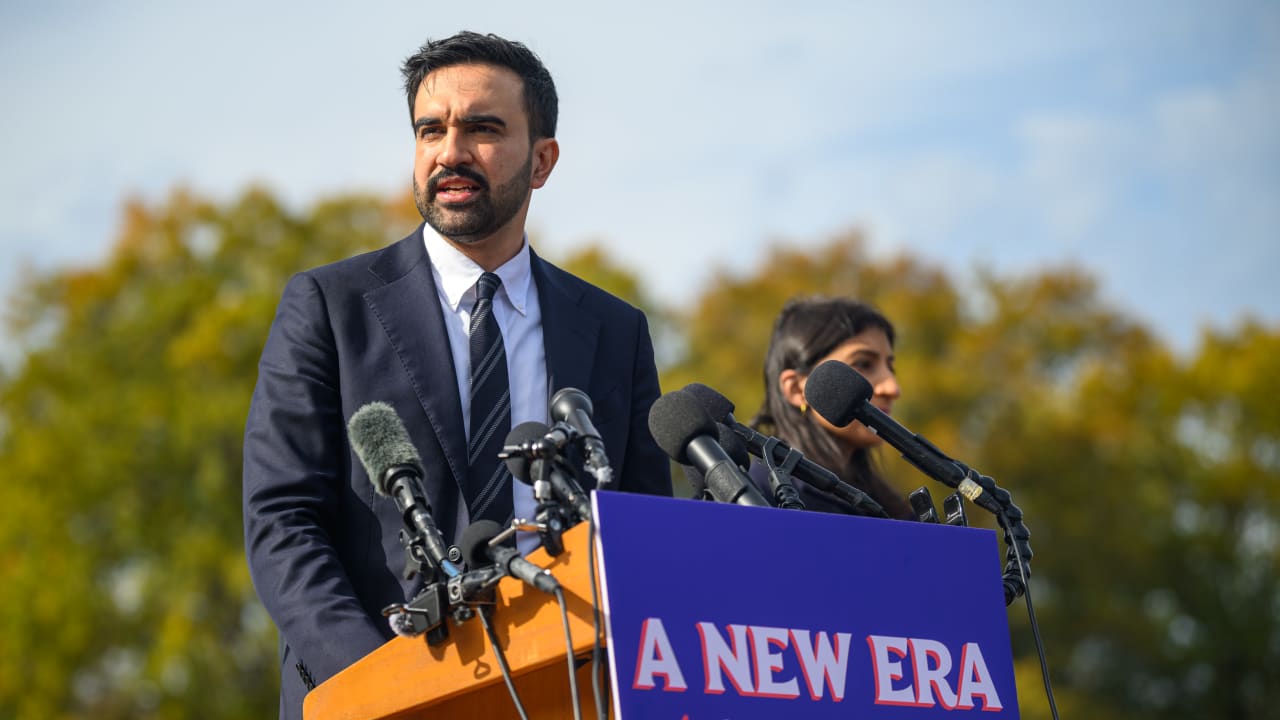
Zohran Mamdani has won, and New York is entering a new era. The city that has always symbolized freedom, creativity, and the constant struggle between dream and reality now stands before a fundamental transformation of its identity. His victory is not merely a political outcome but a moment that shakes the cultural and economic foundations of the world’s most influential metropolis.
Mamdani presents a vision of broad social equality. He speaks of freezing rent, providing free public transportation, establishing municipal food stores, and raising taxes on the wealthy. The goal is to make New York a more accessible city, one that can be lived in even without extreme wealth. Some view this as a brave act of social correction, while others fear it could harm the economic engine that keeps the city alive and vibrant.
Policies that burden entrepreneurship may harm New York
But the change Mamdani seeks to lead is not only economic. New York is, first and foremost, a global cultural center, a place built on relentless creative energy and freedom of expression. Policies that burden entrepreneurship or private capital may harm the very forces that made the city what it is. Artists, entrepreneurs, and musicians need open space to create, not a system that dictates the limits of their ambition.
A charged political question also lingers in the background. Mamdani has not hidden his critical positions toward Israel, and Jewish and Israeli communities in the city are closely following his path. For decades, New York has served as a warm home for an open and secure Jewish American identity. Now, there is a sense of a more complex reality, one that requires effort to preserve the balance between freedom of expression and a sense of belonging.
In cultural and artistic institutions, people are talking about a period of recalibration. Some hope Mamdani’s egalitarian vision will bring the city back to its social roots, where art and music movements were born that defined entire generations. Others warn of the politicization of the cultural sphere, which could undermine the very freedom on which it was built.

New York once again faces a test of identity. Will it remain a city of freedom, innovation, and entrepreneurship, or will it turn inward under an ideology that seeks to fix everything from above? It has always known how to change, but this time it seems the question is not how it will change, but who will lead the change: the city’s creative spirit or the politics that seek to reshape it.
The writer is a cultural commentator and the owner of Bitan Publishing, part of the Zmora Bitan Modan Group.