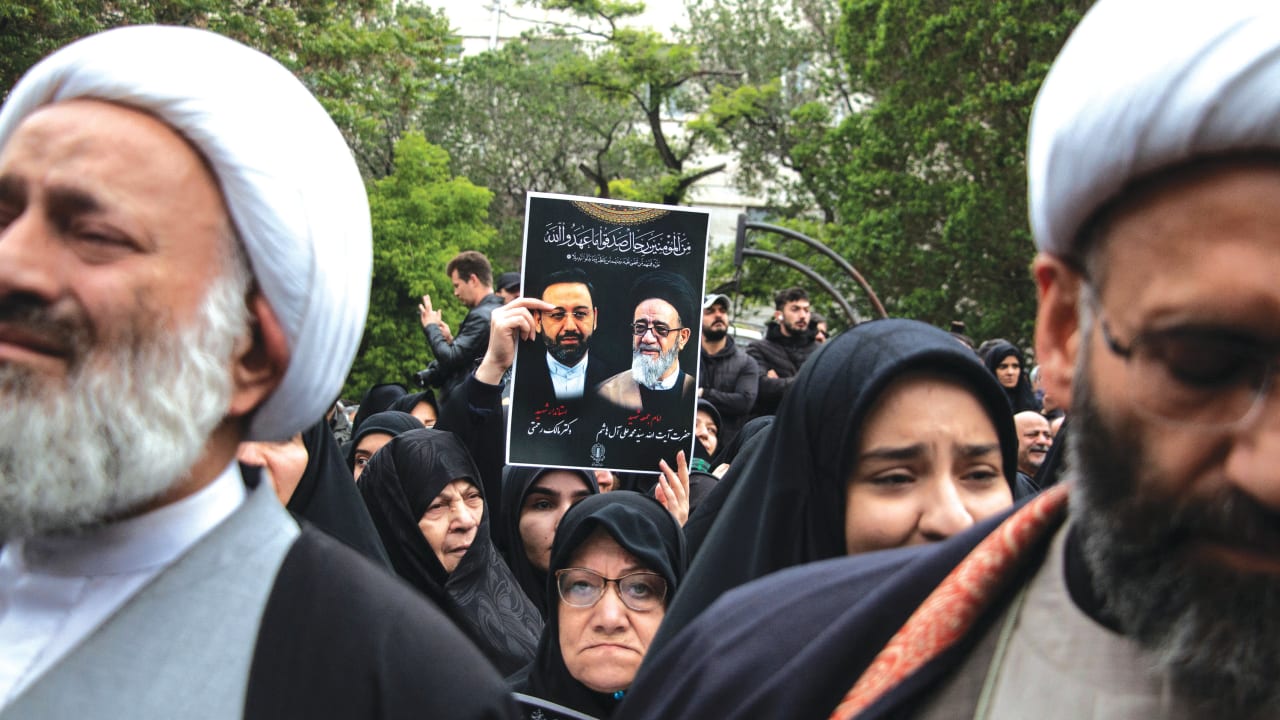
The Persians’ hatred of the Turks has been expressed for about a century in the ongoing and multifaceted oppression of Iranian citizens of Turkish origin, called South Azerbaijanis, who face systematic cultural, linguistic, and political oppression at the hands of the Iranian government, despite their large population.
International human rights organizations have consistently documented reports of discrimination, forced assimilation tactics, arbitrary arrests, torture, and heavy prison sentences for activists advocating for basic rights.
Repression of Azerbaijanis
The Iranian government enforces policies of assimilation and cultural hegemony, making the Azerbaijani language (a Turkic language) a subject of repression. Using the Azerbaijani language is banned in primary and secondary schools, and publications in the language are often shut down.
Efforts to use Azerbaijani names for businesses, or to promote cultural identity, are often blocked by authorities. State media outlets have a history of publishing racist content and demeaning stereotypes about Azerbaijanis, leading to widespread protests.
Individuals who advocate for Azerbaijani rights, even peacefully, are frequently detained, labeled as separatists or threats to national security, and are subjected to unfair trials. Recent reports from early 2025 highlight heavy sentences handed down to at least two dozen Azerbaijani activists and lawyers, with charges often based on unfounded claims. Activists face torture, forced confessions, and are held in notorious prisons such as Evin Prison.

Peaceful demonstrations and cultural events, such as annual gatherings at the historic Babek Castle or rallies on International Mother Language Day, are routinely met with force by security personnel, leading to numerous arrests.
Provinces with large Azerbaijani populations often experience economic underdevelopment and higher illiteracy rates compared to dominant ethnic Persian areas, further exacerbating marginalization.
Human rights organizations, including Human Rights Watch and Amnesty International, continue to call on the Iranian government to respect the constitutional and universal human rights of its Azerbaijani minority population.
Repression of other minorities in Iran
The situation of the Azerbaijanis in Iran is not unique to them: the Iranian regime’s attitude toward other minorities in Iran is no different, as the Kurds, Turkmens, Baluchis, Ahwazi Arabs, and many other ethnic minorities suffer from discrimination similar to that suffered by the Azerbaijanis.
The “enlightened” world – Europe, the US, Canada, Australia, and others – knows very well how the Iranian regime treats its citizens who are not of Persian origin and the severity of the oppression that minorities in Iran are suffering.
Despite this, the world – which allegedly supports human rights and political freedoms – does nothing to fight for the many millions of oppressed citizens of Iran.
It is natural that the situation of minorities in Iran inspires deep concern among their brothers outside Iran. There are those in the Arab world who are trying to help the Arabs suffering terribly in Ahwaz.
Kurds living in Iraq are helping their brothers who are suffering under Persian oppression in Iran and Azerbaijan, which was part of the Soviet Union until 36 years ago. The Baloch (an Iranian ethnic group primarily inhabiting the Balochistan region in Pakistan, and in Afghanistan) are also trying to help their brothers who are suffering under Iranian occupation.
The silence of the civilized world vis-à-vis the oppression of the South Azerbaijanis and the other ethnic minorities in Iran is deafening.
The writer is a Middle East scholar and commentator on the region.