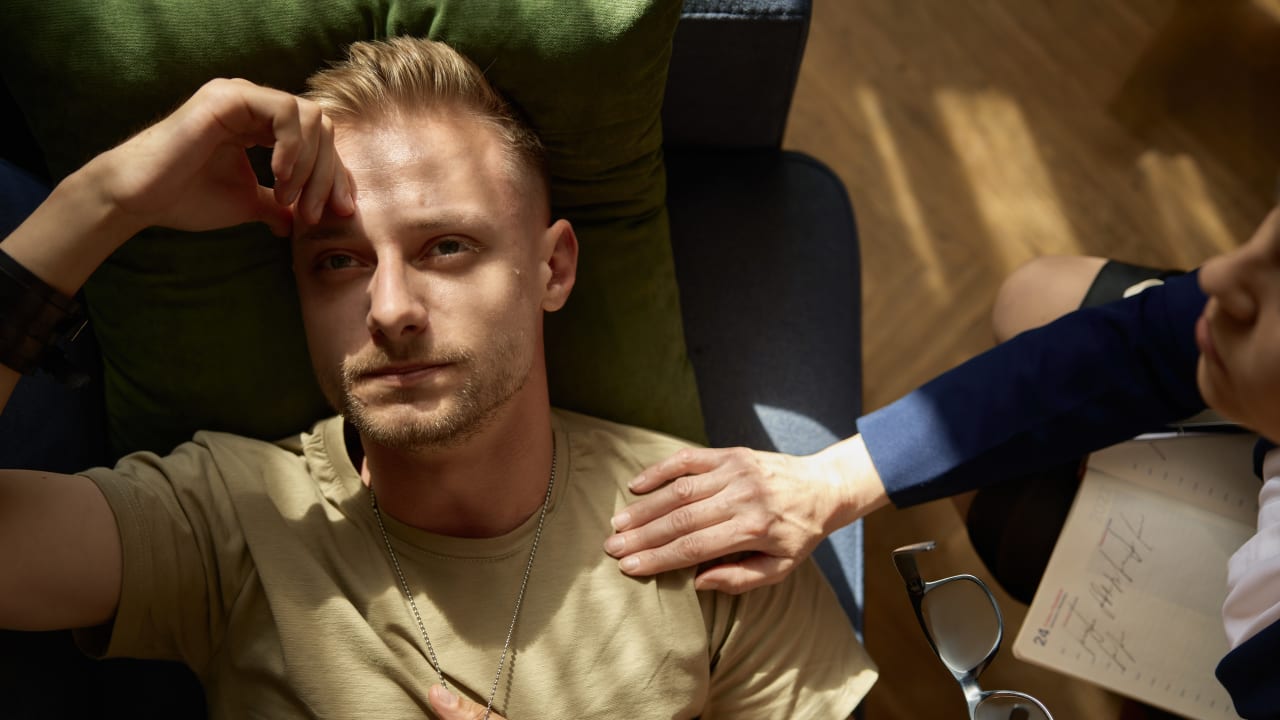
One of the greatest challenges in coping with post-trauma is its invisibility. Although the symptoms may be numerous and severe, they often go unnoticed by anyone but those closest to the individual. Yet for the person living with it, the injury is tangible – and profoundly disruptive.
When we think of post-trauma, most of us picture emotional distress: nightmares, anxiety, sadness, or constant hypervigilance. But post-trauma also has another face, less discussed yet requiring no less effort to overcome: the cognitive impact.
Learning and thinking processes are affected: memory weakens, attention scatters, emotional regulation falters, and the ability to plan or make decisions declines. Even simple daily tasks, such as organizing one’s schedule or waiting in line at the supermarket, can feel insurmountable.
Many describe a sense of “brain fog,” confusion, and an inability to complete ordinary tasks or focus for more than a few minutes. Some even speak of a loss of identity. This is not laziness or lack of motivation – it is a genuine functional impairment that can be rehabilitated.
Science today confirms what many patients have long felt in their own bodies. During a traumatic event, the amygdala – the brain’s emergency center – takes over, while the frontal lobe, responsible for planning, control, and rational thought, is pushed aside. When this state persists, the brain’s balanced functioning becomes compromised.

The result: a person lives in a state of “chronic emergency.” Every noise feels like a threat, and every task feels like a mountain to climb. Understanding that this could be a real cognitive impairment, not a weakness of will, brings immense relief – and, more importantly, hope.
Functional impairment, however, can be rehabilitated. At the heart of the approach developed at the Feuerstein Institute lies a belief, established by the late Prof. Reuven Feuerstein, an Israel Prize laureate, that human cognitive ability is modifiable. The brain is flexible and capable of forming new pathways through targeted cognitive intervention.
This intervention, known as Instrumental Enrichment, strengthens cognitive and metacognitive skills – helping individuals rebuild their capacity to think, learn, and act. Each rehabilitation plan at the Institute is tailor-made, centered around a clear goal: returning to work, studies, or to independent living.
The process always begins with a comprehensive assessment – identifying areas of strength and weakness. No two cases of post-trauma are the same: one person may struggle primarily with memory, another with emotional regulation, and a third with planning and organization.
Following the assessment, an individualized goal is set. This is not a slogan but a shared commitment between the patient and the professional team. Is the aim to rejoin the workforce? Resume academic studies? Rebuild family life? Every stage of therapy is directed toward that chosen goal.
Treatment itself involves cognitive training
Treatment itself involves cognitive training: learning to plan a daily schedule, breaking complex tasks into manageable steps, and practicing structured exercises to enhance memory and attention. It includes flexibility training – switching between tasks, adapting to changing situations, distinguishing between the essential and the peripheral, and organizing information clearly. Every exercise is not an abstract drill but a practical tool for life.
For rehabilitation to be truly effective, cognitive work does not occur in isolation. It is integrated within a broad therapeutic framework:
Occupational therapy helps translate cognitive tools into daily functioning.
Speech and language therapy supports the organization and expression of thought and helps the person overcome loneliness.
Group therapy allows individuals to re-engage in relationships and social settings.
And emotional therapy helps process trauma and its impact.
It is this integration that leads to real change – not just reduced anxiety, but a genuine ability to get up in the morning, act, connect, and gradually return to a fuller life.
Since the outbreak of the Israel-Hamas War, the number of people coping with post-trauma has been steadily rising. Many are young parents, professionals, and community members. If we address only the emotional dimension and neglect the cognitive one, we leave them stuck halfway on their road to recovery.
It is vital to understand that cognitive rehabilitation is not a luxury or an optional add-on. It is a central part of healing – restoring function, self-belief, and dignity.
Post-trauma may erase identity, but cognitive rehabilitation gives people the tools to reclaim control, meaning, and hope.
The writer is the director of rehabilitation centers at the Feuerstein Institute.