
On Aliyah Day, we are reminded of the moment God first called a Jew to leave everything familiar and build a new life in this land: “Lech lecha mei’artzecha – Go forth from your land, your birthplace, and your father’s home, to the land that I will show you.” (Genesis 12:1)
That command to Abraham began the heartbeat of the Jewish aliyah story. Every oleh (immigrant) who builds a life in Israel today continues that legacy. But aliyah is not only a Biblical mandate; it is a living force that strengthens Israel and the Jewish people as a whole.
Over the past two years of war and loss, that power has been especially visible in the hardest moments. When Israelis have been called to give more than they thought possible, olim have stood shoulder to shoulder with their fellow citizens – fighting in our army, opening their homes, volunteering in hospitals, and comforting families in grief.
Many built their lives here decades ago; others arrived only months before the war began, and more than 50,000 have chosen to make aliyah since October 7, 2023. Together, they are shaping the destiny of our nation and reaffirming an unshakable belief in the collective future of the Jewish people.
Soldiers, hostages, and heroes
From the earliest days of the war, the stories of olim have illuminated Israel’s darkest hours.
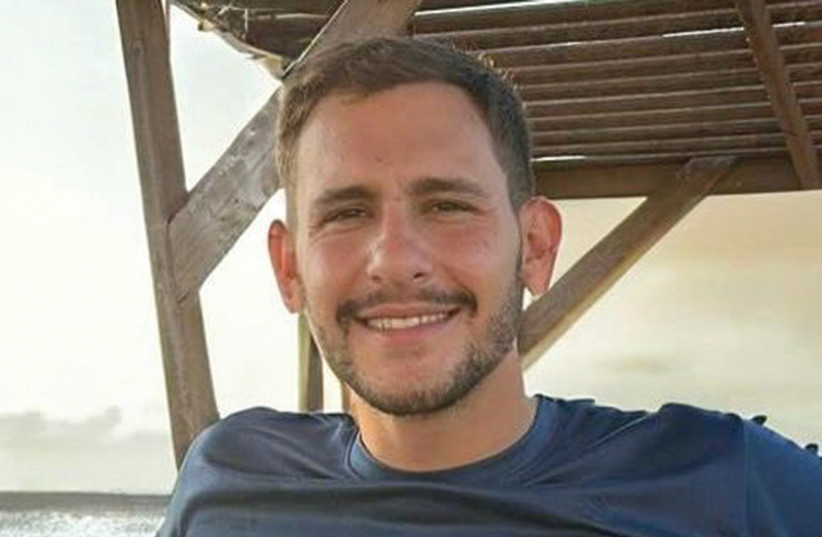
One of those heroes was Capt. Daniel Perez zt”l (of blessed memory), who moved to Israel from South Africa with his family in 2014.
At the time of the attack on October 7, Daniel was serving on the Nahal Oz Army Base as a company commander in the IDF’s 77th Battalion of the 7th Armored Brigade. When the onslaught began, he immediately ran to his tank and engaged the enemy, saving the lives of many fellow soldiers and civilians. Eventually, terrorists surrounded his tank, murdered Daniel, and took his body hostage.
When Hamas finally returned his remains for burial two years later, thousands of mourners gathered at Mount Herzl for his funeral. Daniel’s life and loss were felt by the entire nation.
The same spirit of giving can be seen in families like Rachel Goldberg-Polin and Jon Polin, who immigrated to Israel with their three children in the 2000s and encountered the unimaginable when their son, Hersh Goldberg-Polin, zt”l, was abducted from the Nova festival and murdered in Gaza after being held in captivity for 329 days.
In the face of unbearable pain, they transformed personal tragedy into a public mission, giving voice to the anguish and hope of an entire people. Through their advocacy and moral clarity, the Goldberg-Polins have reminded the world and their fellow Israelis what it means to hold onto faith, compassion, and unity even in the shadow of loss.
Another powerful example is Edan Alexander, a young American-Israeli soldier who was taken hostage on October 7 and held in Gaza for over a year and a half before his release. When he finally returned to his family in the United States, he was embraced by his hometown of Tenafly, New Jersey, which had prayed for his safety and wept with his family through every day of captivity.
Yet rather than retreat from the trauma he endured, Edan expressed his wish to return to Israel to rejoin his unit and continue serving in the IDF. His decision captured the heart of the country. It was an act that spoke louder than words – a testament to the unbreakable bond that so many olim feel with the land and people of Israel.
These stories are not exceptions. Thousands of olim continue to serve in reserve duty, while their spouses and children shoulder the strains with remarkable grace. Many lone soldiers, those who made aliyah without their parents, have served beyond what was required. They remind us that aliyah is not a chapter completed upon arrival; it is a lifelong covenant of partnership with the people and destiny of Israel.
Innovators and visionaries
The impact of olim extends far beyond the battlefield. Across Israel, graduates of gap-year and yeshiva programs are choosing to stay in Israel – continuing their studies, enrolling in universities, and weaving their own stories into the fabric of Israeli life. Within the network of Ohr Torah Stone programs, we see this commitment firsthand: Nearly one in five students who spend a year learning in Israel decide to make aliyah.
In response, new initiatives have emerged to help them build meaningful lives here. The Tzemach David Foundation, for example, has launched specialized university on-boarding programs that assist international students in integrating both academically and socially, helping ensure that their decision to stay becomes a lasting success.
Nefesh B’Nefesh recently opened a Jerusalem residence for olim women in Sherut Leumi (National Service) – a space that offers not just housing, but community and belonging. New hesder programs that combine Torah study with active military service have sprung up over the last few years to help accommodate lone soldiers.
However, the story of olim building Israel does not end with the young. Olim have shaped Israel at every level — in business, civic life, and in Torah. Israeli-American venture capitalist Michael Eisenberg, recently appointed as Prime Minister Benjamin Netanyahu’s representative to an international oversight body implementing the Israel-Hamas ceasefire, exemplifies how olim are now shaping Israel’s public life as well as its economy. Eisenberg has long been a leading voice for ethical entrepreneurship and civic responsibility.
Similarly, Jeffrey Swartz, founder of MAOZ, has worked to strengthen leadership across Israel’s government, health, and education sectors. The same pioneering energy has fueled Israel’s spiritual renaissance: Visionaries such as Rabbi Shlomo Riskin, Rebbetzin Chana Henkin, Rabbi Aharon Lichtenstein zt”l, Rabbi Chaim Brovender, and Rebbetzin Malke Bina – all olim – ignited the modern revolution in women’s Torah learning that continues to transform Jewish education worldwide.
Living covenant of hope
All of these stories capture the power of aliyah: Jews from around the world who choose to move their lives and loved ones to shape the Israel of tomorrow. As we mark Aliyah Day, may we recognize our olim not only as those who have joined us but as those who continually teach us what it means to choose Israel – to choose life, covenant, and destiny – again and again. For it is God who commands Abraham to travel to “the land that I will show you.” Yet how that land will look is totally up to us.
The writer, a rabbi, is president and rosh yeshiva of the Ohr Torah Stone network.