Sometimes complex issues are confusingly packaged to obscure simple truths. Two such truths struck me this past Shabbat in Jerusalem, when I visited my daughter’s family and attended the morning service at the Ramban Synagogue.
The first truth may sound controversial, but it is not. Whether they acknowledge it or not, all Jews, whatever nationality is stamped on their passports, are, by definition, Zionists. Not all Jews agree with the policies of the Israeli government; many Israelis themselves protest those same policies. A small minority of ultra-Orthodox Jews may even deny the legitimacy of the State of Israel as the beginning of the “flowering of our redemption.”
Yet no one who identifies as Jewish can deny that the Land of Israel has been – and remains – the focus of Jewish yearning and prayer throughout two millennia of dispersion, discrimination, and destruction.
The centrality of the Land of Israel is enshrined in the Bible, and the longing for Zion pulses through almost every prayer, no matter the language or denomination. Zion and Judaism are inseparable.

Zionism during the war
In many ways, this war has brought out the best in Jews everywhere. A vocal minority has protested actions in Gaza or distanced themselves from government policy, but they cannot erase the Zionism that lies at the heart of Jewish identity. Most Jews outside Israel have found ways to contribute: offering aid, raising funds, and standing up for Israel in increasingly hostile environments.
Here in Israel, I know of no one who hasn’t, in some way, put their shoulder to the national wheel. My own congregation in Netanya, made up mainly of aging Anglo retirees, has done its bit: volunteering on farms, raising funds, knitting balaclavas and fingerless mittens for our soldiers in winter, and tying tzitzit in summer.
In my daughter’s larger Jerusalem community, members have supported the families of serving soldiers – cooking meals, delivering comfort packages, and ensuring their children are “adopted” within the synagogue while their fathers risk everything on the front lines.
As we have watched this spirit of unity, we have all been unsettled by that other, darker constant that shadows Jewish history: antisemitism. That shape-shifting virus has always existed, reappearing in new guises throughout the centuries.
Zionism and Judaism
With the current ceasefire in place, many soldiers have thankfully returned home. At the Ramban service, the rabbi thanked them, and the community, for their devotion and support. Two young fathers, newly returned from the front, stood to speak and thank the community for its embrace of them and their families. It was deeply moving. Even more so was stepping into the sunlit courtyard afterward to find tables laden with kiddush delicacies, each one adorned with a framed photograph of a soldier: some with comrades, some reunited with loved ones, and one, to everyone’s amusement, with his dog.
That moment brought something home to me with great clarity. We must learn to distinguish among these three words: Judaism, Zionism, and antisemitism.
Judaism and Zionism are inseparable. Love of Zion, whether expressed through faith or culture, is the beating heart of Jewish identity.
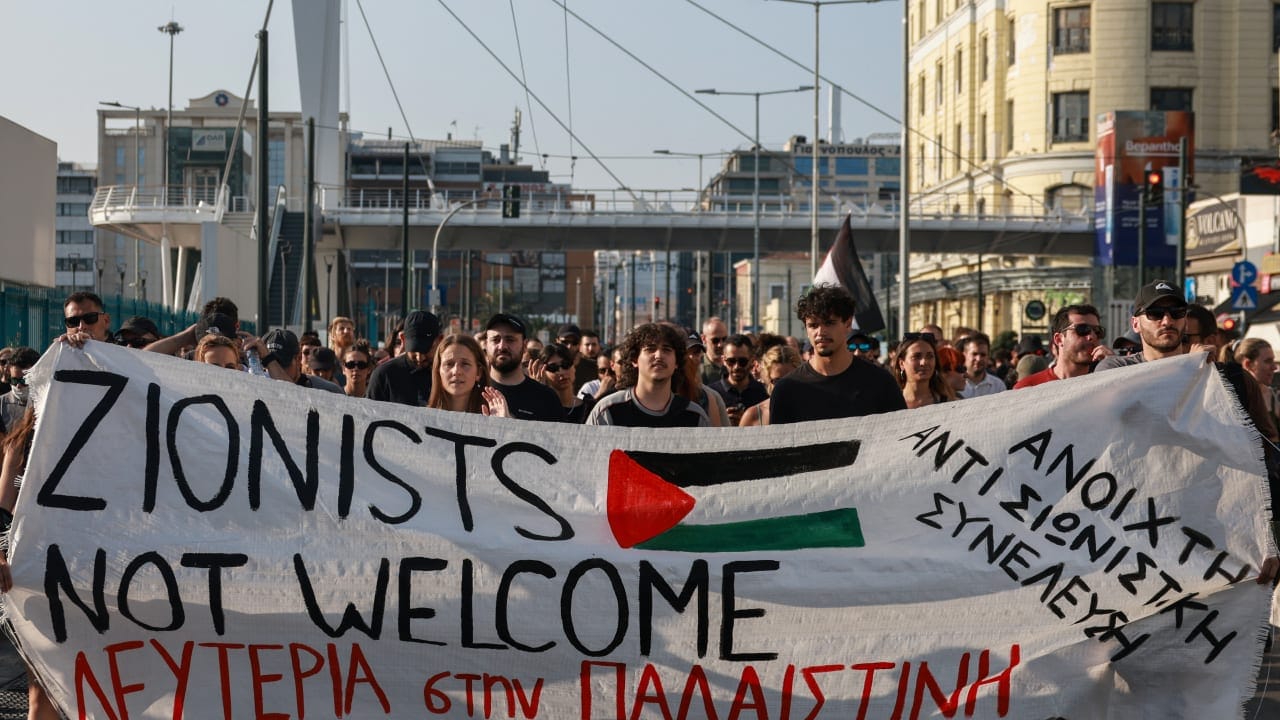
It is legitimate to protest Israeli government policies; democracy demands nothing less. Yet to vilify the very word Zionism, the word our enemies have chosen as the epitome of their hatred, is undeniably antisemitic.
We must sharpen our discourse, here and abroad, and insist on this distinction. Criticize policies if you wish, but when “Zionist” becomes a slur, make no mistake: That is antisemitism, plain and simple.
The writer is an educator, psychologist, and author of a bestselling historical novel, Good for a Single Journey. She made aliyah from London to Netanya in 2013.