
Despite the High Court’s unequivocal ruling that women, too, may sit for the complete set of rabbinical exams, the chief rabbis submitted a request last week for an additional hearing and for a stay on the ruling’s implementation. In their request, they propose that women be tested only on the laws of Shabbat and family purity.
This disregards the reality that the public, men and women alike, are already voting with their feet and turning to female halachic authorities for guidance on a wide range of questions across all the same areas of Jewish law studied by male rabbis.
It is important to emphasize: Women have been studying Halacha for many years, and they simply long for the chance to take official exams – just as men do, at the same level. They are not asking for leniencies, nor for rabbinical ordination or any specific title, only for the right to sit for an official State of Israel exam and receive formal recognition of their knowledge.
Providing halachic guidance in daily life
“Rabbanit, who should tear my shirt at the funeral? Am I allowed to shower before? What should I wear to the funeral?” Questions like these about mourning, and a wide range of other halachic issues, reach me constantly via WhatsApp. In moments of deep pain and upheaval, people have so many questions – and in addition to emotional support, families want to know what they are halachicly obligated to do before or after the funeral.
Since the war began, the questions have become even harder and more traumatic. I do my best to answer and to provide the questioner, male or female, with halachic guidance through these painful moments.
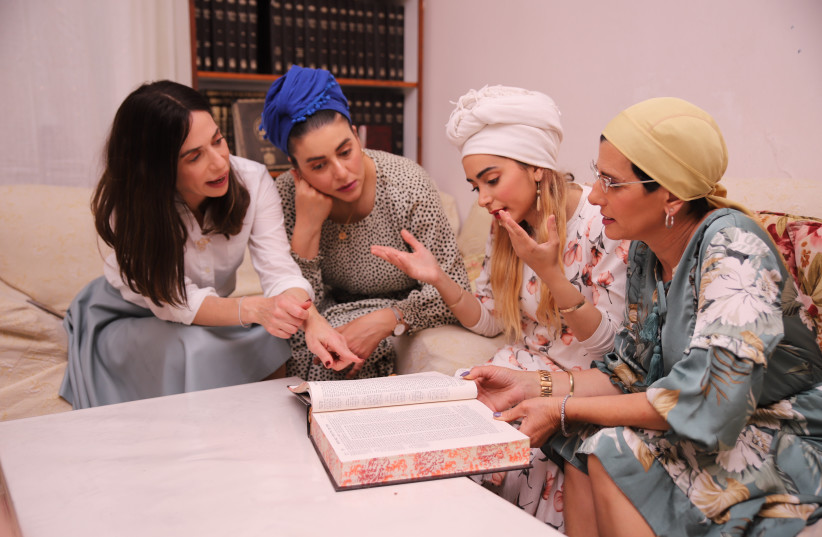
Having studied the laws of mourning as part of my halachic training at the Women’s Institute of Halakhic Leadership (WIHL), I regularly answer these questions and others, and have even assisted the chevra kadisha (burial society) in tearing my female relative’s shirt at a funeral, since she preferred that a woman do it rather than one of the men present.
Women like myself have already been studying and taking exams for years on a full range of topics – from the laws of mourning to family purity, kashrut, Shabbat, marriage, and blessings. This is not a new phenomenon; it is part of a decades-long reality in which women have devoted themselves to serious Torah study.
The significance of the exams
The Rabbinate exams carry significance beyond the religious and educational realms. A man who passes them gains access to professional and economic opportunities that are currently closed to women. This is because Torah scholarship of this kind is recognized as equivalent to an academic degree for purposes of seniority, rank, and pay, and it allows men to apply for official state positions.
Women, by contrast, are barred from taking the same exams that grant men these advantages. They are asking simply to be allowed to be tested so that their learning will hold equal value and so that they, too, can enjoy the same professional rights.
By tying recognition of Torah study to employment and salary benefits, the State of Israel has effectively left women out of the game. Supreme Court Justice Noam Sohlberg and his colleagues determined in their ruling, which the Rabbinate is now contesting, that the state cannot allow such blatant discrimination against women regarding the halachic exams.
In the request now submitted to the High Court, the chief rabbis argue that there are “differences between men and women,” and that while there is no obstacle to women studying, they may do so only in subjects related to “daily life,” such as Shabbat and niddah (family purity).
As the director of a kollel in which women study all the same halachic subjects included in the Rabbinate exams, I can attest that there are no areas of Halacha that are unrelated to daily life. As I mentioned, my colleagues and I are also asked about kashrut, mourning, and even questions related to marriage.
Halacha is a complete world. To truly serve God, women must be able to study all its areas, and to issue halachic rulings after years of rigorous study and testing.
The petition to the High Court did not request rabbinic ordination for women, nor any special title for those who take the exams. It simply sought to allow women to sit for the test – to assess their abilities.
Now that the exam has been postponed (pending resolution of the suit), men who prepared for it feel deep frustration. That frustration is shared by women, who have been studying Halacha for over 15 years without ever having been given the opportunity to be tested.
Open the locked doors, and let men and women alike prove their halachic knowledge on the very same exam.
The writer is director of the Susi Bradfield Women’s Institute of Halakhic Leadership, one of the Ohr Torah Stone network’s 32 educational programs.