A Knesset hearing on hospital violence this week underscored a broader emergency: Frontline medical teams are absorbing a surge of assaults linked to a national trauma crisis, while support systems lag behind right now.
At issue are not only guards and penalties, but the cumulative shock of a nation still living in survival mode.
At a joint session of the Knesset Labor, Welfare, and Health Committee and the Knesset National Security Committee, Health Care Campus staff described a mounting sense of siege in crowded emergency rooms.
The Haifa hospital’s head of security said ordinary people, driven by fear, sometimes turn aggressive as families push past triage to be with loved ones.
Dr. Irit Martik, the director of Rambam's emergency psychiatry unit, told lawmakers the outbursts were no longer isolated and are symptoms of collective stress. “People have changed,” she said. “They have been living in survival mode for too long, and it is changing how they react in moments of fear.”

Her warning about “a steady stream of threats, shoves, and shouted demands that delay care and fray thin nerves” echoed testimonies from nurses and social workers.
Officials acknowledge the trend. Health Minister Uriel Busso vowed to clamp down on attacks on medical teams, calling it a “worrying rise in violence,” and said the ministry would act “relentlessly to stop this intolerable reality.”
These are necessary deterrents, but they address the visible flash points, not the forces fueling them. Those forces are measurable.
Surge in calls to emotional support hotlines during Iran's June barrage
During Iran’s June barrage, the Health Ministry said emotional support hotlines had received more than 4,700 calls in a single weekend, a snapshot of fear that seeped from homes and schools into hospital corridors.
Combat stress amplifies the load. IDF data reported by The Jerusalem Post showed that more than 1,100 soldiers have already been discharged with post-traumatic stress disorder (PTSD) since the war began, even as the army expands mental-health services. That number does not include thousands more reservists and civilians who will not seek formal diagnoses, but whose daily functioning is frayed.
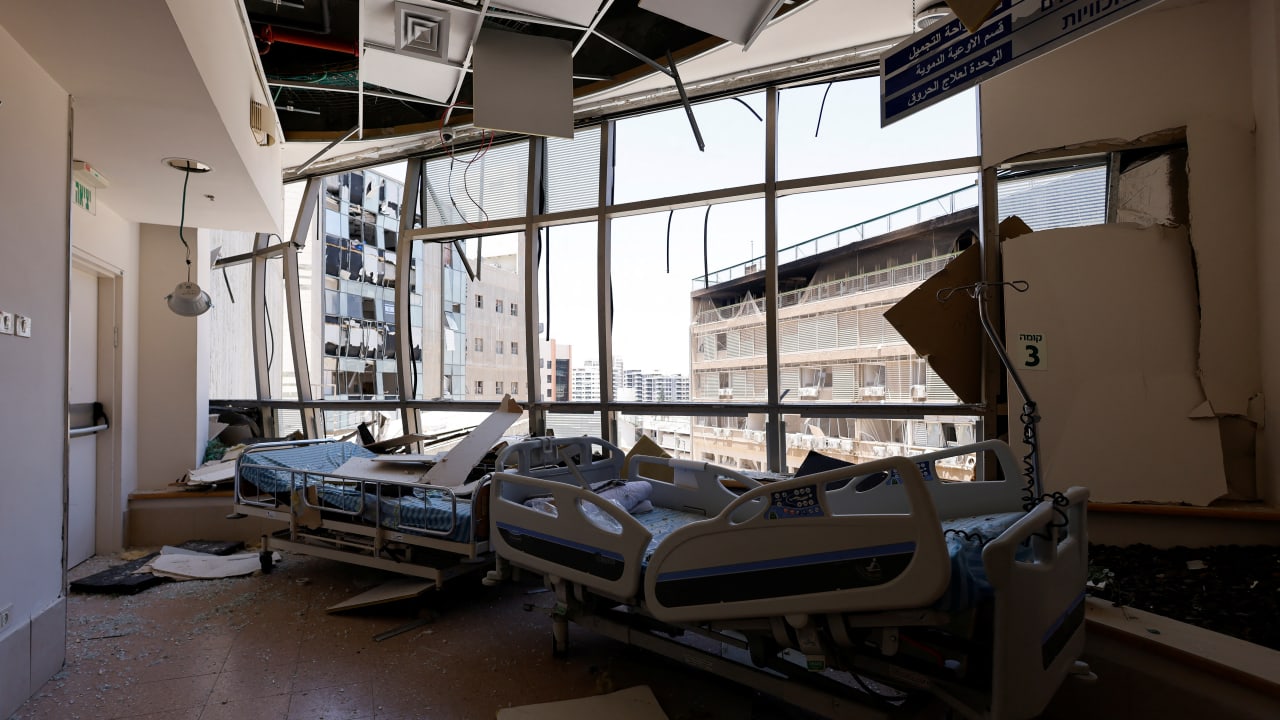
The hospitals themselves have been targeted. On June 19, an Iranian ballistic missile slammed into Soroka Medical Center in Beersheba, blowing through two floors of the surgical complex. Visiting the blast site, Prime Minister Benjamin Netanyahu said: “We strike nuclear targets. They strike hospitals.”
Busso told the Post the attack had marked “a significant event for the state.” If a hospital can be cratered at dawn, no emergency ward feels immune at midnight.
Treating this crisis as a security problem alone – with more guards, faster police response, and stricter penalties – will not be enough. Hospitals have become both first responders and national shock absorbers, catching the spillover of a mass trauma event.
A proactive plan must treat mental health like critical infrastructure, as essential as air defense or water supply. That means setting up walk-in trauma clinics in the North and South, integrating psychological first aid into emergency protocols, and funding ongoing counseling for staff exposed to secondary trauma.
Policy-makers should set measurable targets – such as reduced wait times for child therapy, guaranteed same-week intake for acute cases, and mandatory post-deployment screenings with referrals – and publish monthly dashboards so that the public can track progress.
Health funds and hospitals can pilot embedded crisis counselors in emergency departments to de-escalate tense moments before they turn violent, and to connect families with follow-up care. The Education Ministry should establish school-based resilience programs that teach regulation, routine, and peer support in every grade.
None of this is optional. As a Post editorial warned this summer, the psychological toll of this period can last for years. Pretending that resilience equals recovery is policy neglect by another name.
The doctors are telling us what the statistics already show: that the invisible war is escalating in plain sight. A country that knows how to mobilize for physical defense must now mobilize for mental health with the same urgency, clarity, and resources.
The lesson from Rambam’s testimony is simple: Prevention is cheaper than repair, and dignity at the bedside depends on safety in the corridor.
If leaders meet this moment with candor and investment, hospitals can return to being places of healing, not flash points of fear. If they hesitate, the next incident caught on a shaky phone video will not be an aberration; it will be the new normal, and the costs, human and economic, will only grow.