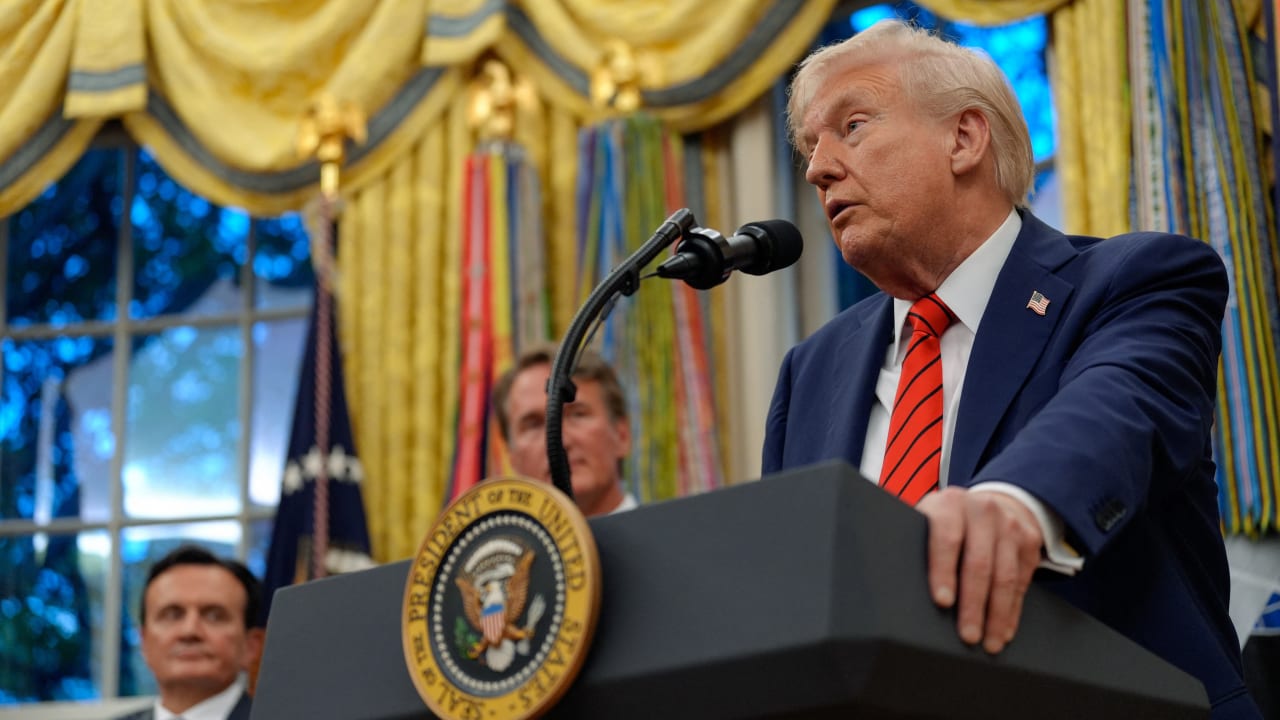
Within the first 48 hours of the Gaza ceasefire and hostage deal announcement last week, a public chorus emerged, urging a Nobel Peace Prize for US President Donald Trump.
Prime Minister Benjamin Netanyahu posted an AI image with a caption effectively calling to give Trump the award; Georgia Republican Rep. Buddy Carter publicly nominated Trump for his role in the deal; and major opinion pages argued, “Yes, Trump deserves the Nobel Peace Prize.”
These sentiments were echoed by policy voices making the same case, and international wires noted that “some world leaders” said that Trump deserved the prize, even as process watchers warned that the deal likely came too late for a 2025 consideration. Additional coverage recorded ongoing calls and framing around a “Trump Nobel” in live blogs, tabloids, and broadcast write-ups.
Now to the judgment. The Nobel Peace Prize has never been a mission-accomplished medal. It has rewarded direction, momentum, and promise long before peace was ever secured.
For example, in 1973, former US state secretary Henry Kissinger shared the Nobel Peace Prize for a Vietnam agreement that soon unraveled.

In 1994, a year after the Oslo Accords’ signing, then-prime minister Yitzhak Rabin, his foreign minister Shimon Peres, and former-PLO chief Yasser Arafat received the prize for initiating a peace process, rather than for completing one.
US president Barack Obama was honored in 2009 – less than a year into his presidency – for his commitment to strengthening international diplomacy.
Colombia’s president, Juan Manuel Santos, also won the award in 2016, just days after Colombians rejected his first FARC deal in a referendum – a conscious bet that recognition could help repair and complete the agreement.
In 2019, Ethiopia’s Prime Minister, Abiy Ahmed, was lauded for making peace with Eritrea, despite the risks that lay ahead. In each of these cases, the committee knew peace was not yet at hand. Nevertheless, it decided that encouragement was part of its mandate.
By that standard, this year’s Gaza deal checked the boxes that matter: Lives saved now, hostages returning now, and a mechanism for continued releases and restraint.
Let us name the hypocrisy
No one is claiming that this is the end of the war. Neither were Oslo, the early Obama moment, the Santos negotiation, or Abiy’s outreach the end of theirs. The difference is not the substance – it is that the committee chose to act as a clerk rather than a catalyst.
There were options. The committee could have reconvened and delayed the announcement to weigh the Gaza deal’s immediate effects. It could have reserved the prize and awarded it later in the year, a step used in other Nobel categories when facts demanded it.
Alternatively, the panel could have split the citation, recognizing both the previously selected laureate and the architects of the Gaza breakthrough, reflecting a year that produced two different kinds of courage.
It could have also appended an extraordinary commendation, making clear that the ceasefire and hostage framework would be treated as part of this year’s achievement. The only option it should not have chosen was the one it did. Pretend nothing seismic had happened while pointing to its filing deadline.
This is a plea for consistency. If the committee believes, as it plainly has, that the prize can shape events, then 2025 was the time to shape events in the Middle East by recognizing the deal that turned funerals into homecomings.
If the committee believes an unfinished peace process has still created a bridge toward peace, then it should have said so when it mattered most. Moreover, if the committee believes rules are sacred, it should explain why those rules were elastic for Oslo and Obama but suddenly made of stone when the situation regarding Gaza took a sharp turn.
One more point of context, and it matters for the record: No modern leader has lobbied as aggressively and as publicly for a Nobel as Trump.
For years, he has said outright that he deserves it; his rallies have turned the prize into a refrain; his allies have filed formal nominations, and this week, he drew explicit endorsements from foreign leaders, lawmakers, columnists, and cable news surrogates. There is nothing inherently wrong with campaigning for recognition.
What happened now, in this regard, was that the committee’s paradox was exposed. It treats the Nobel Peace Prize as an award that exists to encourage peace, yet in the context of the Gaza deal, the one figure visibly marshaling political capital to lock in a fragile ceasefire is being asked to wait for the calendar – instead of being handed the award outright for the progress made toward peace.
Here is the simple editorial judgment. The Nobel’s precedent for aspirational awards is real. The scale of the Gaza breakthrough is real. The committee’s discretion is real. The excuse is the only thing that feels unreal.
Trump’s role in pushing this agreement across the finish line should have been recognized in 2025, not penciled into a future calendar.
The point of the Nobel Peace Prize is not to admire peace after the fact – it is to reward and reinforce the choices that make peace possible. This year, the committee chose process over people. It should have chosen peace.