
The sexual violence of October 7, 2023, was more than an assault on individuals – it was an act of terror aimed at an entire society. Israel must invest in long-term mental health recovery and recognize that even those who remain silent still need help.
Two years have passed since then, and Israeli society is still grappling with unfathomable trauma resulting from the cruelty and barbarity revealed in the days and weeks following the massacre, which continues to surface even now.
The events of October 7 shook Israel to its very core, undermined our most basic sense of security, and left behind a deep rupture – personal and national. This trauma will not fade; it will shape Israel’s collective memory and identity for decades to come.
For the first time in its history, Israel confronted the systematic use of sexual violence as a weapon of war – designed to sow terror, humiliation, and dehumanization. The calculated sadism inflicted on women and men, soldiers and civilians, young and old, entire communities – was unprecedented. These were not isolated acts of brutality; sexual violence was an intentional component of the enemy’s strategy.
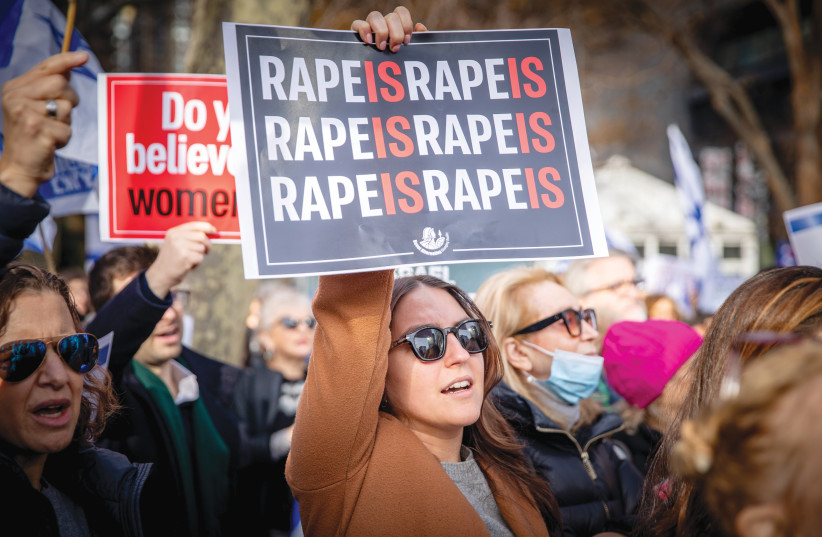
Addressing sexual assault
Addressing the sexual violence – whether during the massacre or while being held in Hamas captivity – is a profoundly painful and complex task. It is an assault on body, soul, and identity. And, beyond the personal, it also carries a national and moral imperative: to confront the truth and to ensure global recognition of what truly happened.
Still, above all else, this is about the survivors. Their privacy, wishes, and needs must come before any other priority – including advocacy, legal justice, or political interests.
Since the massacre, state institutions, academia, civil society, and independent researchers have begun to document and study the sexual violence of October 7.
Dangerous misconception
However, some within Israeli society still hold the misguided belief that sexual assault perpetrated by the enemy is somehow more severe or “defiling” than other forms of sexual violence. This is a dangerous misconception. There can be no hierarchy of pain. All acts of sexual assault are absolute and devastating violations of human dignity and must be met with equal compassion, sensitivity, and care.
From our work at the Association of Rape Crisis Centers in Israel, we know how harmful it is to create hierarchies of harm.
Survivors who were not assaulted in a nationalistic context may feel invisible or devalued amid the intense – and justified – focus on the sexual violence of the massacre. These survivors, too, need recognition and reassurance that their voices matter and will not be lost.
Even two years later, new details continue to emerge about the experiences of hostages in captivity and the sexual assaults endured by the survivors of the Nova music festival.
The psychological toll is immense, and recovery will require years of sustained effort. Mental health experts describe this as one of the most severe psycho-social crises in Israel’s history.
Long-term healing
Healing will require long-term therapy, trauma-informed care, and strong community support.
The massacre and its accompanying sexual violence shattered Israeli society and reawakened trauma, even among survivors of past assaults. Recognizing this reality demands a national, well-funded plan – one that invests in professional treatment and long-term psychological rehabilitation for direct victims, their families, witnesses, rescue personnel, and survivors of previous trauma alike.
The road to recovery will be long and arduous. It will require patience, empathy, and deep respect for personal boundaries. The state must allocate substantial budgets for long-term psychological rehabilitation. Even those who have not yet spoken – who could not, or dared not, share what they endured – need help and will continue to need it for years to come.
As a society, it is our moral duty to ensure that every person who suffered or witnessed the atrocities can heal in their own way and at their own pace, with the full support they deserve. Only through such an approach can we truly recover – and rebuild a society that moves forward without denying the enormity of what was lost.
The writer is CEO of the Association of Rape Crisis Centers in Israel (ARCCI).