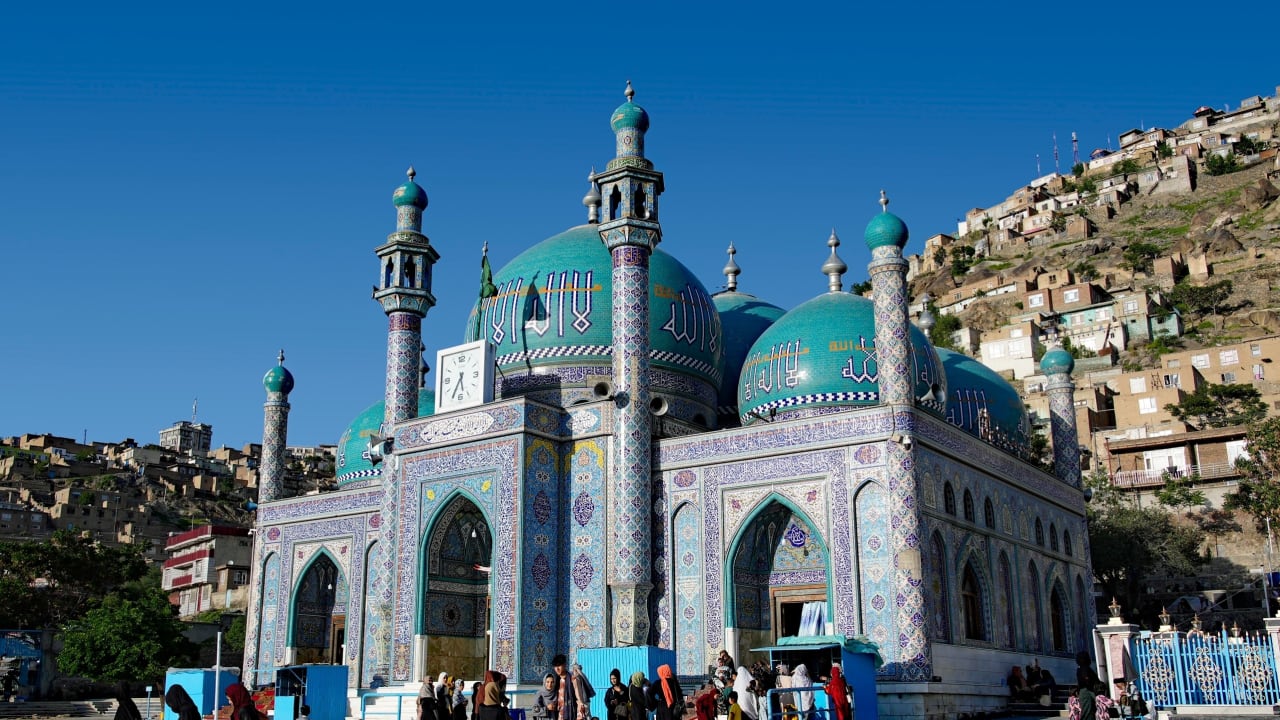
The latest news out of the Afghanistan universities is that books written by women are banned from the curriculum.
More than 600 books that had women authors have been removed so far, with the hunt on for others. According to the directive of the Taliban’s deputy higher education minister, the books are in conflict with principles of Sharia (Islamic law).
In addition, 18 courses dealing with women’s studies, or any human rights, need to be dropped. Two hundred other courses are reportedly under review.
Afghan universities are all-male, of course. Afghanistan is the only country in the world that prohibits girls and women from getting general education at secondary and higher levels, let alone attending university.
These rules came into effect soon after the Taliban took back the country following the American withdrawal four years ago.
It’s understandable if you’ve missed this development in Afghanistan news. We have so much news of our own, I might have missed the Afghanistan news, too, if I hadn’t recently met my first-ever Taliban supporters.
A trip to Dubai
At the beginning of September, I realized that I was missing just a few of the 15,000 “diamonds” I needed to maintain my Platinum status in El Al’s frequent-flier program. With holidays and several significant family events in Israel in September, fulfilling the requirements didn’t seem possible.

Then I impulsively booked a two-day El Al round trip to Dubai to pull me over the diamond line. My husband insisted on coming, too. How could he let his wife visit the United Arab Emirates by herself?
The morning of our departure followed the evening of the Israeli attack on Qatar, so we assumed that our flight would be canceled. It wasn’t. The barman in the Dubai airport lounge kept refilling my glass with liquor. Had he overheard me say that this particular liquor was the Rebbe’s preferred drink?
I’d found a reservation for a five-star hotel on booking.com for two nights at the price of taking our grandkids to a Jerusalem grill restaurant. What really sold me was also that it included breakfast and, according to the advertisement, the hotel is sensitive to the needs of both halal and kashrut – something I’d never seen advertised by a hotel that isn’t certified kosher. So I packed two small eat-in frying pans, and we arrived at the Central Canal Hotel, which abuts a 3.2-kilometer, human-made, water canal inaugurated only in 2016. Dubai’s ubiquitous skyscrapers already line the canal.
We appreciated the warm welcome in Dubai, unfathomable before the Abraham Accords. But more than the height of the Burj Khalifa or breadth of the giant Dubai Mall, the mix of people was riveting. We shared a taxi with a young pharmaceutical rep who’d flown in from Tehran. I did my early-morning swim with a woman in a burkini from England. The Pakistani driver said his English was so good because, after 18 years alone in Dubai, he’d decided to pass the safari guide course to earn enough money to bring his wife and children to live in Dubai. The maître d’ in the breakfast room asked us if we needed disposable cutlery (we’d brought our own) and brought a fresh spatula for cooking our eggs on our frying pans.
Ninety-two percent of the residents of Dubai are foreign workers, most from India or other countries in South Asia like Pakistan and Bangladesh. When the Taliban took over Kabul in August 2021, the UAE hosted many fleeing Afghans on their way to a third country. There are also billionaires, former Afghans, now investors in Dubai’s booming real estate development.
The maître d’ at the hotel recommended that we use our short time to visit Old Dubai, where residents lived before the boom, when Dubai was known for pearl fishing. A coffee museum there offered tastings, but when we got there it was closed for renovations, like a few other sites in this low tourist season. We chanced upon a small souk, an outdoor market in the Al-Seef neighborhood. We went into the first shop, called Sky Cashmere Textiles. There were traditional dresses and elaborately embroidered bags from Pakistan for sale.
Meeting a Taliban supporter
As my husband and I were browsing and discussing possible purchases, the young merchant, who assumed we were American, asked who is boss in our country – the husband or the wife. We explained that we are co-bosses married for 50 years. He boasted that in his country, the man is always the boss. What country is that? I asked. Afghanistan, he told me proudly. Still single, he is looking forward to the time when he has enough money to return and can boss his wife, maybe even two wives.
“What will happen if your wife is smarter than you are?” I asked. He didn’t understand the question.
Thinking naively that Afghans living in Dubai would be either refugees from the Taliban or those have wised up to be working in Dubai, where women have free education and outnumber men in universities, I asked him what he thinks of the Taliban.
Wonderful, he said, beaming. The best. Doing wonderful things.
And what if when you marry and one of your wives has a daughter? Imagine that she wouldn’t have more than a sixth-grade education. “A problem,” he admitted, but one that will be solved.
When we left his stop, having bought Pakistani-made pastel embroidered pencil cases for our granddaughters, we visited numerous other shops, selling colored camel-hair shawls, exotic spices and perfumes, and “Dubai chocolate.” Wherever we went, the story was the same. The men were all Taliban supporters. One very articulate salesman admitted there was a problem with girls’ education, but then shrugged it off. It would soon be taken care of by the benevolent rulers.
Not according to a UN study published in August 2025. Some 30% of girls never even start the permissible six years of elementary school in the country of 47 million people. The literacy rate for women is 23%, compared to 96% in Israel. In some provinces, women are prohibited from going to male doctors, but women are prohibited from studying medicine or midwifery. Figure that one out.
With the new book ban, male students will be further shielded from women’s thinking. Geneticists won’t be reading Barbara McClintock, the American scientist and cytogeneticist who discovered transposons, or “jumping genes.” Historians won’t be reading Barbara Tuchman. Anthropologists won’t know about Jane Goodall’s chimps or Rachel Carson’s silent springs, not to mention Maria Montessori’s ideas about education. The novels of Jane Austin, Harriet Beecher Stowe, even Agatha Christie are in the burn pile if they’d somehow slipped into the libraries.
This is the world for which these young Afghan men in this diaspora are full of praise. They’re all sons and brothers and potential fathers wishing this restrictive life on their loved ones.
Meanwhile in Israel
Despite two years of heartbreaking war, Israel is still in the top 10 at No. 8 on the World Happiness Index; Afghanistan is No. 147 out of 147 countries.
One of the Happiness Report findings is that “those who share more meals with others report significantly higher levels of life satisfaction and positive affect, and lower levels of negative affect.” Please tell that to the next person who complains that there’s too much eating in our holiday season.
May the happiness of Sukkot, “the season of our rejoicing,” carry us through the year. May the hostages return to sit in their own sukkot. Chag sameach!
The writer is the Israel director of public relations at Hadassah, the Women’s Zionist Organization of America. Her latest book is A Daughter of Many Mothers.