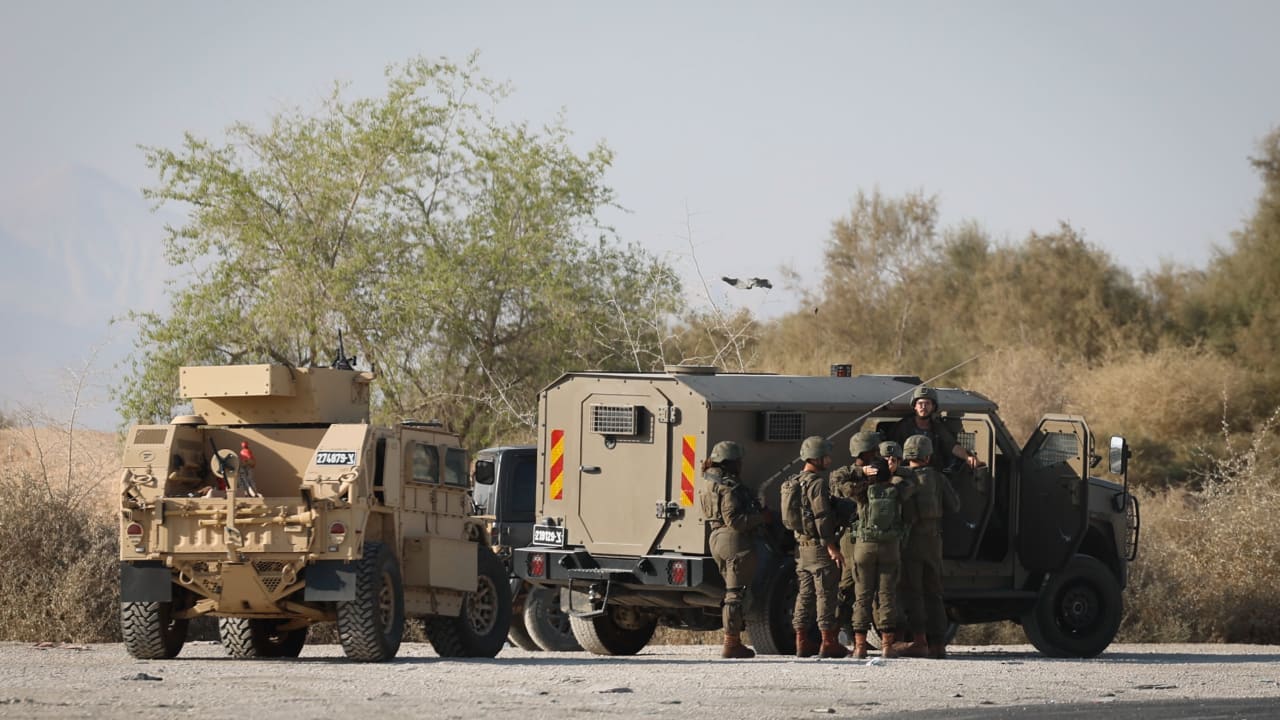
The deadly attack on Thursday at the Allenby Crossing; the symbolic gateway of peace between Jordan and Israel, was not an unforeseeable tragedy. It had long been inscribed on the walls of the Hashemite palace, the culmination of years of rhetoric, policy, and public agitation that made such violence almost inevitable.
Since the outbreak of the Gaza war in October 2023, Jordan has simmered like a cauldron, threatening to boil over at any moment. The streets, fueled by a restless population with strong Palestinian roots, have erupted again and again in protest.
Most demonstrations have been contained by the regime’s restrictions and heavy hand, but the underlying anger has never dissipated. Inside parliament, voices have grown sharper, issuing accusations against Israel and casting it as the singular cause of Gaza’s suffering.
This is not a post–October 7 phenomenon. For years, Jordanian schools have used textbooks laced with anti-Israeli, and at times antisemitic, content. In the halls of parliament, daily legitimacy has been extended to acts of terror. The monarchy itself has hardly been a moderating voice.
King Abdullah has delivered fiery speeches denouncing Israel, while Queen Rania has become an outspoken critic, condemning Israel and chastising the international community for its silence.

Words opened the door for violent action
Sympathetic commentators in Israel have often argued that these royal statements were tactical, a way to placate an angry street rather than reveal the monarchy’s true positions. But words matter. And in this case, words validated public fury, hardened the discourse, and opened the door for violent action.
Years of unchecked protests, radical rhetoric in the media and parliament, and hostile messaging in the education system laid the fertile ground on which the Allenby attack was sown.
Now the Hashemite throne finds itself balancing on a perilous tightrope. It cannot survive without stable ties to Israel and the West, which provide Jordan with vital economic and security lifelines. Yet it cannot ignore the seething anger of its people, lest that anger be redirected toward the palace itself.
The Middle East has taught a cruel lesson: empowering extremism is never a temporary fix. It does not pacify; it devours. By legitimizing radical voices in order to shield itself, the monarchy may have only hastened the day when those same forces turn against it.
The rage now directed at Israel could, sooner than many in Amman are willing to admit, target the Hashemite palace. If that day comes, it will not only be border crossings under threat, but the stability of the kingdom itself.
Lt. Colonel (res) Yaron Buskila. CEO of the Israel Defense & Security Forum (IDSF)