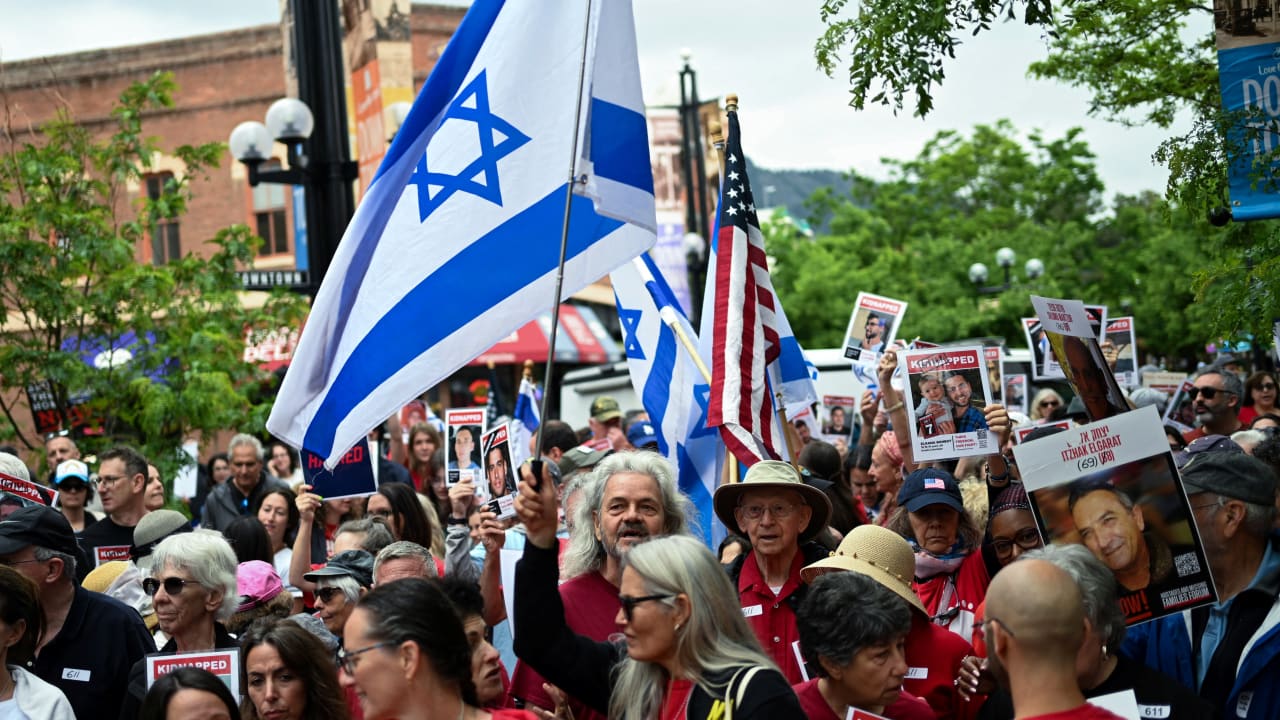
After October 8, the atmosphere in American life shifted in ways that were easy to feel and hard to name. The first shock was the massacre itself, and the hours of video and testimony that followed. The second shock arrived almost immediately after, a moral realignment inside institutions that pride themselves on conscience. Elite campuses filled with chants and encampments.
Carefully crafted statements from cultural leaders managed to mourn in passive voice, as if the dead had selected themselves. Editors, trustees, foundation officers, and student deans all began to speak the language of balance. Balance, in those weeks, often meant that the worst hate crime against Jews since the Holocaust could be treated as one more data point in a debate over power.
A group of Israeli and American analysts, writing in a research brief called the “Atchalta Playbook,” put a name to the moment. They argued that American Jewish leaders had fallen into an “October 8 concepzia,” a conceptual blind spot that misread the room. The central claim of the report is dramatic. The arena of contest had moved, they wrote, from rockets and tunnels to rhetoric and norms, from the battlefield to the language that rules classrooms, newsrooms, and boardrooms.
“Our adversaries’ core strategy,” the authors contend, “has shifted to weaponizing language,” a turn that makes certain words do double duty. Terms that once signaled universal ideals could be repurposed to launder animus toward Jews, while still offering their users the protection of humanitarian intent. You could denounce Zionism, chant the abolition of the world’s only Jewish state, and insist, with absolute sincerity, that you had nothing against Jews. The move was not new, but after October 7, it was everywhere.
Atchalta is a nonpartisan Zionist initiative that turns strategy into action to strengthen Israel’s and the Jewish world’s resilience, security, and social cohesion. The initiative is headed by Eran Shayshon, formerly the head of the Reut Institute.

If this sounds theoretical, the case studies are concrete. In late October 2023, at New York’s Cooper Union, Jewish students took refuge inside a library as protesters beat on the doors and windows. The image lingers because it reverses the story the academy tells about itself. Libraries are supposed to open. Students are supposed to feel safe inside them.
The following winter, a federal judge allowed those students’ civil rights suit to proceed, a quiet acknowledgment that administrators who speak fluently about inclusion sometimes struggle to extend that fluency to Jews. At Cornell, a young man was sent to federal prison for threatening a massacre at a kosher dining hall, a reminder that the online fantasy of violence can have an offline cost.
The existing data aligns with this theory: The Anti-Defamation League (ADL) counted the highest number of antisemitic incidents in its history in 2023 and again in 2024, with a majority of the recent spike explicitly linked to Israel or Zionism. This is the part of the conversation that many decent people still find uncomfortable. They want the line between criticizing a government and hating a people to be thick and bright. It should be. In practice, as The Washington Post documented last year, the line has blurred. Threats, assaults, vandalism, menacing speech, many of them cite the war in Gaza as justification.
A slogan that imagines a land from the river to the sea without the Jewish state is not a neutral placeholder. It is a program for the disappearance of the world’s largest Jewish community outside the United States. That is the substantive content of an eliminationist chant, even when the chant is carried by people who claim they are only arguing with a policy.
The story is not only about campuses. It is about how influence works. The research brief points to what it calls a red-green alliance, a partnership of convenience between radical Left movements and Islamist currents that define liberation in theological, not liberal, terms.
This alliance has been researched and written about extensively in recent years. The alliance has flourished in a culture of attention where statements made in the first hour, no matter how thin the evidence, can outpace forensic corrections that arrive the next day.
Israel should treat narrative front as a national security theater
The Atchalta authors have a state’s eye view of this. They argue that Israel should treat the narrative front as a national security theater and build the machinery to match. Their prescription, in outline, is to establish a central node within government that coordinates intelligence, law, diplomacy, and technology, and to utilize it to empower civil society.
Get sanitized intelligence quickly to editors, mayors, and platform executives when a rumor looks likely to dominate. Share structured evidence with allies overseas so that a minister or a university president is not left relying on whatever went viral overnight.
It is fair to ask a quieter question, one that does not require a new ministry or a new doctrine. What should the rest of us, the people who move words for a living, do differently now? The first answer is also the least clever. Name antisemitism when it appears, including when it arrives in activist style.
A standard that says calls for genocide are unacceptable in the abstract but negotiable when the target is Jewish is not a standard; it is a warning label. The second answer is institutional, not theatrical. Most of the change will not come from viral clips or campus showdowns; it will come from governance. University boards that adopt clear speech codes and enforce them neutrally.
Deans who learn to distinguish between protest and harassment and act in real time when the line is crossed. Donors who tie philanthropy to transparent benchmarks on safety and classroom neutrality and who praise public courage as loudly as they condemn public cowardice.
There is also an unglamorous job for people in media and tech. Newsrooms need a muscle memory for crisis claims. Editors, particularly those who covered election disinformation, already know this. The first version of a dramatic story is often wrong.
The more extreme the image, the more likely it has been edited or generated. When the subject is Israel, the cost of getting it wrong is not only reputational. In the fall of 2023, a handful of headlines helped set streets on fire. Platforms, for their part, should enforce the rules they publish. A space that automatically recommends violent content about Jews, whether through an algorithmic glitch or indifference, is not a neutral space. It is a machine that turns someone else’s propaganda into our neighbors’ anger. The civic point here is not to suppress arguments about the war. It is to protect the freedom to argue by damping the accelerants that turn argument into menace.
None of this requires gentling the political reality in Israel and Palestine or shrinking the circle of empathy for Palestinians. It requires holding two ideas at once, a skill our readers have practiced. Israeli policy is fair game for fierce criticism, and always has been. The safety of Jews, at home and abroad, is not. You can insist on a different course in Gaza and also insist that a Jewish freshman at a Midwestern university should be able to walk across a quad without choosing between her safety and her identity.
In fact, to reach any workable political horizon in the Middle East, you probably need both instincts alive at once, the demand for limits on state violence and the refusal to excuse violence against civilians because it arrives draped in the language of resistance.
The other half of the October 8 argument concerns Jewish life itself. For years, many American Jewish institutions cultivated a minority reflex. This made sense in an era when the main threats felt external and when legitimacy required a posture of soft-spoken gratitude. The past two years have shown the limits of that posture. A community that believes it is alone will behave defensively, and online adversaries thrive on that defensive crouch.
The research brief urges leaders to act like a majority, to project confidence rather than apology, and to rebuild the patient infrastructure of civic influence, the kind of daily relationship work that made earlier generations of community relations councils effective. It is hard to argue with that. If the ideological weather of the day tells young Jews that they are conditionally welcome in progressive spaces, welcome provided they disclaim the core of their collective story, then communal leaders should meet that condition with a cheerful refusal. This means insisting on joining coalitions based on their characteristics.
To make that insistence stick, there is a final piece, perhaps the most delicate one. The alliance that has produced so much rage since October 7 depends on a contradiction. It asks liberals to march alongside movements that are illiberal in substance, particularly on the status of women, LGBTQ people, and religious dissenters. Some on the Left feel this contradiction and do not know what to do with it.
The answer is not to jeer them or to deny their solidarity with Palestinian civilians. It is to invite them into a harder honesty about who their loudest partners have become. This is what the Atchalta authors call driving a wedge, though there is a less tactical way to say it. Make visible the distance between progressive ideals and the theology of the men who run Hamas. Show that distance in the lives of Palestinians, too. If you want a politics of human dignity, you cannot build it on a doctrine that rejects human pluralism. People who sense that tension will not all change their minds about Israel. Some will simply step back from the brink. That step matters.
The Atchalta brief offers one sentence worth keeping at hand. Be as shrewd as your opponents, the authors write, without compromising your values. That is not the end of the argument. It is a way to begin again, after a season when so many people, including those who thought they knew the room, discovered that it had changed while they were looking elsewhere.