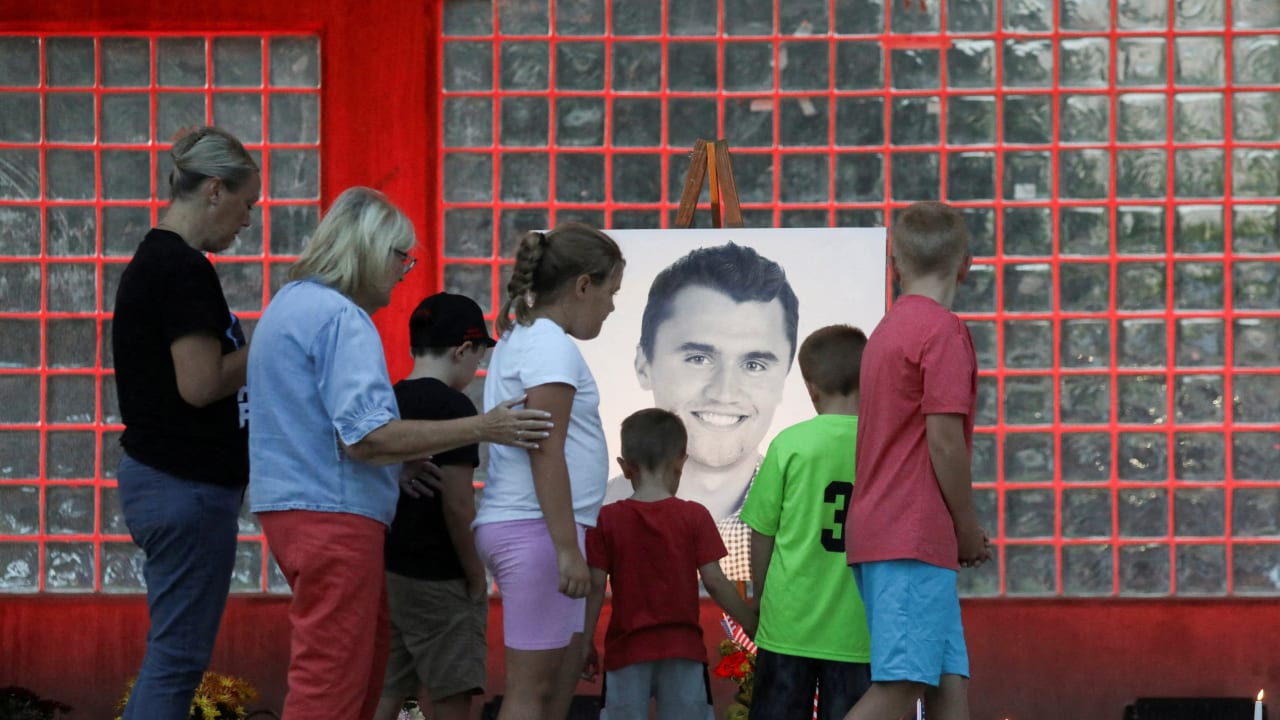
I grew up believing America’s greatest strength was its diversity and ability to debate without destruction. From the founding generation onward, our democracy thrived on fierce disagreement managed within a framework of mutual respect. Yet today, that ideal feels endangered.
As a young Jewish conservative active in politics from Washington, DC, to my current home in South Florida, I see firsthand how polarization has hardened into hostility. Too often, disagreement is met not with arguments but with intimidation. Too often, those who speak out are met with harassment or worse. This climate silences ordinary citizens, not just public figures, and threatens the very fabric of our democracy.
My involvement in the conservative movement began early. In both DC and Florida, I work with young Jewish leaders in organizing events, going to conferences, and being involved in the community. Across both places, one lesson is very clear: being young, Jewish, and conservative requires resilience and grit.
That resilience is something that was reiterated during events sponsored by Turning Point USA, an organization that gave my generation the confidence to speak up.
Building a movement
I started attending Turning Point events and conferences about five to six years ago, and over that time, I had the privilege of meeting Charlie Kirk multiple times.

What stood out to me was not just his stage presence, but how down-to-earth he was. Charlie was always willing to listen – always making time to hear as many people as he could. He wanted open dialogue, even with those who disagreed, because he believed truth was strongest when tested.
Turning Point USA was more than a campus club; it was – and is – a movement. What started small grew into thousands of chapters nationwide. Conferences, such as the Student Action Summit, drew young people from across the country. For Jewish conservatives, myself included, these gatherings were especially important: places where we could proudly assert both our faith and our political convictions without apology.
Charlie’s legacy is clear. He embodied the next generation of leadership, one that understands how to connect with young people in ways that resonate. He gave students who felt silenced a community where they could stand tall. He always spoke the truth, even when it was unpopular, and he was consistently pro-Israel, especially in the wake of October 7. That mattered deeply to Jewish conservatives who. like me, often feel that our support for Israel is tested or questioned in political spaces.
Across campuses and communities, Charlie helped create a network of students who no longer felt alone in their beliefs. His authenticity – his willingness to be both bold and approachable – built a movement that will outlast him.
Lessons from Jewish history
As a Jew, I carry an acute awareness of what happens when rhetoric escalates unchecked. History is littered with examples of scapegoating that began with words and ended in violence. The Jewish community knows the dangers of polarization better than most.
That perspective shapes how I view today’s climate. It is one thing to battle fiercely over policy; it is another to treat opponents as enemies. Once political disagreements cross that line, democracy weakens. In Jewish tradition, words are sacred – they can build or they can destroy. We must use them responsibly.
The dangers of hostility
We don’t have to look far for reminders. Congresswoman Gabby Giffords survived an assassination attempt in 2011. Congressman Steve Scalise nearly lost his life in 2017 when a gunman opened fire at a congressional baseball practice. Most notable and spoken about were the two assassination attempts against US President Donald Trump. Beyond elected officials, ordinary Americans increasingly face harassment online and in person simply for expressing their beliefs – especially if you are Jewish, conservative, and pro-Israel.
A democracy cannot function if citizens are afraid to speak. The essence of America is that ideas, not violence, determine outcomes. When intimidation replaces dialogue, freedom is eroded for everyone.
Charlie understood this. He wanted young conservatives to engage – boldly but peacefully. He believed that open dialogue was the antidote to division, and he modeled that in his own interactions. His example challenged us to be confident in our convictions without losing sight of our common humanity.
A call to action
This is where conservatives – and all Americans – must recommit to higher standards. Politics should not be a blood sport. It should be a contest of ideas, fought vigorously but peacefully.
For young conservatives, that means carrying forward the best of what Charlie modeled: unapologetic conviction paired with a commitment to persuasion. For progressives, it means engaging conservatives as fellow citizens rather than adversaries. For everyone, it means remembering that disagreement is not a threat to democracy – it is democracy.
I’ve spent years in both DC and Florida organizing, advocating, and building networks of young Jewish conservatives. What I’ve learned is simple: community makes courage possible. None of us can stand alone, but together we can model what politics ought to look like: spirited and principled but civil.
America’s future depends on whether we rediscover the art of civil discourse. That requires rejecting intimidation and recommitting to respectful debate. It requires remembering that our opponents are not our enemies. And it requires the next generation – my generation – to prove that democracy is still worth fighting for.
Charlie Kirk reminded us that voices matter, that courage is contagious, and that the future belongs to those willing to speak up. His example challenges us to do the same – not with anger or hostility, but with conviction, confidence, and respect.
The challenges are real. But so is the promise of America. If we can meet this moment with clarity and courage, our democracy will not just survive – it will thrive.
As a young Jewish conservative, I see protecting civil discourse as both an obligation of my faith and a responsibility to my country. That is the America I want to help build – and the legacy I want to honor.
The writer is a 32-year-old Jewish professional and proud conservative. Originally from Linwood, New Jersey, he earned both his undergraduate degree and MBA in Washington, DC, and has made Florida his home.