The fight between Israel and its enemies – both other countries and terror groups – is no longer a small, local battle. It has become a wide-reaching hunt that goes beyond maps and ignores the usual rules of national borders. For the people of Israel, this is a fight for survival, a war without borders that pays no attention to geography or who is in charge.
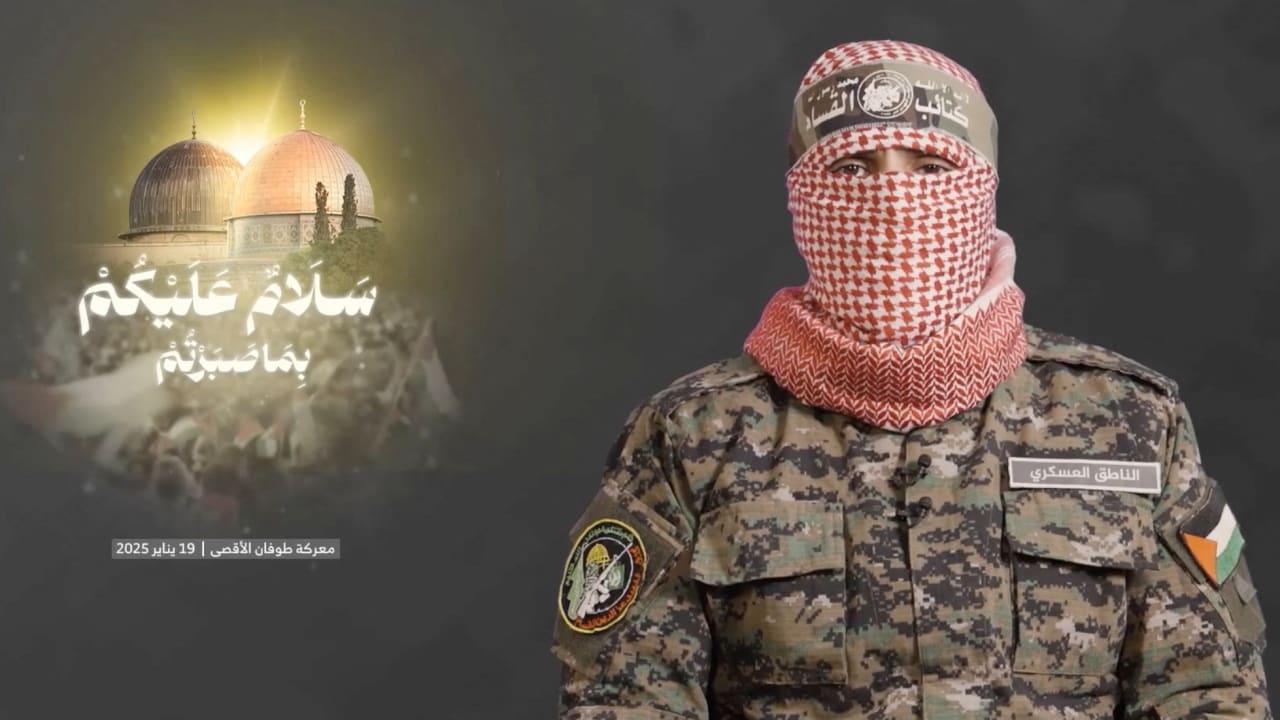
After the October 7 massacre, Israel made a firm decision: Its fight is not just with those who carry out terrorism in Gaza. It will also include anyone who justifies terror or supports it through incitement and propaganda. This is why Abu Obeida was assassinated. He was not just a Hamas spokesman, as some like to say, but a complete terrorist who took part in the violence and used poisonous ideology to justify crimes. He became a target that Israel needed to remove.
His killing was not a one-time event. It is part of a clear method that proves anyone who helps create death, with a weapon or with words, will be dealt with in the same way: they will be taken out.
The truth is, Israel bases its policy on keeping its people safe above all else, and on removing threats by hunting down and killing terrorists wherever they are. Israel knows that being soft on terror comes with a very high price. Because of this, rooting out terrorist leaders and members is the most important goal for Israel’s national security.
Israel's security operations
Every name in the files of Israeli intelligence agencies is waiting for its turn. Sometimes the wait is long. But the result is always the same: They are alive now, but they are living on borrowed time. This idea is itself a part of psychological war, making every terrorist leader live in constant fear, knowing a strike could come at any moment, whether he is hiding in a dark tunnel or living openly in a fancy room in a foreign capital.

The August 30 assassination of Abu Obeida is just one part of a long series of harsh revenge operations that Israeli security forces carry out without stopping. Before him, Ismail Haniyeh was killed in the heart of Tehran, a loud message that even the most protected places cannot keep Israel’s enemies safe.
Today, Israel shows that targeting terrorist leaders is no longer limited to Gaza or nearby areas. It has become a policy that crosses borders. The operation that killed most of the men who call themselves the Houthi government is more proof of this.
It was not just a military action, but an intelligence success that proves Israel’s military and spy agencies can reach deep into faraway countries and break in. Distance does not give protection. The bill might be late, but it always comes due.
That operation carried a double message: Anyone who becomes a terrorist threat to Israel and its people will be in the line of fire, a legal target whenever Israel chooses. As the Arabic saying goes, “You must reach Sanaa no matter how long the journey.” Israel makes it clear that revenge is only a matter of time. Time might stretch out, but it does not bring escape.
Obviously, terrorist leaders built their dreams on popular talk that reduced the fight to the battlefield. Osama Hamdan said it clearly: “The last word will be said on the ground, and only on the ground.” Reality has shown that the last word does indeed belong to the ground.
However, not in the way Hamas and its foolish leaders wanted, because the situation on the ground has become a reason for new rules that include precise assassinations that change how the game is played.
As for Abu Obeida himself, he kept repeating in his statements that Gaza was and will be a graveyard for invaders, only to become proof after his assassination that those who preach about graves might get there first.
So, the assassinations are not just reactions to single events. They are an expression of a fixed security belief that says real prevention of attacks is achieved through continuous eliminations, making the enemies drown in mourning, and dealing final blows to the heads of evil.
Hunting down enemies as a policy
From my view, Israel considers this policy a necessary tool to protect its national security, even if it means facing diplomatic or political pressure. The practical thinking that guides Israeli decisions puts its people’s safety above everything else, and keeps the bullet ready as long as the danger exists.
The deeper effect of these operations is not only measured by the number of people targeted, but by their psychological impact. It breaks the false sense of safety even for those who think they are hard targets or under the protection of regional capitals.
Every terrorist leader, no matter his rank or importance, from Gaza to Lebanon, from Iran to Sanaa, ends up a clear example that Israel can reach them even if they are behind strong walls underground, and turn them into a warning.
It is a symbolic war as much as a physical one, and its goal is to make every terrorist leader aware that time might pass, but the end is decided. Israel makes the choice and carries it out.
So, it seems the policy of neutralizing and eliminating terrorist targets is unambiguous. The list is open, and the target bank of the Mossad and Israeli intelligence agencies is still full of names. Military and intelligence strikes will not stop, and the past will not be forgotten.
Anyone who thinks distance keeps him safe will discover that safety is an illusion, and anyone who believes regional countries will protect him will find that protection is weak and cannot stand up to the long arm.
The message Israel sends today is that terror leaders have no protection. Its logic is simple but final: as long as terrorism exists, death remains the certain fate for its leaders.
The writer is a UAE political analyst and former Federal National Council candidate.