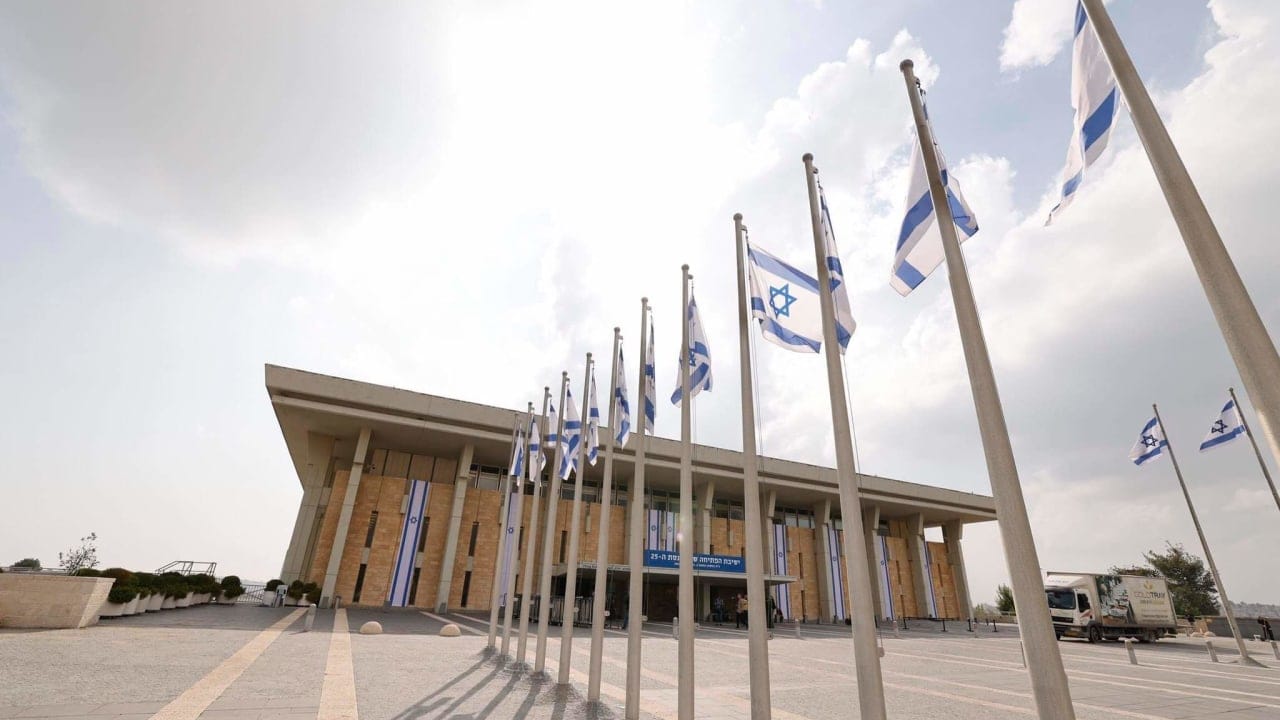
At a time when Israel faces national trauma, war, and existential threats, it is both shameful and dangerous that members of the Knesset are threatening to dismantle the unity government over the debate on drafting Torah students into national service.
As Jews commemorated the destruction of the Holy Temple on Tisha B’Av – a tragedy our sages say was caused by baseless hatred – we are watching history repeat itself: division, blame, and political ego endangering national unity.
When Israel was founded in 1948, fewer than 500 haredi men were exempt from military service. Today, nearly 100,000 haredi men aged 18 to 24 are exempt. But in June 2024, the Supreme Court ended this exemption and ordered the government to begin drafting them.
Let’s be clear: All Israeli citizens should contribute to national service. Jews, Arabs, Druze, Bedouins, and Christians all benefit from the country’s security and infrastructure, so they all should share its burdens, whether through military or civilian service. Anything less threatens our democracy and unity.
But Israel is not only a state – it is a Jewish state. The Torah and its values are the foundation of Jewish continuity, not the property of one political camp. Without the Torah, there is no Jewish people – and without the Jewish people, there is no Jewish state.

That’s why we must seek compromise. Not everyone needs to serve in combat units. Many can fulfill their duty in civilian national service: in hospitals, schools, nursing homes, or by helping the poor. These acts of chessed (loving-kindness) are deeply Jewish, as commanded in the Talmud and Shulchan Aruch.
All service – military or civilian – should consider a person’s emotional, psychological, and physical readiness. Exceptional Torah scholars whose study sustains halachic leadership may be granted limited exemptions, but these should not become sweeping policies. Most religious Jews pray daily, study Torah, and still work, serve, and support their nation. Faith and responsibility can coexist.
However, the greater shame is not the debate but its timing and tone.
The horrible timing of the haredi draft debate
We are still grieving the horrors of October 7, 2023, when Hamas launched a brutal attack, killing and kidnapping innocent civilians. Not one of Israel’s 120 Knesset members has stood before the nation to say, “We were the shepherds, and we failed our flock.” Not one has taken public responsibility.
Even so, the people of Israel remain strong. They have not turned on their leaders. They have not protested the prime minister’s long rule, though his time in office exceeds that of many world leaders. Nor have they revolted when promising new voices in politics were pushed aside instead of nurtured.
And now, while soldiers are still fighting in Gaza, while thousands of families remain displaced, and while Iran’s threats grow, our elected officials are busy fighting one another – risking the collapse of the unity government over an issue that requires patience and vision.
Leadership is not about pride or party loyalty. It is about selflessness, courage, and moral clarity.
So I ask you, our leaders: Who among you is raising the next Joshua, as Moses did? Who is building the future of Israel?
The public is tired – tired of betrayal, tired of personal ambition disguised as patriotism, tired of politics that serve politicians instead of the people.
Do not break this government. Strengthen it. Do not abandon your people. Lead them.
Do not let October 7 be followed by another tragic date – this time, one caused by ego, not by enemies.
Our children deserve more than vengeance. They deserve healing, stability, and hope. They deserve to see that even in crisis, their leaders can stand together.
As the Talmud teaches: Any generation in which the Temple is not rebuilt must consider itself responsible for its destruction. Let us not be that generation.■
Shmuel Legesse is an international educator, community activist, and diplomacy expert. He served in the Israel Police and as a detective for the New York State Supreme Court. He has represented Israel’s Knesset in international public affairs. He has a doctorate in educational leadership from Yeshiva University.