In recent years, a vocal minority of anti-Zionist Jews – including rabbis and cantors – unaffiliated with the Reform movement has gained disproportionate attention from mainstream American media.
This has created a skewed public perception of Reform Judaism’s relationship with the State of Israel. It is important to distinguish legitimate critique from delegitimization.
Many Reform Jews rightly challenge Israeli policies or advocate for changes to specific laws, seeking to preserve Israel’s Jewish character while promoting justice and equality. By contrast, the anti-Zionist minority actively undermines Israel’s existence as a Jewish state and advocates for its dismantlement.
This is what I mean by anti-Zionist: Not someone who is critical of Israeli leadership, policy, or the devastating war in Gaza, but someone who is fundamentally against the existence of Israel as a home and refuge for the Jewish people.
The two can be distinguished by answering a simple question of intent: Are you criticizing Israel for its betterment or for its destruction? One is a tool to evoke policy change and improvement; the other is a justification for its eradication and the demonization of Jews.

It is true that the Reform Movement did historically hold an anti-Zionist stance, rooted in the universalist ideals of the Pittsburgh Platform, which held that Jews could live fully Jewish, secure lives without a national homeland.
However, by 1915, Louis Brandeis began advocating for a Jewish homeland as a refuge for oppressed Jews worldwide, gradually influencing Reform leaders.
In 1937, the Columbus Platform, known as “The Guiding Principles for the Reform Movement,” was adopted by the Central Conference of American Rabbis (CCAR).
It states, “Judaism is the soul of which Israel is the body… We affirm the obligation of all Jewry to aid in its upbuilding as a Jewish homeland by endeavoring to make it not only a haven of refuge for the oppressed but also a center of Jewish culture and spiritual life.”
Turning point in Reform Judaism
This marked a key turning point in the Reform movement, officially embracing Zionism in response to rising antisemitism.
It can be reasonably said that the Reform movement has affirmed support for the existence of a Jewish state for over 100 years. The Union for Reform Judaism (URJ) consistently emphasizes Israel’s right to exist while advocating for peace and security for all people in the region.
Similarly, the CCAR supports Israel’s right to defend itself while seeking a just and lasting peace that ensures security and dignity for both Israelis and Palestinians.
These positions reflect the movement’s commitment to Zionism, a recognition of the Jewish people’s historical connection to the land, and a dedication to the preservation of the safe haven that the State of Israel provides for our historically persecuted people.
Most Zionists feel strongly about retaining Israel’s Jewish character not out of a desire for exclusion or “ethnic supremacy,” but out of necessity.
In a world plagued by antisemitism, Israel is the only place on the planet where Jews can decide our own fate. Zionism is, therefore, an ideology supporting the protection and preservation of Jewish life and self-determination in our historic homeland.
While I do not claim to represent the URJ or all Reform clergy, I speak from internal knowledge of the movement and my direct experiences as a proud Reform cantor (also dually ordained in the Conservative/Masorti movement).
I feel a mix of embarrassment and anger about the misrepresentation of Reform Judaism. Embarrassment, because anti-Zionist Reform leaders have increasingly tried to represent our movement in public perception, leaving me and many of my peers feeling unfairly associated with these positions and left to defend Reform Judaism to both our own congregants and the broader, non-Reform Jewish community.
Anger, because some right-wing Jews seize on any legitimate critique of Israeli policy or the war in Gaza to label Reform and Progressive Jews as “anti-Israel,” “self-hating,” or “Kapos,” further inflaming divisions.
Challenges facing progressive Judaism
I do, however, hold some genuine concerns about the future of Progressive Judaism. While we value a plurality of opinions and the principle of engaging in machloket (debate), – as more anti-Zionist clergy are ordained, we risk these extreme voices growing within our movement.
While today the majority of Reform leaders do support Zionism, the increasing influence of Gen Z and younger anti-Zionist perspectives may tilt the movement toward a stance that undermines Israel’s security and the safety of the Jews who live there.
This would be a tragic shift for a movement that has long championed both social justice and the protection of the Jewish people. Adding to the challenge, some other Jewish denominations – and segments of Israeli society – dismiss Reform rabbis and cantors as “not real” clergy or even “real Jews.”
This ignores the rigorous study and ordination process Reform clergy undergo, which includes intensive training in Torah, Talmud, Jewish cultural and religious traditions, history, life cycle officiation, and pastoral care.
While Reform leaders are deeply committed to helping their communities live meaningful Jewish lives, we are sometimes disparaged by other liberal Jews for not passing their moral litmus test of condemning Zionism, while simultaneously being denounced by more traditional Jews as self-hating.
It is challenging enough to have to defend ourselves from antisemitism without having to also worry that our own communities might misrepresent our core identity and values.
The combination of infighting within the Jewish community and antisemitism from the outside has resulted in distorted public perception. Our communities are predominantly Zionist and progressive, neither at the exclusion of the other. Reform clergy overwhelmingly support Israel’s right to exist while advocating for policies that promote justice, peace, and human rights.
Given that half of world Jewry is Israeli, clergy must be representatives of both communities in the Diaspora and in our homeland, Israel.
Reform movement must advocate for Jewish peoplehood too
It is, therefore, imperative that the Reform movement put equal emphasis on training future clergy to be historically knowledgeable advocates for the continued existence of Israel as a secure haven for the Jewish people as they do on the values of social justice and tikkun olam (repairing the world).
While tikkun olam is indeed a core Jewish value, a rabbi or cantor who advocates for the rights of other marginalized groups at the expense of their own people’s safety and security has no business posing as a leader of the Jewish people.
As Rabbi Ammiel Hirsch said in an interview with eJewishPhilanthropy about the possible “crisis” facing Reform Judaism: “They [anti-Zionist Jews] prioritize tikkun olam not as an expression of klal Yisrael, Jewish peoplehood, but at the expense of Jewish peoplehood.”
Reform Judaism has always sought to balance tradition, social justice, and modern values – including a strong commitment to Israel.
Dissent and debate are natural, but the voices of a few, even when bolstered and tokenized, must not overshadow the majority or jeopardize Israel’s security (and thereby the welfare of nearly half of the world’s Jewish population).
We are the largest Jewish denomination in North America, and therefore it is vital for other Jewish movements to rely on us as invaluable allies in preserving Jewish tradition, fighting antisemitism, and advocating for the safety and security of Jews in Israel.
Especially with the rise of anti-Jewish hatred and violence, the diverse spectrum of Jewish denominations must join together in solidarity around these values. We cannot afford to make the fatal flaw of mistaking friends for enemies during these turbulent times.
We must, therefore, better support and represent Reform clergy who share an equal dedication to Zionism and social justice. In doing so, the movement can continue to be a proud and authentic voice for Jewish life worldwide.
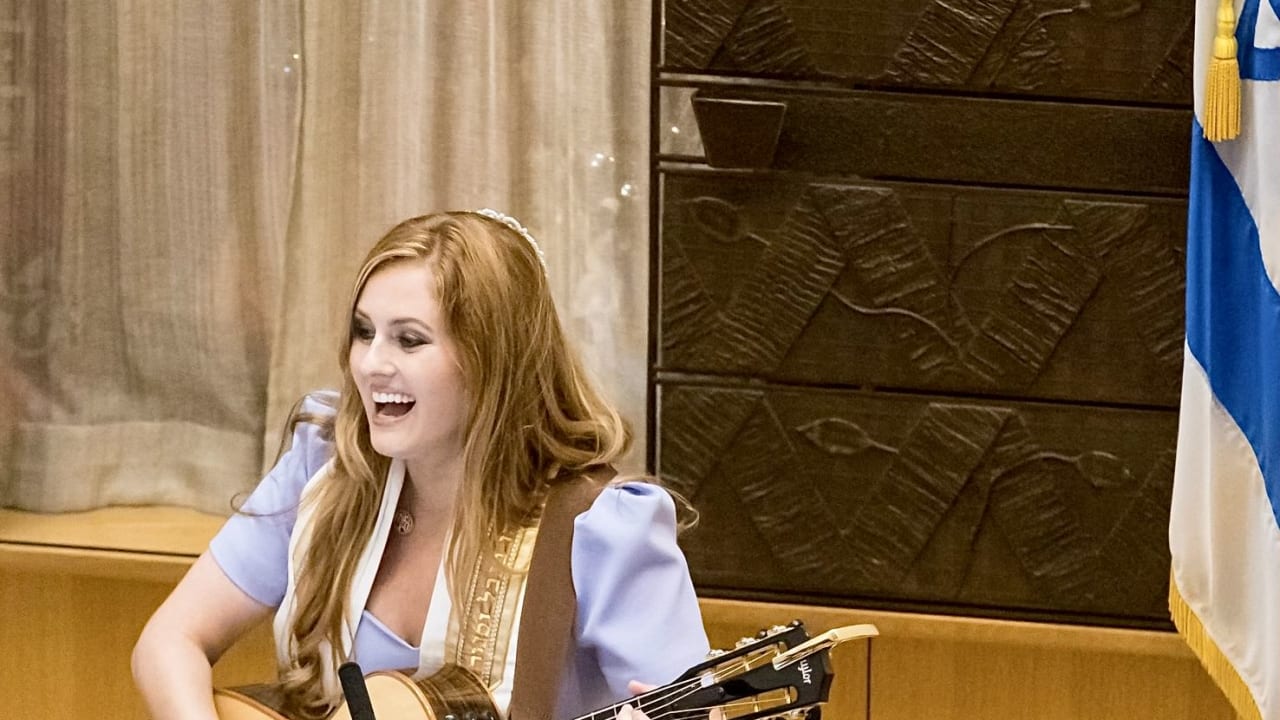
The writer is the cantor and co-clergy of East End Temple in Manhattan.