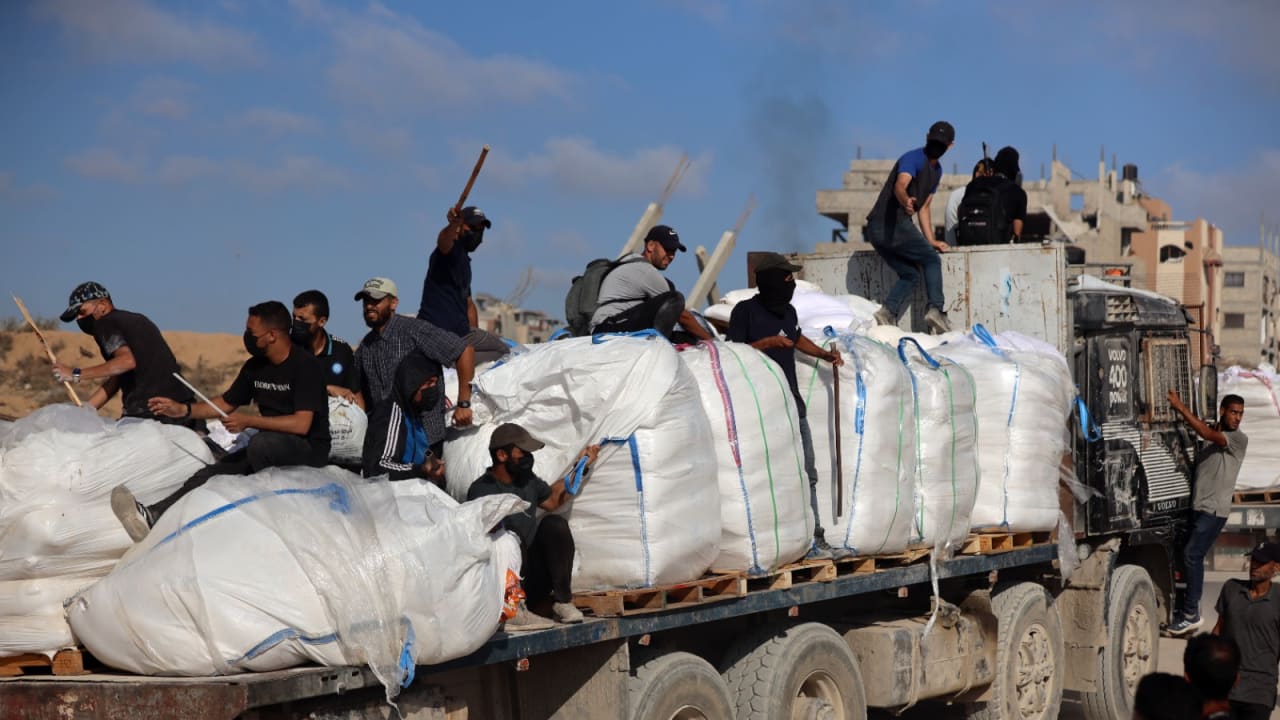
On Monday, the Coordinator of Government Activities in the Territories (COGAT) released clips that it said show Hamas operatives beating, binding, and even firing at Gazans. The footage is grim, and its provenance is not detailed, yet the pattern is familiar. Hamas does not govern; it coerces. It keeps Gaza in line through fear and violence, not consent.
COGAT is the IDF unit that coordinates civilian matters with Gaza and the West Bank. Its commander, Maj.-Gen. Ghassan Alian, said the videos illustrate how Hamas oppresses the population to preserve power.
It’s not that a few terrorists misbehaved on a dark night. It’s the method. When criticism appears, when a rival raises a flag, when a neighbor is suspected of talking to the wrong person, the cudgel and the gun appear.
This is not new. Hamas seized Gaza by force in 2007 after a brief civil war with Fatah. It then enacted one-party rule. Human-rights investigators have for years recorded arbitrary arrests, torture, and executions of political opponents and suspected collaborators. This repression survived every ceasefire and every round of fighting – because it is the instrument by which Hamas keeps order.
The legal and moral framework is clear. The United States, the European Union, the United Kingdom, and others list Hamas as a terrorist organization. That is because of deliberate attacks on civilians over decades, culminating in the October 7 massacre. No one should be surprised when such a group uses violence on Gazans.

None of this negates the humanitarian catastrophe in Gaza and this must add to the urgency of highlighting the plight of the population. Last week, the UN-backed Integrated Food Security Phase Classification declared a famine in the Gaza Governorate and warned it could spread. Israel disputes the finding, arguing the assessment undervalues new aid channels and improved flows.
Both points should be highlighted so does a sober acknowledgment that Hamas has sought to control life-saving resources, and the chaos and criminality have disrupted deliveries on Gaza’s roads and at warehouses.
Some aid agencies and audits say they have not seen systematic theft of certain donor-funded consignments, while also documenting looting, interference by armed men, and the simple reality that desperate people crowd trucks when order breaks down.
These claims are not mutually exclusive. The responsible response is to harden monitoring and keep the focus on households, clinics, and schools.
First, coverage must stop treating Hamas only as a combatant against Israel. It is also an authoritarian force over Palestinians today. When videos of beatings circulate, they should not be dismissed as propaganda by default or stripped of context.
They align with a documented pattern of domestic coercion. Any honest report on Gaza must place Hamas’s abuses alongside the wider humanitarian picture.
Second, donors should harden delivery and monitoring so that aid reaches civilians while armed groups are starved of leverage.
That means end-to-end tracking from border to household, more direct support to vetted clinics and municipalities, and transparent independent audits. It means backing Palestinian professional unions and civil society – the people who can distribute without fear. If you believe Gazans deserve dignity, design systems that protect them from the men with the guns.
Third, diplomacy must build civilian protection into any ceasefire or reconstruction plan. Any rebuilding that leaves the same coercive apparatus intact will finance the next round of repression and war. The 2007 takeover and the years of intimidation that followed are not footnotes. They are central obstacles to a livable future in Gaza.
Israel has a duty here, too. It must keep drawing a bright line between Hamas and Gaza’s civilians in words and in deeds, and it must communicate that distinction clearly and consistently to international audiences. The moral difference matters, and so does the practical one.
Weaken Hamas, strengthen civilian life in Gaza, to benefit both Israelis and Palestinians
Weakening Hamas while strengthening Gaza’s civilian fabric is the only path that serves Israelis and Palestinians alike.
They are the enemy. Look at what they do. The people in those clips are not abstractions or talking points; they are neighbors, relatives, and ordinary citizens who cried out and were silenced.
If policy-makers, advocates, and journalists truly care about Gazans, they should start by taking those victims seriously and shape policy that finally protects them from the men who rule by fear.