
Former US vice president and presidential candidate Kamala Harris once recounted how, as a little girl in San Francisco, she joined her Jewish friends in collecting donations for Israel, using the JNF’s Blue Box. “I didn’t know much,” she said, “but I knew it was important.”
It’s not only a moving anecdote, but a reminder of an all too recent era in which Israel was an exemplar in the world: a pioneering, democratic country that shared core values with the American public; one that sparked solidarity even in a non-Jewish girl who felt proud to make a small contribution to its establishment.
The Blue Box, a symbol of Jewish unity and a shared Zionist vision, expressed the profound bond between many in the United States, especially among the Jewish community, and the State of Israel. It was not a relationship without criticism, but even when there was criticism, it always came from a place of care, belonging, and love. Years of occupation in the West Bank and Gaza have sparked serious controversy, but the Democratic Party and American Jewry have largely remained on Israel’s side.
On October 7, 2023, the harsh images from Israel reawakened this emotion. The American administration, and American Jewry in particular, rallied to its cause with love and dedication, through aid projects, fundraising, and support for the residents of Israel’s Gaza border region, the bereaved families, and the abductees. But the never-ending war and the horror of alleged starvation and mass destruction is undermining this foundation.
Today, as the Netanyahu government pushes Israel toward international isolation and moral pariah status, Jews around the world find themselves caught in the crossfire. While Israelis can return home, Diaspora Jews are left navigating rising antisemitism alongside growing frustration and estrangement from a state that was meant to represent them.
Across the Jewish world, many are experiencing a painful rupture: watching in horror as images and stories from Gaza circulate widely in their own countries and finding themselves agreeing more with their neighbors than with the policies of the Israeli government. At the same time, global Jewry faces the dangerous, antisemitic conflation of Israeli government actions with Jewish identity as a whole.
Deepening a rift between Israel, Diaspora Jewry
Young Jews, in particular, are being asked to defend a government whose values and conduct feel profoundly alien to them. This dissonance is deepening an already serious rift between Israel and Diaspora Jewry, between Jewish identity and Israeli statehood, and within the Jewish community itself.
The concept of Zionism, which for their parents symbolized national liberation, equality and hope, has become synonymous with oppression, ethnic cleansing, and starvation in the eyes of those around them, and sometimes in their own eyes, too. In such a reality, it is difficult for many of them to identify as Zionists.
They remember the essence of Zionism as conveyed to them by their parents, but discover that in the eyes of their friends, it is something completely different, and this undermines their own faith in it as well.
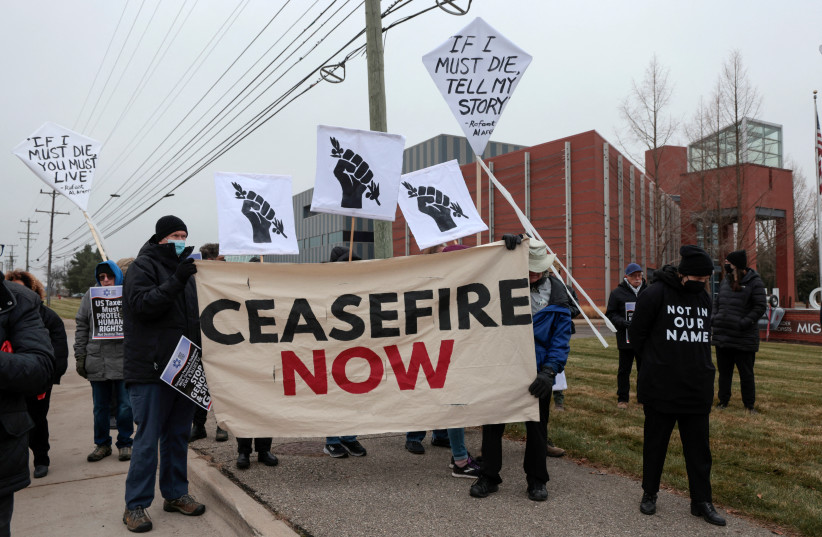
On American campuses, in particular, the socio-political arena shapes the next generation. Young Jews find themselves torn between the values they were raised on and their national identity. Many of them join the protests against Israel’s policy, under the banner of “Not in my name.”
If the State of Israel continues its trend of disengagement from universal values, it is liable to lose the heart of the next generation of world Jewry; a generation that will choose – which is already choosing, liberal values, friends, and conscience, over than a country that it perceives as having betrayed all of these, and which they feel is endangering them, as well.
Many surveys have shown over the years that the younger generation of Jews is distancing itself from Israel. However, since the outbreak of the Israel-Hamas War, with its attendant images and testimonies, largely unsympathetic toward the State of Israel, its standing is in free fall.
Ending the war is a paramount Israeli interest, but also a Jewish one.
It will not change the positions that have already been established, but it will be the start of a journey of correction, which, if it continues in the form of promoting regional normalization and the two-state vision, might help to begin rehabilitating Israel’s standing in the US – our most important ally in the world – and among our brothers and sisters of Diaspora Jewry.
The writer is J Street-Israel’s executive director. He has served as an Israeli diplomat in Washington and Boston and as a political adviser to the president of Israel.