Before the 1979 Iranian Revolution, Iran was often described as a vibrant and diverse country, where life flourished under a relatively liberal social framework. Women actively participated in society attending universities, pursuing careers, and enjoying legal rights comparable to men. Dress codes were flexible, with wearing the hijab being a personal choice rather than a mandate. Iran was also home to multiple religious communities coexisting with relative harmony.
However, following the overthrow of Shah Mohammad, the last Shah of Iran. With the establishment of the Islamic Republic under Ayatollah Khomeini, the country underwent a dramatic transformation.
The new regime imposed strict Islamic laws that severely curtailed women’s rights, including restrictions on education, employment, and personal freedoms like clothing restrictions. The mandatory hijab law was enforced under threat of harsh punishment, contributing to widespread protest. Today, Iran’s image stands in stark contrast to the hopeful and culturally rich nation it once was.
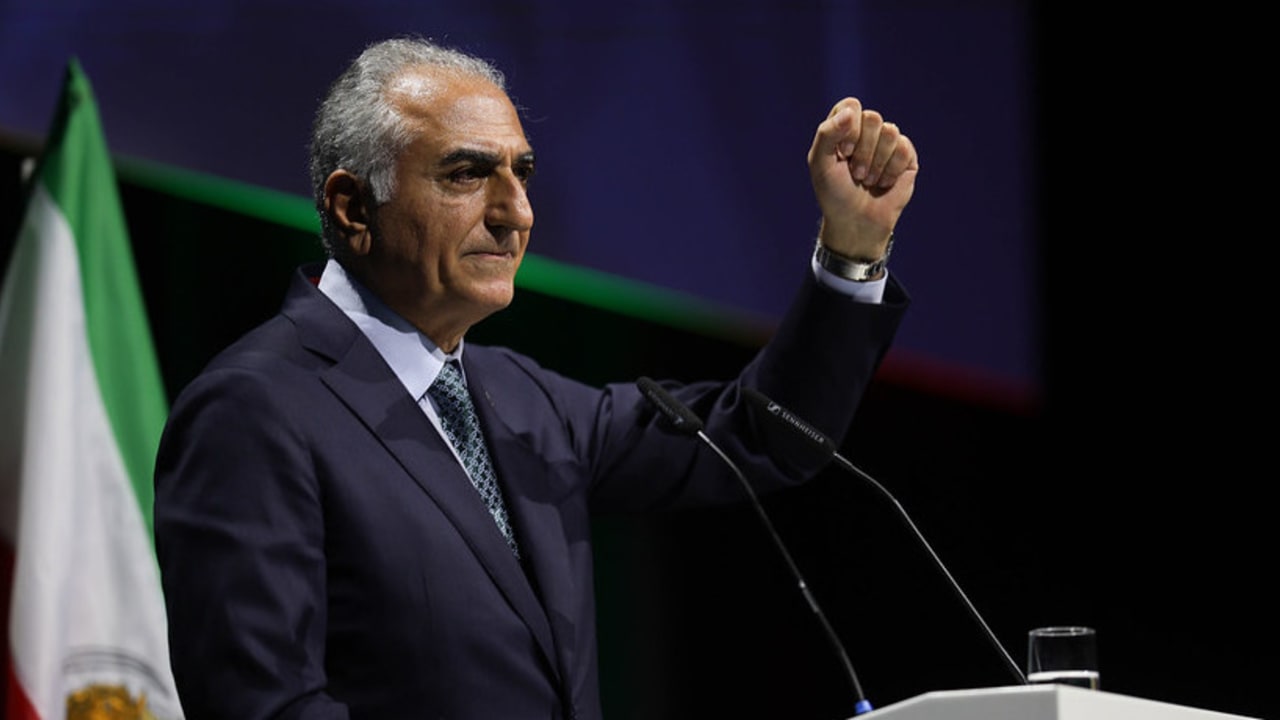
Reza Pahlavi, eldest son of the late Shah Mohammad Reza Pahlavi, has emerged as a prominent figure opposing the current Iranian regime. As a staunch advocate for restoring democracy, Pahlavi calls for a return to the Iran of the past marked by religious freedom, tolerance, and equal rights for men and women.

Reza Palhavi's uprising
In recent months, Pahlavi has launched an initiative named Rizesh ("Uprising"), a secure platform designed to support defections within Iran’s military, security forces, and civil service. The program enables participants to register anonymously, receive guidance for opposition activities, and coordinate their departures from the regime. To date, over 50,000 members of Iran’s state apparatus have reportedly signed up.
He has also announced plans to introduce additional websites aimed at empowering ordinary Iranian citizens to participate safely in the growing movement for reform.
Beyond his involvement with Rizesh, Reza Pahlavi has taken significant steps on the international stage. He has actively engaged with lawmakers and officials in Canada, France, Germany, the United States, and the United Kingdom, urging them to stand with the Iranian people and increase pressure on the Islamic Republic. Through dozens of speeches and interviews, he has consistently called on the global community to support Iran’s civil society and democratic aspirations through nonviolent means.
People believe that due to the recent instability in the regime, Reza’s efforts may actually succeed, and the oppressive government of Iran could be overthrown. This instability has been fueled by widespread protests that began in 2022 following the death of 22-year-old Mahsa Amini, who died in custody after being arrested for allegedly wearing her hijab improperly. Her tragic death ignited a nationwide uprising led primarily by women and young people, sparking a movement that called not only for reform but for a complete transformation of the country’s political system.
Additionally, in June of this year, it was revealed that Iran was only weeks away from acquiring its first nuclear weapon. In response, Israel launched a military operation against Iran to prevent this, with the United States joining the conflict by bombing the nuclear program site, setting Iran back several years in its efforts to build a nuclear weapon.
Also, a series of high-profile assassinations targeting Iranian officials, widely believed to be attributed to Israeli intelligence, has further destabilized the regime and deepened its internal vulnerabilities.
Speaking of Israel and Iran, the current Iranian regime has a long and hostile history with Israel—routinely supplying missiles to proxy groups, training foreign militias to fight against Israeli forces, and fueling regional instability. In stark contrast, in April 2023, Reza Pahlavi made a historic visit to Israel, where he met with President Isaac Herzog and participated in a Holocaust memorial ceremony. His visit was a powerful symbolic gesture, demonstrating the possibility of peaceful relations between a future democratic Iran and Israel—marking a sharp departure from the regime's decades of antagonism.
The future of Iran is uncertain, but rising instability both inside and outside the country could give leaders like Reza Pahlavi the chance to push for democracy and a return to a freer, more tolerant Iran and maybe rebuild relations with Israel. Many hope this moment marks the beginning of real change toward equality and freedom for all.