
This weekend, Jews around the world will mark Tisha B’Av, the annual day of mourning for the destruction of the Temples in Jerusalem and other catastrophes in Jewish history.
Tradition teaches that the Second Temple fell not because of a powerful enemy or military failure but due to baseless hatred from within. Sarcasm replaced dialogue. Objection replaced compassion.
Disputes were no longer for the sake of heaven but for the sake of argument.
On October 7, 2023, Israel experienced a different kind of destruction and devastation. Not of stone buildings but of trust, security, and our very belief in the systems that were supposed to protect us. In those horrifying moments, it seemed as if all layers of Israeli society melted away, leaving only one thing: a people – raw and exposed, bound by shared vulnerability. One nation, united in pain and in the need to take action. But what action?
Yet hat stood out just as powerfully as the horror was what came next. An unprecedented wave of grassroots mobilization swept across Israel. Volunteers emerged from every city and town. Personal initiatives became national relief efforts. Strangers opened their homes. People filled the gaps where government support failed.
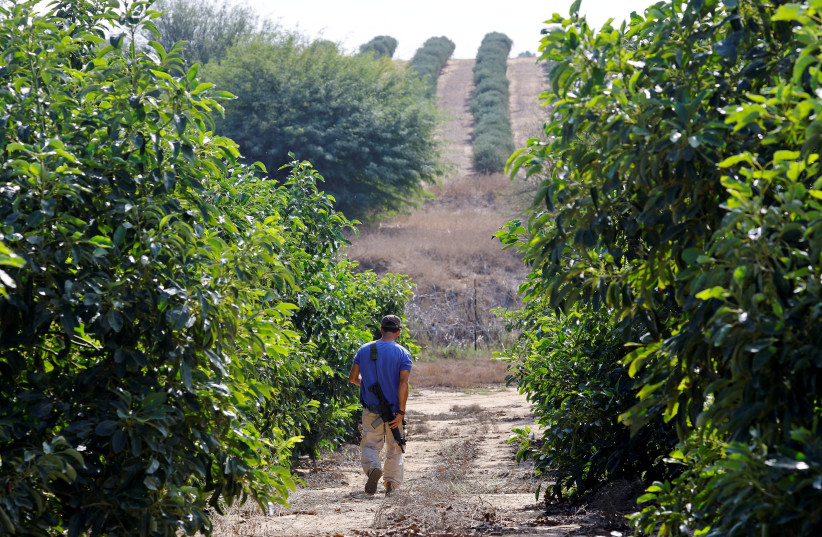
Jewish communities around the world rallied to help by raising funds, sending supplies, checking in on loved ones, insisting on being part of a shared fate. It was living proof that mutual responsibility is not an empty slogan but a defining trait of Jewish and Israeli identity.
The extraordinary mobilization was also evident in the countless Israelis abroad who rushed back to join the war effort. It wasn’t a formal order that called them home but an inner voice and a fierce, unmatched sense of duty. And in the midst of this moving response and prolonged hardship, one voice continues to echo powerfully – the voice of bereaved families who paid the ultimate price: “May we be worthy of their sacrifice.”
On this Tisha B’Av, that sentence must echo louder than ever.
May we be worthy – of the price we’ve paid, of the unity we revealed, of the promise to leave divisiveness behind and never return to baseless hatred. As the English saying goes: “United we stand. Divided we fall.” When united, we are unstoppable. But divided – we become vulnerable to every threat, both from without and from within.
On October 7, the ground beneath us shook with existential dread.
On October 8, the spirit of the Israeli people rose in defiance shoulder to shoulder. Yet, that moment of unity passed far too quickly. The fractures returned faster than we imagined. Political fights, toxic rhetoric, and growing polarization rushed back into daily life. Instead of reinforcing the solidarity that had bound us together, we slipped back – almost overnight – into fragmentation.
What is this “baseless hatred” that led to the destruction of the Temple? The Talmud teaches that it is as severe as the three cardinal sins: idolatry, sexual immorality, and bloodshed. It is not simply a negative emotion. It is a societal and moral erosion from which it is hard to return. That needs to change. Each of us is responsible not only for what we say but also for what we remain silent in the face of.
And yet, hope
And yet, there is hope. Tisha B’Av is not only a day of mourning.
It is also a warning; a spiritual road marker guiding us toward a better path.
As it says in the Talmud: “All who mourn for Jerusalem will merit to witness her joy.” Our mourning is not for sorrow’s sake but for the sake of repair. Pain is the path we must walk to reach healing and growth.
Rabbi Kook once wrote: “Supreme unity will come precisely from the depths of disagreement for the sake of heaven.”
His words offer a powerful and comforting lens. We do not need to avoid conflict – disagreement is part of life.
The key question is how we disagree: with respect, empathy, and a shared yearning for good – or with rage and entrenchment.
No need to think alike
The thinker Abraham Joshua Heschel put it this way: “To be one people, we do not need to think alike – we need to feel one another’s pain.” This is not a fixed reality. Unity is not uniformity. We have a choice.
Perhaps that is the essence of the matter. If we allow ourselves to feel the pain of others, even or especially when they are politically, culturally, or religiously distant, we will become more worthy of Jerusalem’s joy.
If destruction came from hatred, rebuilding must come from love – not sentimental love but a love grounded in commitment, in deliberate choice, in daily effort.
ANU – Museum of the Jewish People is the official national center for Jewish communities in Israel and around the world. It is a home for the many and varied voices of the Jewish people and a home for the Jewish story.
The museum’s vision is to be a space of shared ground – a broad, inclusive, and respectful platform that reflects a multifaceted reality, whose very complexity is a source of its beauty.
October 7 taught us that darkness can fall without warning.
Tisha B’Av reminds us it can also emerge from within.
Both the light and the shadow are in our hands. The question is whether we will heed the call. Whether we will allow even a narrow opening for compassion, connection, and rebuilding.
This time, perhaps, we will choose differently.
The writer is CEO of ANU – Museum of the Jewish People in Tel Aviv.