
On the evening of October 8, as the scale of the horror became clear, our Arab Palestinian and Jewish Playback Theater group was scheduled to meet. One by one, participants canceled. My Palestinian co-leader said, “Let’s at least meet on Zoom. It’s a terrible time, but we can still be together.” So, we did. And for a brief moment, it brought comfort.
However, that was the last time our group met together – Arab and Jewish – for four months.
The pain and trauma on both sides was overwhelming. On the Jewish side, there was a sense of rupture, rage, and the terrifying realization that even in our own land, we were not safe. For some, it reopened the wound of our long history: pogroms, persecution, and the Holocaust.
On the Palestinian side, there was shock, fear, and then grief and fury – as the bombing of Gaza intensified, and the death toll of civilians, women, and children climbed.
For many Palestinians, this violence echoed a long and painful story – one that stretches back through decades of occupation, dispossession, and the ongoing trauma of the Nakba.
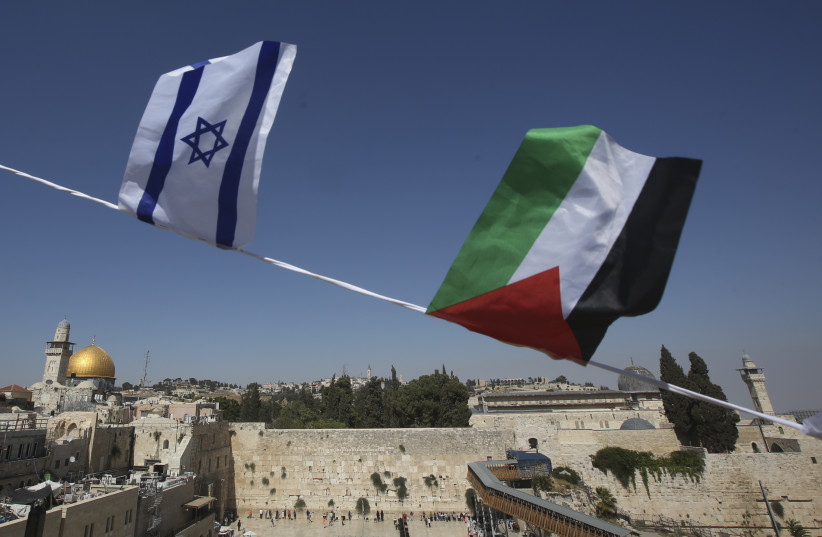
It became too painful to sit in one space together.
A reactivation of intergenerational trauma
I remember a Jewish woman, a lifelong peace activist who had spent years driving sick Palestinians from the West Bank and Gaza to Israeli hospitals. Just a week after October 7, she came to a workshop seething with rage.
Gripping a padded bat, she struck a pillow again and again, screaming: “I want to kill you. I want to kill all of you.” Then she collapsed in tears, finally able to touch the pain beneath the rage – held in the arms of fellow Jewish participants who wept with her.
It wasn’t hatred. It was grief. It was betrayal. And it was unbearable.
At another workshop in California, a young Jewish mother described hiding knives around her house and mapping out an escape route, afraid Hamas could come for her family, even across an ocean.
This wasn't just trauma from one terrible day. It was a reactivation of legacy burdens – carried in Jewish and Palestinian bodies for generations. Pain that has not been transformed will be transmitted. And unprocessed emotions can easily drive harmful actions – on the streets, in policy, and in war.
My Palestinian friends were also in shock – some afraid of being targeted, others drowning in despair as images from Gaza reached their phones. All of us were unraveling.
Always, in the background, was the unbearable knowledge that hostages were still being held in Gaza. Their faces haunted every conversation, every gathering. Their absence sharpened the pain and deepened the urgency.
Healing during a time of loss
What does it mean to try to heal in a time of devastating loss? How do we carry the pain of our own community while staying open to the suffering of others? How do we hold onto our humanity when everything around us urges us to harden, to hate, or to turn away?
I realized then that we didn’t just need a few healing circles. We needed hundreds. We needed trained facilitators who could sit with people in their pain, honor their rage, and gently guide it toward something life-giving.
This was the beginning of the Army of Healers, a growing network of Arab Palestinian and Jewish facilitators trained in trauma-informed methods who could respond to this moment of collective breakdown.
When I shared this urgent need at the October 2023 IFS Conference in Denver, the response was immediate. More than 80 IFS-trained therapists and practitioners from different parts of the world stepped forward.
For the past year and a half, they have been offering free one-on-one support to both Israelis and Palestinians, holding space for pain, trauma, and healing across the divides.
By January 2024, something shifted. Beneath the rage and fear, we began to hear a quieter voice – a longing to reconnect. A desire to feel together, not apart. Since then, we’ve launched 22 healing groups, supporting nearly 400 Arab Palestinian and Jewish participants through spaces of grief, rage, resilience, and repair.
This year, we were honored to receive the IIE Victor J. Goldberg Prize for Peace in the Middle East. We receive this honor on behalf of every person who has chosen connection over division, courage over fear, and healing over hate.
This is what the Army of Healers stands for: interrupting the transmission of trauma. Creating spaces where pain can be felt safely, so it doesn’t become more violence, more hatred, and more war.
In our region, where pain runs deep and the stories of Jews and Arabs, Israelis and Palestinians, are woven together – healing is a form of resistance: a quiet and steady uprising of hope, and the beginning of a future we dare to imagine.
The writer directs Together Beyond Words and helped launch the Army of Healers – bringing Jews and Palestinians from Israel together for healing in a time of deep pain. She trains facilitators, leads circles of connection, and walks the path of peace with courage and heart.