
“During the Holocaust, when you were being slaughtered, you, the Jews, cried for help and no one came. Today we, the Druze, are being slaughtered and are calling for the help of Israel.” Prime Minister Benjamin Netanyahu shared this message publicly and issued a clear reply. “We have taken action,” he said. “And we will continue to take action as necessary.”
This past week, a brutal campaign of violence has unfolded in southern Syria. Hundreds of Druze civilians (members of a minority community indigenous to the Levant) have been murdered, kidnapped, or forced to flee their homes. Villages have been burned. Women and children were reportedly slaughtered in sacred sites where they had sought refuge. The perpetrators include radical Islamist militants, Bedouin gangs, and regime-backed elements, all empowered by years of state collapse and lawlessness.
The carnage has been captured on video and is now spreading across social media. These are not vague reports or unverifiable claims. There is footage of Druze civilians being hunted down and executed.
Elders are dragged into the streets. Their mustaches shaved in acts of humiliation. For the Druze, this is not just an insult, it is desecration. In Druze culture, facial hair, especially the mustache, is a powerful symbol of dignity, piety, and manhood.
Elder men are traditionally known for their modest appearance, religious devotion, and strict adherence to tradition, including the wearing of facial hair as a sign of spiritual discipline. Forcing a Druze elder to be shaved is meant to strip him of identity, honor, and religious status in front of his community. It is not just abuse. It is psychological warfare. It is a calculated act of degradation meant to erase who they are.

Women are stripped and assaulted. Men are beaten, tortured, and forced to leap from rooftops as militants cheer. More than one video shows Druze men being driven to the edge of their balconies, their homes surely quiet moments before. Balconies once filled with carefully nourished plants are suddenly overrun by screaming men with AK-47s.
The peaceful stillness of domestic life is shattered by terror. The Druze men are forced to climb over the railings. As they leap, they are shot multiple times as they are leaping to their deaths. It is a special kind of evil. Deliberate. Performative. Proud.
All of it is filmed. All of it is shared online for the enjoyment of the killers. These images are not just horrifying. They are a visceral reminder of the savagery unleashed by Hamas on October 7. The same evil. The same joy in human suffering. The same defilement of dignity for propaganda and sadistic pleasure.
The worst of the atrocities have occurred in and around Sweida, a city and province that had long remained a fragile sanctuary amid Syria’s decade of civil war. That sanctuary is gone. The violence is not collateral damage from a larger conflict. It is direct, targeted, and deliberate. It is ethnic and religious cleansing in broad daylight. It is terrorism dressed in the language of sectarian retribution.
The violence began escalating around July 11 after a Druze merchant was attacked on the road between Sweida and Damascus. In retaliation, Druze fighters from local defense forces captured suspected attackers. This quickly spiraled into retaliatory attacks by regime-linked Bedouin gangs, with fighters storming villages and igniting brutal clashes. Between July 13 and 16, entire neighborhoods in and around Sweida province were overrun. Homes were burned. Bodies mutilated. Armed groups stormed hospitals and killed wounded fighters. By the end of the week, hundreds were dead and tens of thousands had been displaced.
On July 18, a ceasefire was announced after international and regional pressure. The Syrian regime, Jordan, Turkey, and the United States all reportedly pushed to prevent a broader sectarian war. But despite that announcement, the violence has continued. Local residents report gunfire and renewed attacks. Militants have ignored the truce. Social media posts show fresh attacks, more bodies in the streets, and civilians fleeing villages. Even in Sweida city, the sound of gunfire has returned. The situation remains extremely fragile. Armed militants are still roaming, revenge killings continue, and the underlying threats have not been resolved. The Druze must be protected.
But not everyone has ignored the call for help.
Israel steps up to help the Druze when no one does
The Israeli Druze community has played a prominent role in every aspect of Israeli society, not only in the military but in academia, politics, business, and the media. I have personally met Druze commanders serving in the IDF during my visits to Gaza. They are courageous, respected, and integrated. The ties between Israeli and Syrian Druze are real and deeply personal. Many families are split across the border. For Israeli Druze, the suffering of their brothers and sisters in Sweida is not distant news. It is family. It is urgent. It is personal.
As the carnage spread, Sheikh Muwafaq Tarif, the spiritual leader of the Druze community in Israel, sent a personal message to Netanyahu, invoking the memory of the Holocaust. The Prime Minister’s response was immediate. He shared the message publicly and issued a clear reply: “We have taken action,” he said. “And we will continue to take action as necessary.”
The exact nature of Israel’s full response is still emerging, but it has already included airstrikes against Syrian regime military positions both south of Damascus and within the capital itself. These strikes reportedly targeted forces involved in the attacks on Druze civilians. It may also involve intelligence support and other covert actions to deter further massacres. What matters more than the tactics is the principle. When a close-knit, historically loyal minority community within Israel cries out to the Jewish state for help as its kin are massacred just across the border, Israel does not turn away.
This is not just about shared history or mutual loyalty, though those run deep. It is about moral clarity. It is about responding to evil when others stay silent. It is about understanding that the same ideologies that fuel the murder of Druze families in Sweida are no different from those that drove the slaughter of Israelis on October 7. The same radical hatred. The same disregard for innocent life. The same tactics of terror cloaked in religion and resentment.
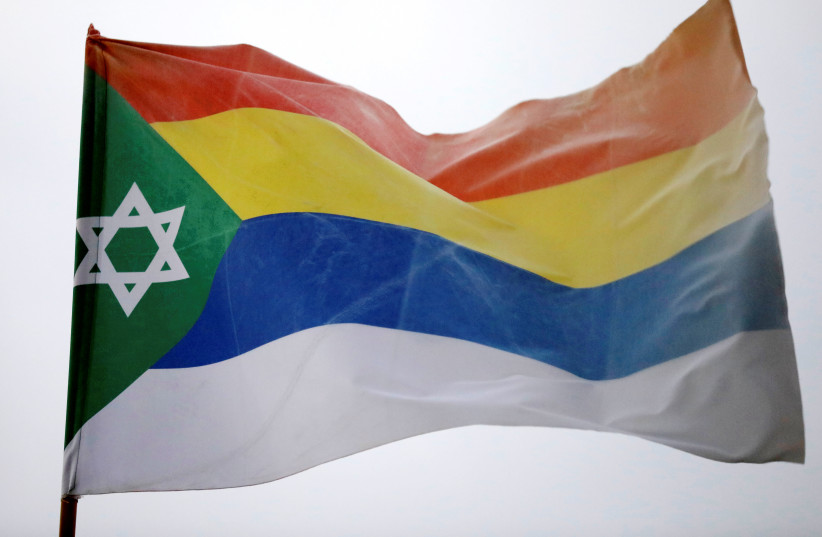
The Druze have long walked a difficult path. In Syria, they tried to remain neutral as the country burned, rejecting both the Assad regime’s brutality and the jihadists’ extremism. In doing so, they carved out a fragile autonomy in Sweida. But neutrality is no shield when monsters are at the door. And no ceasefire can protect a people if the world refuses to see what is happening.
As always, what matters most is not just what is done, but who does it. While the international community hesitates, while human rights organizations say little, while Western capitals issue muted statements or none at all, Israel has stepped forward. When others calculate political risks, Israel sees human lives. When others look away, Israel acts.
The silence is deafening. The same institutions and voices that claim to champion human rights have gone quiet. There have been no emergency UN sessions. No international protests. No hashtags. No outcry. It is a silence that reveals the selective morality of those who only speak when it fits their politics. It is a silence that enables genocide. And it is a silence that history will remember.
This moment reveals a deeper truth. It shows what solidarity looks like when it costs something. It shows what it means to remember your own history and refuse to let others suffer alone. It shows that the vow of never again is not only about one people, but about the kind of world we are willing to build.
The slaughter of the Druze in Syria may not trend. It may not lead the news. But it matters. It matters to those who are still under threat. It matters to those who still believe in the responsibility to protect. And it matters to those of us who study war, not just to understand destruction, but to learn how to stand against it.
Let history record who acted. Let it record who stayed silent. And let it record that when the Druze cried out, Israel listened.
John Spencer is the executive director of the Urban Warfare Institute. He is the coauthor of Understanding Urban Warfare. Learn more at www.johnspenceronline.com You can also follow him on 'X' at: @SpencerGuard. Substack: https://substack.com/@spencerguard