
The Iranian-Israeli confrontation last month was no fleeting event in the chronic conflict record. Instead, it transformed into a revealing moment, exposing the depth of Iran’s collapse as both a regime and a project.
What had been promoted for years as a major regional power crumbled in just twelve days. It left behind a crumbling system, a disillusioned populace, and shattered illusions buried under a barrage of military, economic, and political realities.
This war did not erupt suddenly. Since IRGC Guard Corps leader Maj.-Gen. Qassem Soleimani’s assassination in 2020, Tehran pursued escalation through its militias in Iraq, Syria, Lebanon and Yemen, deluding itself that it had Israel surrounded on four fronts.
But Israel did not wait. It worked quietly to develop its intelligence and military capabilities until the moment came to turn the tables with a preemptive strike. This strike targeted the heart of the nuclear project and decimated command and control centers, revealing the profound cracks in the Iranian regime.
In this round, Israel was not only the initiator but also remarkably demonstrated a qualitative capability to dominate the battlefield. It used intelligent defensive systems managed by advanced algorithms that neutralized the effectiveness of Iranian missiles. These missiles were revealed as little more than recycled Eastern weaponry under new names.
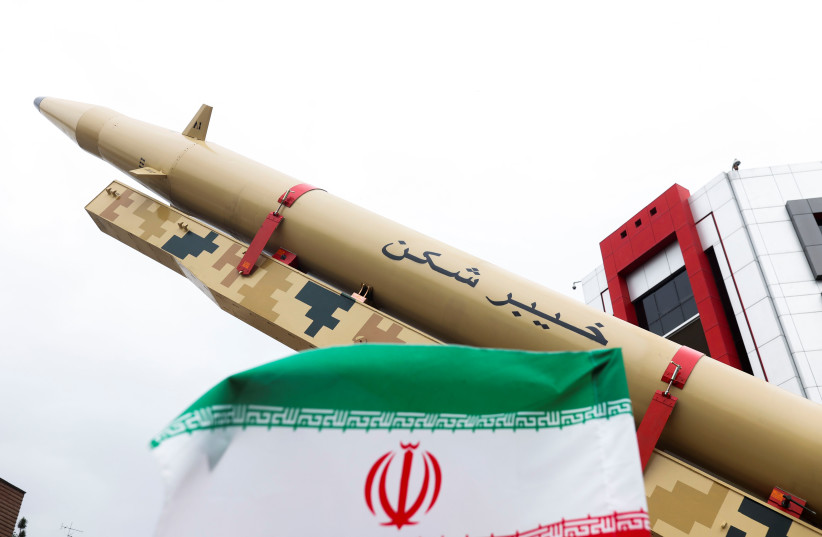
While Tehran bet on quantitative intimidation, Israel’s defense establishment in Tel Aviv built on qualitative efficiency. Here, the lie of Iranian deterrence fell to a precise and rapid blow.
More critically, Tehran lost not only militarily but also suffered a painful blow to its economic and social core. The targeting of oil infrastructure crippled production and exports, while the collapse of the rial exposed the fragility of a state claiming strength while its people struggle to buy bread.
Iran's unmasked and with it's foundations crumbling
In reality, the war unmasked Iran’s historical dilemma: a regime obsessed with external control while its internal foundations crumble. Meanwhile, the Tehran-backed factions of the so-called Resistance Axis lost their maneuverability, with some openly retreating.
In contrast, Israel, despite its small size, appears to be redefining power equations in the Middle East. Through smart partnerships with Gulf states and advanced technological capabilities, it has successfully overturned the traditional concept of military power. Israel has become a rising regional security hub, commanding attention from Gaza to Tehran.
The United States managed the battle from afar, capitalizing on the chaos Tehran sowed and Jerusalem’s ability to achieve strategic goals with minimal direct intervention. This marks a clear return to the strategy of weakening without toppling. It allows the Iranian regime to survive, but burdened by accumulating defeats, it remains an exhausted entity incapable of exporting its revolution or imposing its will.
Today, the Iranian regime faces a three-dimensional collapse. It has eroding legitimacy at home, waning influence abroad, and a nuclear program in ruins. This project, consuming four decades of spending, control, and repression, is now effectively gone. Rebuilding those facilities would invite harsh and humiliating strikes anew. Worse still, no propaganda can convince the people that an external enemy is solely to blame.
The Middle East is witnessing a reshaping – not through conferences or political understandings, but through the failure of projects built on sectarianism and expansion by force. Iran, which sought to export its model, now finds itself nearly rejected by its own people, isolated from its surroundings, and desperately seeking an exit at any cost.
Amidst this transformation, Israel emerges as an assertive power. It does not wait for permission to secure its borders; instead, it forges alliances and builds new security equations at the expense of a regime proven to be a burden on itself and its neighbors.
But the painful truth is that Iran wasn’t just defeated militarily. It stands utterly exposed as a failed political, security, and economic model. It has lost credibility and dignity both internally and externally.
This is a regime that spent hundreds of billions on projects of domination and expansion while its people starved. Today, it can only hide behind hollow slogans of resistance and divine victory, slogans that have lost all meaning and become objects of scorn. Meanwhile, the regime’s external arms and militias crumble under the weight of Israeli strikes and the assassination of their leaders.
Iran’s strategic depth has seen its sovereignty and sanctity violated. Its regional weight is dissipating before its eyes – not only because its adversaries are stronger, but because it is a regime rotted by corruption and blinded by illusions.
The Middle East waits for no one. Those who fail to see that the era of hegemony and militias is fading will pay a heavy price in their sovereignty and survival. Iran, which imagined itself invincible, now looks more like a crisis-ridden state burning in the fire of its own adventures.
The post-Iran era has begun – not geographically, but in terms of the erosion of its influence and dominance. This reality will only grow clearer with each passing stage, no matter how hard the Iranian regime tries to deny it.
The writer is a UAE political analyst and former Federal National Council candidate.