
Thank God for the courage, clarity, and determination behind the Dinah Project. Its work is both timely and essential: laying out a path to justice for survivors of rape in Israel and offering a framework that could help women far beyond its borders.
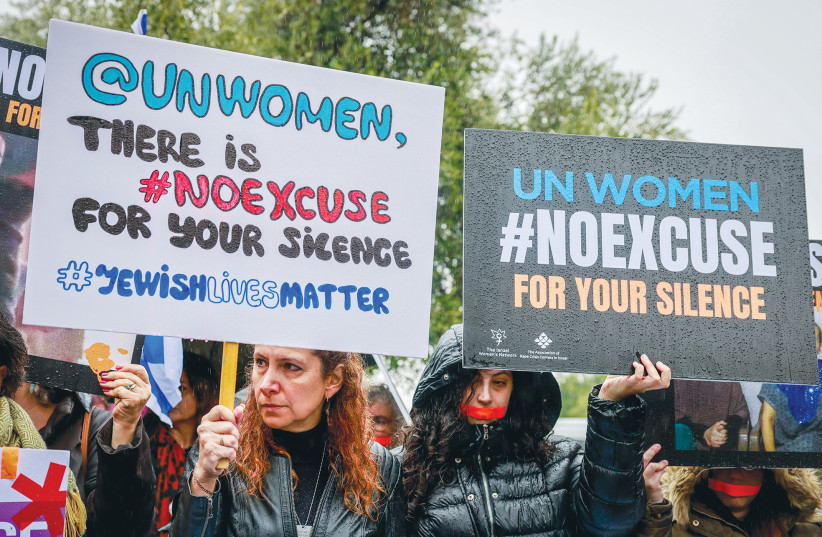
In a moment of global reckoning, the Dinah Project stands in stark contrast to the silence from many corners of the American and European women’s movements. When Israeli women were brutally raped and murdered by Hamas on October 7, the outrage one might have expected from feminist and anti-rape organizations simply never came. Instead, there was quiet. Deafening, disturbing quiet.
I had a chance to confront that silence directly. As the host of The Van Leer Institute Series on Ideas, I interviewed Dr. Judith Herman, a psychiatrist, scholar, and long-respected leader in the field of trauma and sexual violence. She joined me to discuss her 2024 book, a culmination of decades of research and clinical work with survivors.
The silence around October 7
One of the book’s central ideas is that survivors of sexual violence need validation, not just from therapists and law enforcement but from society itself. Without that, healing is compromised. With that in mind, I asked her about the silence surrounding October 7.
Here’s how the exchange unfolded:
Host: “How does your work speak to rape as a weapon of war?”
Judith Herman: “Well, rape is an abuse of power; it’s an expression of dominance. It has been documented in every conflict in the 21st century and going back to antiquity.”
Host: “Why were activists and feminists silent about the brutal rape of Israeli women by Hamas on October 7? And how do you think that lack of validation impacts work with the survivors of wartime sexual violence?”
Herman: “Well, if one is taking sides in a war, then the good guys don’t do it; only the bad guys do it. But, in fact, everybody does it. I suppose it had to do with one-sided sympathies, but I don’t honestly know.”
At this point, she hesitated, coughed, and tried to shift the conversation. “By the way, one of the things that isn’t often mentioned… men and boys as well.”
I pressed on.
Host: “I don’t think there’s data supporting that everybody does it.”
In response, she listed countries from an internet search where wartime rape has occurred: Vietnam, Cambodia, Bangladesh, Iraq, Syria, Rwanda, Bosnia, and others. Her conclusion? “If it isn’t done, it’s exceptional.”
There was not a single Western country on her list.
Would she ever minimize a rape in Boston or Chicago by saying, “Well, everyone does it”? Would she brush it off by citing global trends? Of course not. Yet somehow, Israeli victims are treated differently – even by those who’ve devoted their lives to advocating for survivors.
The betrayal of Israeli survivors
Judith Herman is just one example of an educated, dedicated leader who failed to meet the moment. She is not alone. The broader Western feminist movement has largely turned away from Israeli survivors, choosing political calculation over moral clarity.
This betrayal has added a second layer of trauma to an already unspeakable violence.
That’s why the Dinah Project matters so deeply. Their new report, “A Quest for Justice: October 7 and Beyond,” offers a much-needed counterweight. It confronts the reality of sexual violence as a weapon of war and outlines serious legal strategies for prosecuting it as a crime against humanity. It refuses to let these crimes be minimized or dismissed.
And for anyone tempted to shrug and say wartime rape is inevitable – ancient even – let’s be clear: Rape has always been a crime. It was condemned as far back as the Torah.
David Resnick’s new book, Empowered or Abused: The Bible’s Plan to Stop Battlefield Rape and Reduce Sexual Abuse (2025), reminds us that the fight against this evil is not new, but it remains urgent.
Silence is not neutral. It wounds. It betrays. And it must be broken.
The writer, who holds a PhD in clinical psychology, hosts a podcast, The Van Leer Series on Ideas. She is a psychologist with the Tikva Helpline.