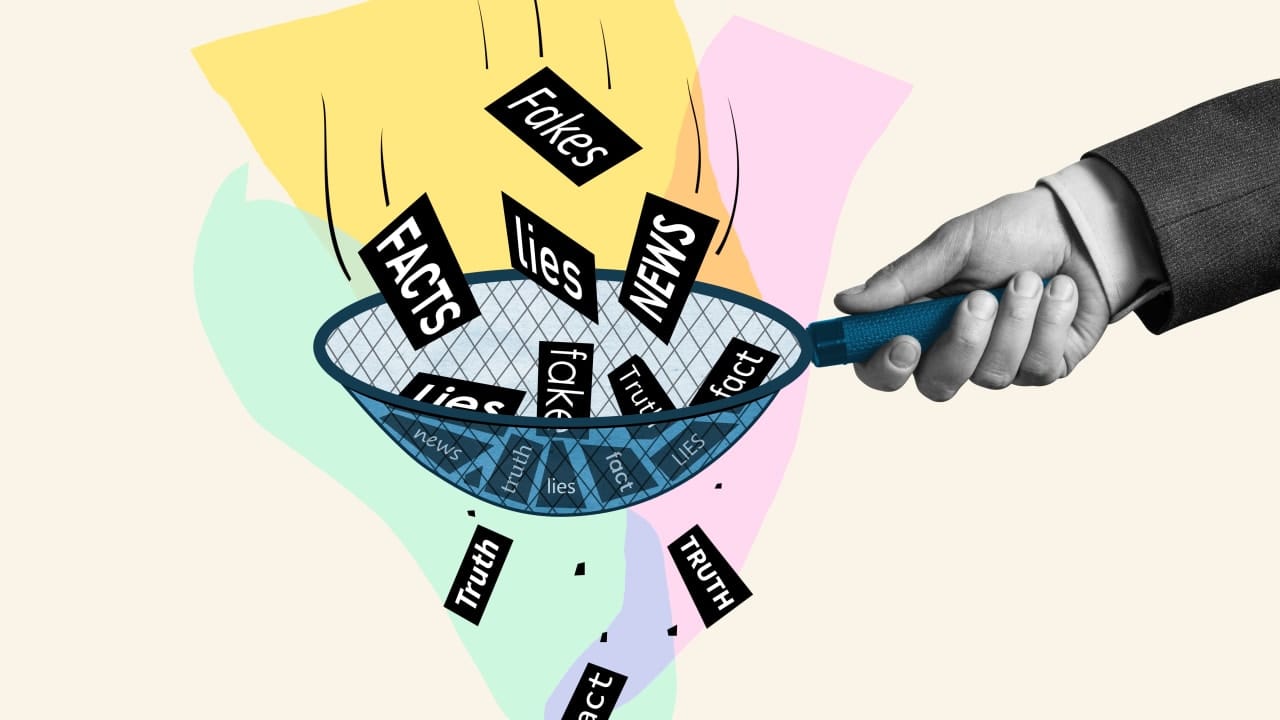
In the fog of war, framing is everything. For the legacy media – those masthead institutions still regarded as the arbiters of truth – this framing is no longer neutral.
Whether by inertia, ideological bias, or the irresistible pull of digital virality, many prominent Western outlets have inadvertently become accelerators for a new wave of antisemitism. Not by what they say outright, but by how they say it – by what they emphasize, omit, and allow to echo without correction.
In their coverage of the Israel-Gaza conflict, major media organizations, such as The New York Times, The Guardian, BBC, and Reuters, often default to a framework that casts Israel as aggressor and Palestinians as victims.
This binary erases complexity and feeds a deeply entrenched moral narrative that flattens history and blinds readers to the nuances of both suffering and agency.
The demonization of Israel
Criticism of Israel’s government and its military actions is not inherently antisemitic. But a growing portion of the discourse crosses that line – not because of overt hatred of Jews, but because the media ecosystem has primed the public to see Israel not as a nation among nations, but as a uniquely malevolent force.

This begins with language. Consider how the words “slaughter,” “massacre,” and “genocide” are often reserved for Israeli operations, even when civilian deaths are the tragic result not of intentionality, but of urban warfare against Hamas fighters embedded in densely populated areas.
Meanwhile, the October 7 attacks – the largest mass killing of Jews since the Holocaust – are often softened by passive voice or euphemism, referred to as “the events of October 7” or “the Hamas incursion.” Context collapses; proportionality vanishes. The result is a moral lens that normalizes Jewish victimization while exceptionalizing Jewish power.
The problem is not merely rhetorical – it’s structural. Western media relies heavily on local stringers, often in Gaza, with ties to Hamas-controlled ministries. Fact-checking becomes impossible in war zones, and unverified casualty figures are often published uncritically. Headlines blame Israel for bombings before investigations can conclude; retractions, when they come, are buried deep in the digital dust.
More insidiously, legacy media has outsourced much of its moral outrage to social media, where algorithmic virality selects for spectacle, rage, and simplistic villains. Clips circulate without context. Misattributed quotes and footage travel faster than any correction.
In the comment sections and quote tweets, a new narrative calcifies: that Israel is not just committing crimes – it is the criminal, the global exception, the embodiment of cruelty. In this environment, antisemitic tropes don’t need to be stated outright: They are already implied.
Jews become avatars for state power, colonization, and global complicity. Attacks on synagogues, Jewish schools, and visibly Jewish individuals spike in cities far from the conflict. Protesters chant, “Globalize the Intifada,” and “From the river to the sea,” slogans that erase the possibility of Jewish self-determination and frame Jewish identity itself as illegitimate.
Yet many media outlets cover such protests as organic expressions of solidarity – never interrogating the underlying assumptions or the rising Jewish fear that accompanies them.
Legacy media failing to treat antisemitism as prejudice
Herein lies the core issue: legacy media has failed to treat antisemitism as a system of prejudice with its own logic and history.
While it is quick to recognize structural racism, Islamophobia, and anti-immigrant sentiment, antisemitism is too often seen as a relic of the past – a swastika on a gravestone, a slur shouted in the street, but not a systemic, evolving ideology. This blind spot allows modern antisemitism to masquerade as progressive critique.
Moreover, in their eagerness to correct for decades of Orientalist framing and Western imperialism, many journalists now over-correct – flattening the Middle East into a single morality tale where Jews are cast as white oppressors and Palestinians as racialized victims.
This framing is not just historically inaccurate (consider Mizrahi Jews, Ethiopian Jews, or Holocaust refugees) – it is dangerous. Such framing renders Jewish trauma invisible and justifies its repetition under the banner of resistance.
What is needed now is not blind support for Israeli policy, but intellectual honesty. Legacy media must examine its own filters – its sourcing, its headlines, its choice of imagery, its comfort with outrage and reluctance to nuance.
Journalism should be an act of truth telling, not performance. In an age where misinformation spreads faster than mourning, and where “Zionist” is increasingly used as a slur, the stakes are not just journalistic: They are existential.
To report on a war is to frame memory in real time. The legacy media must ask themselves: What story are we telling the world – and at what cost?