
The recent Iranian missile strikes exposed not only vulnerabilities in Israel’s defense systems but also deep structural weaknesses in its residential infrastructure.
Hundreds of buildings – many of them decades old – were damaged or destroyed, displacing thousands of families overnight.
In addition to the immediate humanitarian impact, this crisis underscores a long-term challenge for the housing market, civilian resilience, and national stability. Yet within the devastation lies an urgent opportunity: to treat urban redevelopment not as a patchwork real-estate initiative, but as a strategic national recovery policy.
A key model for such redevelopment is a process commonly used in Israel called “evacuation and reconstruction,” known in Hebrew as pinui-binui. This involves relocating residents from deteriorating buildings, demolishing those structures, and rebuilding new, modern housing on the same site – often with improved infrastructure, reinforced construction, and more efficient land use.
It’s a proven method that has already seen success in several Israeli municipalities and abroad. For instance, after Turkey’s massive earthquake, authorities didn’t attempt to repair individual structures – they cleared and rebuilt entire neighborhoods swiftly and decisively.
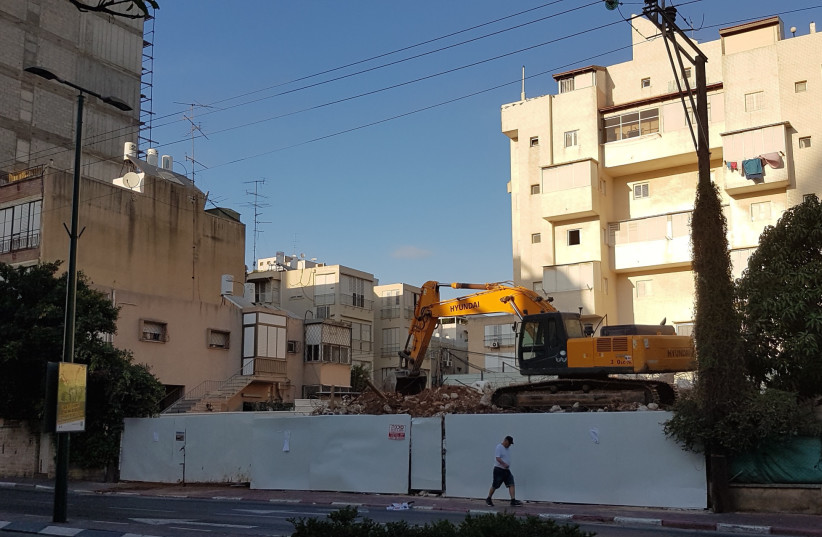
Israel has already experimented with urban renewal through tools like TAMA 38 and local redevelopment agreements, which have given residents improved housing with no direct costs and created safer neighborhoods.
But these programs have remained limited in scale, too slow in pace, and overly reliant on municipal initiative and market conditions.
Rather than investing in temporary fixes for unsafe, outdated buildings, the government should incentivize full redevelopment by granting expanded building rights and encouraging private-public collaboration.
Developers benefit from profitable projects, residents gain secure new homes, and the state reduces long-term exposure to disaster-related costs.
Demand for secure, modern housing in city centers is growing, but bureaucratic inertia, particularly at the municipal level, continues to stall urgent progress.
Israel must act to break bottleneck
To break this bottleneck, Israel must act on three strategic levels:
Firstly, create a national emergency redevelopment mechanism, with a fast-tracked planning and approval process for crisis-affected areas. A special inter-ministerial task force should be empowered to override regulatory delays and coordinate efforts across government bodies.
Secondly, empower local authorities as project leaders through targeted municipal recovery funds and clear authority to advance planning without years of red tape.
Finally, develop a robust incentive framework that includes: additional building rights for developers, financial clarity and housing guarantees for displaced residents, and a government-backed insurance system to reduce project risks and attract private capital.
TAMA 38 showed that with the right regulatory push, Israel’s real estate market can mobilize quickly – but it also highlighted the shortcomings of fragmented, market-dependent policies.
Urban renewal and redevelopment is critical to Israel's future
In today’s reality, what is needed is a more centralized, agile, and emergency-ready system that treats urban renewal not as a real estate venture but also as a cornerstone of national resilience.
The public is not waiting for long-term planning documents. What’s needed now is visible action: building permits, construction crews, and clear timelines.
Urgent urban redevelopment is the only sustainable path to restoring residents’ physical security, stimulating economic recovery, increasing municipal value, and strengthening Israel’s cities for the future.
Most importantly, it ensures that the state fulfills its core responsibility: protecting its citizens – not only during times of war, but in the critical aftermath.
The writer is CEO and owner of ELG Investment Group, specializing in real estate in Israel and abroad.