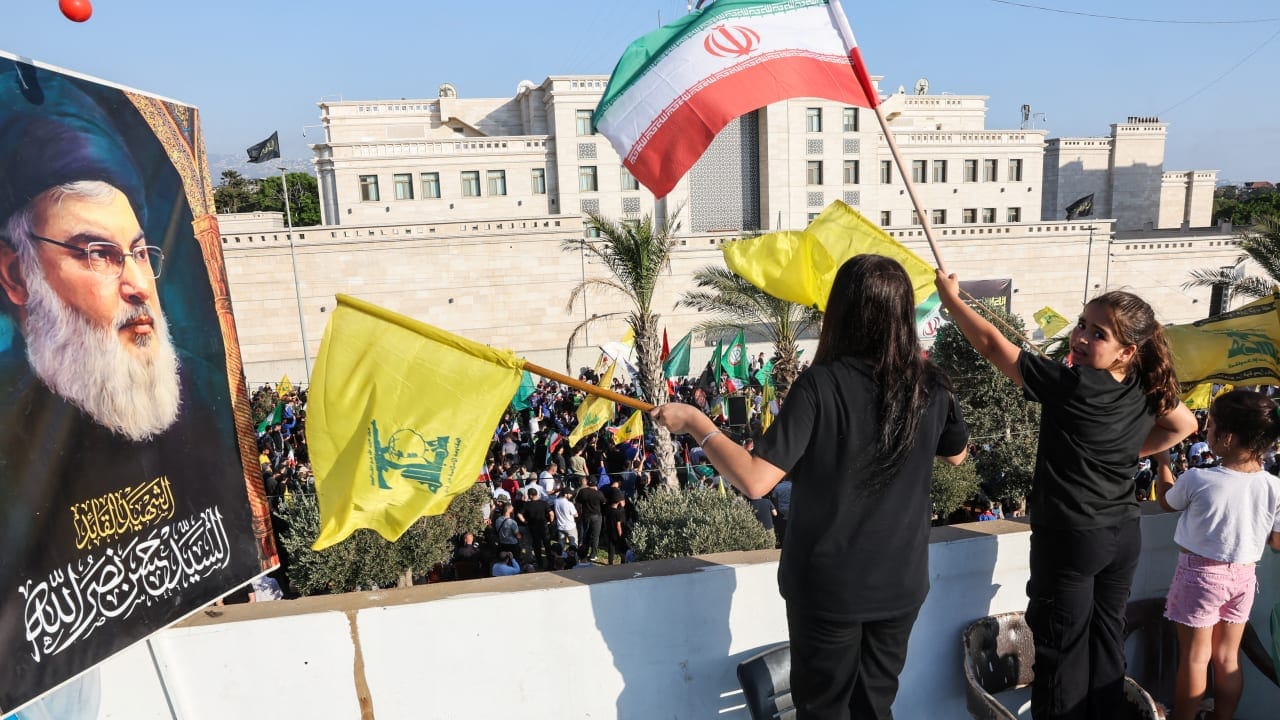
As international efforts to counter Hezbollah continue, much of the focus remains on the Middle East. Yet the terror group’s financial networks extend far beyond the region, reaching into several African countries where weak oversight and informal economies create openings for illicit finance.
The Iranian-backed Lebanese group’s financial networks span much of Africa, feeding its operations in the Middle East. Countries such as Cote d’Ivoire, Guinea, and Sierra Leone have all been cited in investigations and sanctions as nodes in this transnational web.
One of Hezbollah’s most brazen strongholds in Africa is the Democratic Republic of the Congo (DRC). Far from being an unwitting victim of transnational crime, the DRC has become a permissive environment – and at times, an outright facilitator of Hezbollah’s financial empire.
Hezbollah, a designated terrorist organization, relies on a global financing network to sustain its military operations and regional influence. For years, the DRC has played a quiet but critical role in this apparatus, offering a lawless business environment, corrupt financial institutions, and low political will to intervene.
The US Treasury Department has repeatedly exposed Hezbollah’s financial presence in the DRC. In 2018, the Office of Foreign Assets Control sanctioned several DRC-based individuals and companies involved in generating tens of millions of dollars for the terror group. These networks use front companies – often in mining, trade, and construction – to legitimize illicit transactions.

They exploit weak compliance at Congolese banks and take full advantage of Kinshasa’s unwillingness to investigate politically connected operators.
This is not just about institutional weakness; it is also about neglect and, in some cases, open facilitation. Investigations have shown that certain DRC financial institutions – including BGFIBank DRC – have enabled sanctioned Hezbollah financiers to bypass restrictions and move funds globally.
The consequences extend far beyond Africa. Every dollar laundered in Kinshasa helps Hezbollah finance its recovery from the war with Israel. The DRC’s leaders may hope to benefit from the influx of illicit capital, but they are in fact empowering one of the world’s most dangerous non-state actors. This isn’t just a Congolese problem; it’s a global security threat.
Despite some US efforts to curtail this activity, the DRC has faced no significant consequences for its role in Hezbollah’s financial networks. The country has continued to receive hundreds of millions in US aid and diplomatic support throughout the years, even as it refused to act against Hezbollah’s financiers.
United states can pressure DRC
But now, new opportunities have emerged to pressure Kinshasa into taking action. The Trump administration has demonstrated its willingness to withhold aid from countries that defy US interests. It has also brokered a peace agreement between the DRC and Rwanda aimed at ending hostilities in the eastern part of the country.
The US now holds a position of renewed influence over the DRC – and it should leverage this to demand greater action on other national security priorities.
The United States has several avenues of influence. First, it should demand comprehensive action to block all Hezbollah-affiliated institutions and individuals from operating within the DRC. If these efforts are not taken seriously, sanctions should be expanded to target any DRC entities that knowingly facilitate or shelter illicit financial flows. Additionally, US aid should be conditioned on measurable reforms in combating terrorist financing.
Moreover, the US should elevate this issue in its broader counterterrorism strategy and foreign policy toward Central Africa. The State Department should pursue bilateral and multilateral efforts to avert the DRC’s financial role in Hezbollah’s global operations.
Finally, Washington should empower investigative journalism, civil society, and whistleblowers in the region who are working to expose these networks at great personal risk. Transparency is Hezbollah’s enemy.
Some may argue that the DRC faces too many internal challenges to effectively police international terror finance. But those very challenges are what make it such a useful conduit for Hezbollah’s financial operations. The issue is not just one of capacity alone; it is also a matter of priorities and political will.
Hezbollah’s presence in Africa poses a direct threat to American interests on the continent. In the wake of the successful US-Israeli operation to dismantle Iran’s nuclear program, Tehran and its allies are likely to regroup – and possibly seek revenge against American targets. The United States should capitalize on its newly assertive global image to push back against Iranian influence in Africa, starting with Hezbollah’s footprint in the DRC.
If we are serious about dismantling Hezbollah’s global financial infrastructure, all enablers must be held accountable, including those who benefit from looking the other way. The DRC is not uniquely culpable, but it is strategically significant. Ignoring its role undermines the effectiveness of broader counterterrorism efforts. It’s time to elevate this issue and to back words with action.
The writer is a senior research fellow at the Israel-Africa Relations Institute and a teaching fellow in the Political Science Department of the University of Houston.