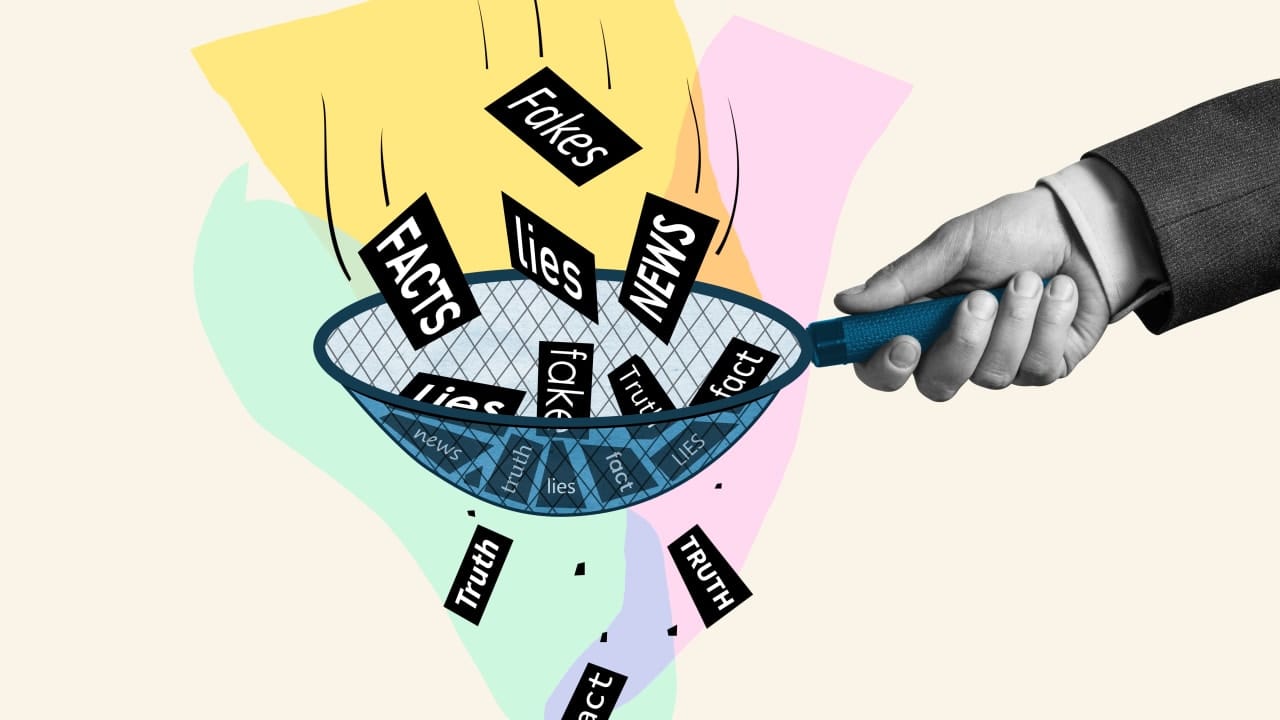
If someone asked you to write an article for a prestigious journal, how would you approach the task?
Well, if it is your first go around, you would probably ask for guidance from the one who assigned it to you. For me, however, this not being my first rodeo, I pretty well know what the reader wants and expects.
Accomplished writers who are good at their craft will include new information unknown to the reader – what we will from hereon refer to as the “truth.” And secondly, and most importantly, the writers will reaffirm (or parrot, if you will) the beliefs of their readers – what is commonly referred to as “opinion.”
I being neither accomplished nor good, will do neither.
Allow me to explain.
The importance of truth and facts
We all would like to think that the truth is self evident – always there in black and white; always the victor. It’s hardly so!

Truth has replaced “facts” in both its interpretation and usage. Take for instance one of the film world’s great dialogues about truth. In the movie A Few Good Men, Tom Cruise demands the truth. What he is basically asking for are the facts that will put the Marine accused of murder behind bars.
However, Jack Nicholson, as the colonel, not to sully his own reputation or that of the military, is wary about relinquishing those facts. In either case, it is left up to the panel of judges in the court martial to determine what is true and what is not – hardly self-evident. Truth is subjective; facts are not.
Opinion is a lot easier to discern, but it tends to creep up more subtly. The writers, if they are good, will try to bend the truth to fit their agenda and couch their opinion by using subjective phrases such as “and on the other hand [... five fingers?].”
So why do we continually gravitate toward articles that are factually incorrect? Why do we watch or listen to podcasts that either raise our ire or soothe our anxieties, irrespective of how the facts are misrepresented? (and for a New York minute, let us be intellectually honest – we all do it).
So why is that? Is it our desire to be close to like-minded people or is it that we might want our “enemies” to be closer? Or maybe it’s that we have way too much free time on our hands.
Would we not be all better off if a truly frank and honest journalist opened with the following: “Dear reader, I shan’t bother to confuse you with the facts, however I feel...” and in that manner be clear from the onset where he or she stands, regardless of the facts, and allow the reader and writer to maybe spend more time assisting those in need or even volunteering for some worthy cause.
So, where do go from here? Well, why not let this short introductory piece be a basic blueprint for what you, the reader, might expect from me in any future scribblings, if I were to ever get another opportunity. Suffice is to say – if you are reading this, I will more than likely get another “kick at the can.”
We are desperately in need of more facts and less opinion. I therefore humbly would like to advocate a new way for writers and readers to communicate. We might call it “the two E’s.” One for “enlightenment,” where a hack (like moi) presents substantiated facts in (2) – an “entertaining” fashion. We can all agree that dry, dusty facts could always use a bit of jocularity.
Will the task be difficult? Sure, but no more difficult than a first-timer trying to put pen to paper and coming up with something half-way readable. The readers of The Jerusalem Report or, for that matter, any printed material, need the unvarnished facts that will allow them to formulate their own opinion – an opinion that suits their needs, not those of the writers. Maybe then, one day in the near future we will be able to use the words “truth” and “facts” synonymously.
Thank you for allowing me five minutes of your precious time. I will now let you return to your regularly scheduled opinionated truth.■
Mark Glatt is a part-time journalist and, much to the irritation of his sons, a full-time father and grandfather.