Since 2020, the term “routine” has adapted itself to new meanings: survival, resilience, hope. From the deadly COVID-19 virus that spread globally, bringing lockdowns, illness, and devastating countless sectors and businesses, came a blurring of boundaries between home and work, a shift from dining out to eating exclusively at home.
Then came the Russia-Ukraine War, affecting countries across Europe and the world, disrupting supply chains, energy prices, and grain markets. Next, there was the Israel-Hamas War, a bloody conflict that continues to this day, with all of us hoping for the immediate return of the hostages.
Now, there’s the Israel-Iran War that loomed as a dark cloud for years and is now manifesting in reality, offering hope for a better future, but alongside a harsh present where the Israeli home front is under emergency status and exposed to ballistic missiles and UAV attacks.
Throughout this prolonged rolling event of the past five years, we have mainly seen its geopolitical, military, security, economic, and social impacts. The government declares a state of emergency, citizens are drafted under emergency orders, children are out of school, workplaces shift to Zoom, and the Home Front Command app becomes a household name.
But one of the first actions people take during a crisis? Rushing to the supermarket to stock up on food.
War or lockdown pushes us into extended periods at home, increasing food consumption. This is reflected in the double-digit surge in grocery purchases reported in the first days of each conflict. At the same time, we experience rapid shortages of essential goods, restrictions on the number of items per household (water, toilet paper), and delivery services collapsing under demand.

The common denominator in all these crises, beyond the obvious security threat, is the urgent, vital need to protect local food security. Fresh agricultural produce grown on Israeli soil – our fruits and vegetables – takes on heightened importance, especially given Israel’s geographic and geopolitical location.
Without a strong Israeli agricultural sector, the country will increasingly rely on imports. And during any crisis – be it a pandemic, war, or international conflict – this dependency can result in significant food shortages affecting all citizens.
Negev Produce
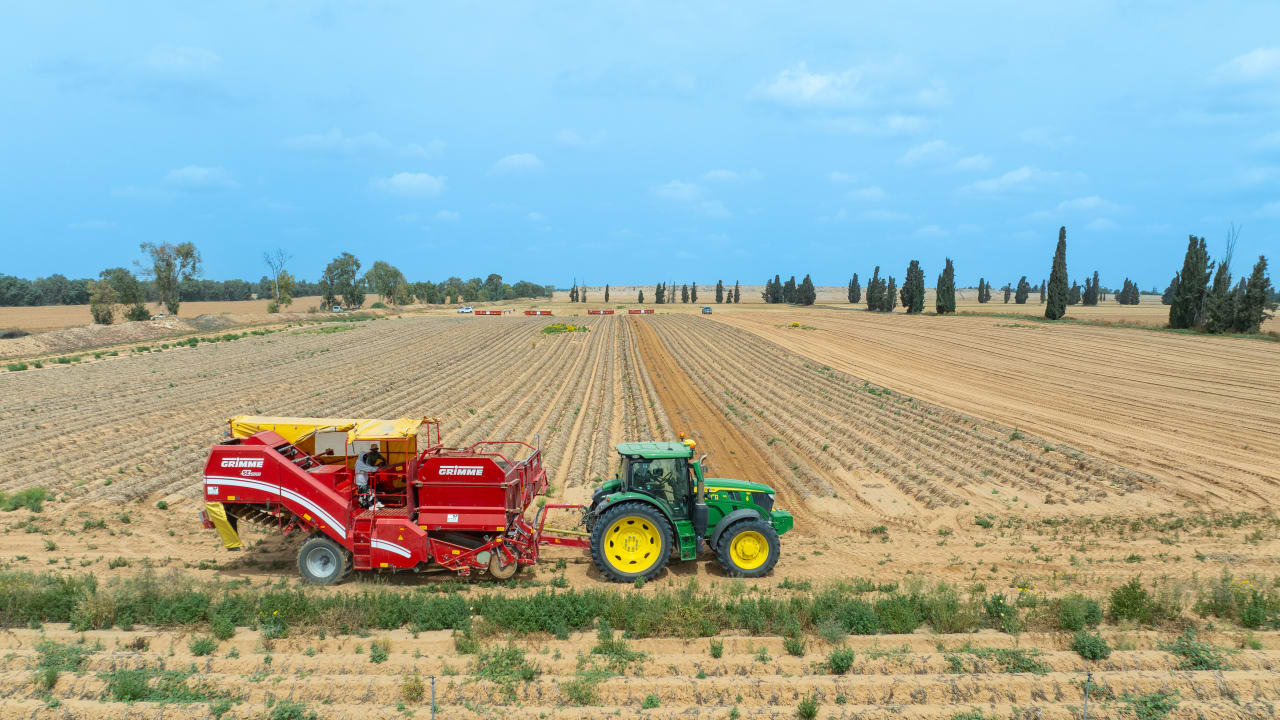
At Negev Produce, the marketing and trading company for the kibbutzim of the Gaza border communities and Western Negev, we understand intimately how essential fresh agricultural produce is – not just for Israeli consumers but also, during times like these, for the defense establishment as we supply key food products to Israel’s security forces.
In fact, around 65% of Israel’s total fresh produce is grown in the Western Negev and Gaza border communities. As leading players in crops like potatoes, carrots, avocados, citrus fruits, radishes, and more, we’ve had to respond to surging demands in past crises. In the Iran-Israel War, too, we immediately saw more than a 10% spike in demand for fresh produce in the first days alone.
Since the war began in October 2023, farmers in the Negev and Gaza border communities have suffered severe personal losses: loved ones kidnapped or murdered, homes burned, families evacuated.
Agricultural infrastructure was also hit – fields left unharvested, orchards inaccessible due to military activity, equipment destroyed or burned, and foreign workers fleeing the country, creating a severe labor shortage.
Despite their grief and the mental toll, these farmers got up each day and returned to their fields under fire with devotion, resilience, and commitment to food security from the morning of October 8, 2023, onward.
It is only during military or political crises that people grasp just how crucial local agriculture is to Israel’s defense. As an “island economy” surrounded by often-hostile neighbors, Israel’s vulnerability during crises makes the availability of fresh produce even more critical. Ensuring food security is not a patriotic slogan; it is a national necessity.
So why is it that, despite knowing the Negev and Gaza border communities are central to Israel’s food supply, we only remember in times of crisis that supporting local agriculture is as essential as the Iron Dome or any other defense measure? The Israeli government must prioritize agriculture – not only in wartime but as a standing strategy in times of peace.
Decision-makers must develop a clear national strategy
To create a strong, thriving, and secure agricultural sector, decision-makers must develop a clear national strategy focused on investment, support, and advancement. Here are five pillars of such a strategy:
1. Reducing dependency on imports: The COVID-19 pandemic demonstrated how fragile external supply chains are. Global trade in fresh produce relies heavily on maritime logistics, which have become significantly more expensive and unpredictable. Geopolitical instability makes it even harder to maintain timely, cost-effective import routes.
For example, the tomato import dispute with Turkey caused immediate shortages and price spikes. If foreign markets become the main alternative to Israeli-grown produce, the damage to local growers and farmland viability could be severe. Investment in local farmers, efficient logistics, and consumer education are key to nutritional stability and community resilience.
2. Supporting border communities: Much of Israel’s agricultural land lies near its borders – regions frequently under threat. Farming in these areas can pose direct risks to human life, yet agriculture remains the anchor that sustains these communities. It keeps land cultivated and offers local employment. These populations need support – not only during crises but continuously – through education, cultural infrastructure, and economic incentives.
3. Promoting Western Negev produce: It’s time to strengthen and expand export activity from the Western Negev – exploring new markets, growing presence in existing ones, enhancing business development capacities, and integrating local produce into new industrial and value-added markets.
4. Investing in agritech: Turn the Western Negev into a national and local hub for agricultural innovation. That means promoting applied research, developing sustainable agriculture to address climate change, and encouraging the adoption of technologies like AI, Big Data, and robotics. Offering tax benefits to agritech start-ups, establishing investment funds, and renewing R&D infrastructure will also be key.
5. Education and employment: Develop advanced training programs and promote agricultural employment through better working conditions for foreign laborers, incentive grants for Israeli workers, funding innovation, and integrating agriculture into school curricula from a young age – creating the next generation of farmers in the Western Negev.
In an era of global crises, climate change, and trade wars, local food security is not a luxury; it is a necessity. Strengthening the local supply chain – especially for fresh produce like fruits and vegetables – ensures food availability, reduces import dependency, and boosts the local economy.
Food security is the foundation of national resilience. It starts in the field, and ends on our plates.
The writer is the CEO of Negev Produce.