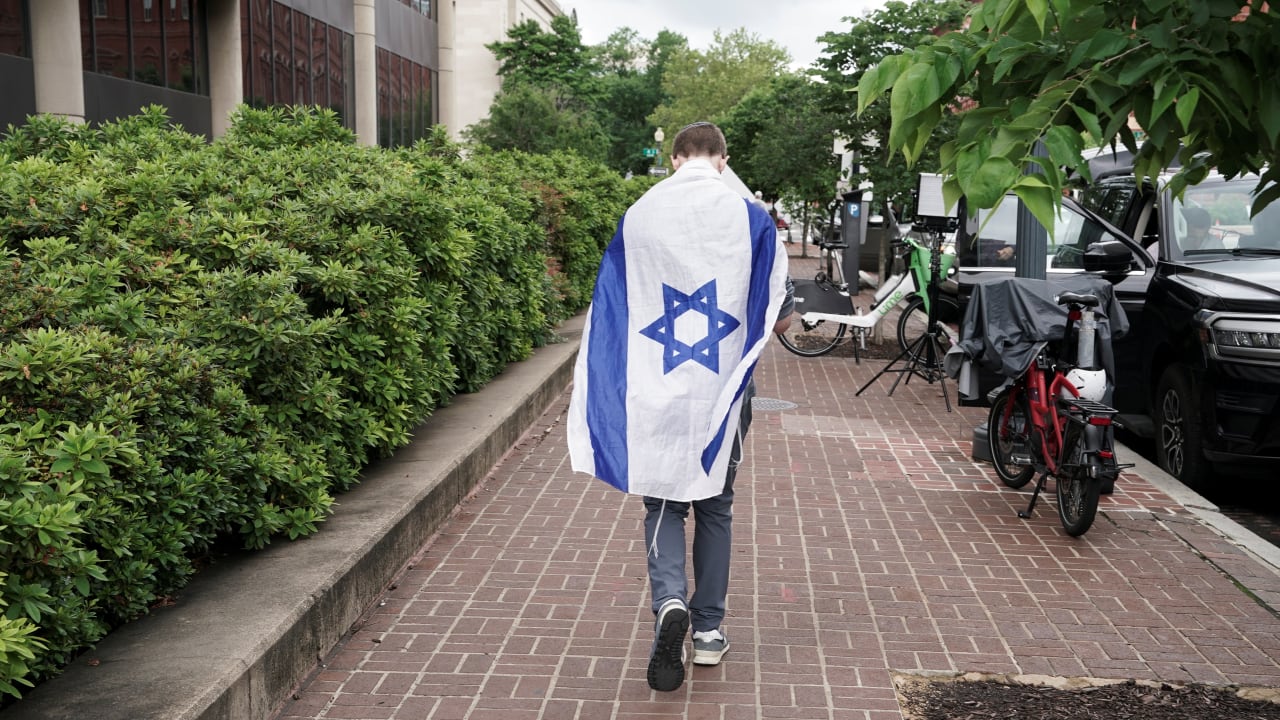
In March of this year, the US Senate Judiciary Committee held a hearing entitled Never to be Silent: Stemming the Tide of Antisemitism in America. Not to be outdone, a few weeks later, the US Senate Committee on Health, Education, Labor & Pensions held its own antisemitism hearing entitled Antisemitic Disruptions on Campus: Ensuring Safe Learning Environments for All Students.
Both hearings were long overdue, but as was to be expected, Republicans thundered about antisemitism on the left while Democrats fulminated about antisemitism on the right. Was this because of typical partisanship or was something deeper afoot? To ask bluntly, is the growing political divide within the Jewish community’s religious denominations driving how American politicians engage on the Jewish community’s interests?
To understand this divide and make sense of it for policymakers, soon after those hearings concluded, the Jewish Electorate Institute, the nation’s only independent, non-partisan organization dedicated to researching the issues that move American Jewish voters, conducted a wide-ranging poll of Jewish voters’ views on domestic policy.
Divides within the Jewish community
What our poll finds, beyond the normal “consensus” views of the Jewish community, is that a deeper problem exists within the Jewish community than we want to recognize, one that threatens to exacerbate the already stark partisan divides within our community.

And that’s the growing political divide between Orthodox and non-Orthodox Jewish voters. We all know about it, and we ignore it at our peril.
In our poll, roughly 10% of the respondents were Orthodox, consistent with national data of the community’s demographics as a whole. 21% were members of the Conservative and Reconstructionist movements, and 37% were Reform. The remaining 32% did not identify with any particular Jewish denomination, also consistent with national data. The differences between Orthodox and non-Orthodox opinion are stark.
During the 2024 election, the Orthodox say that they voted for Donald Trump with 74% of their votes. For Harris, the non-Orthodox vote is the inverse and ranged from 70-84% for her. In House races, only 16% of Jews overall say they split their votes, meaning remarkable consistency down ballot, allowing us to assume that the same numbers hold for both local and Senate races.
On the question of whether the country is on the right track, 68% of the [?largely pro-Trump?] Orthodox say yes while the non-Orthodox range is 16-30%. On the question of approval of President Trump’s handling of his job, it is 71% favorable for Orthodox versus only 14-25% favorable for non-Orthodox. On the question of how Trump is handling antisemitism, there is 75% net approval amongst the Orthodox versus 24-39% amongst non-Orthodox. And on the question of deporting individuals without a court hearing, the Orthodox have a net support of 62% versus a range of 12-25% support amongst non-Orthodox.
The data are clear: Orthodox Jews supported Trump in the election and still strongly do. The opposite is the case for non-Orthodox Jews.
It’s also worth noting that on the question of connection to Israel, where voters are measured on their belief in a shared fate with the Jewish state, the Orthodox also far outpace non-Orthodox, with 36% expressing a very strong connection to Israel, versus a range of just 8-17% for non-Orthodox.
Yet the starkest difference on core Jewish issues – and one that truly peppers the community’s views on the war in Gaza - is actually about leadership in Israel. On this question, 79% of the Orthodox hold favorable views of Prime Minister Benjamin Netanyahu, while only between 27-40% of non-Orthodox hold positive views of him. This is the greatest gap between Orthodox and non-Orthodox in the poll overall.
What this all means is that we, as a Jewish community, have starkly divergent views that need to be addressed. And the impact of these gaps is creating a wedge between Republican and Democratic politicians attempting to navigate these thorny issues, precisely when, as a community, we need bipartisan leadership most.
For far too long, polls of the Jewish community have tended to focus on “what the majority thinks,” without explaining that that majority is almost overwhelmingly Democratic. The result is that minority Orthodox views have often been ignored by Democrats, and vice versa. This has real-world consequences, as the Jewish community needs bipartisan backing, not partisan bickering.
So if there’s one key takeaway of the past several months of policy debate and community trauma, as identified in this poll, it’s that the Jewish community needs to find a way to bridge our political gaps to have any hope of getting the nation’s two political parties to substantively work together when confronting antisemitism.
Because if we can’t get our own house in order, our community’s ability to fight antisemitism will continue to fall prey to the political partisanship gripping the country.
Barbara Goldberg Goldman is the Board Chair of the Jewish Electorate Institute.
Joel Rubin is its Executive Director.