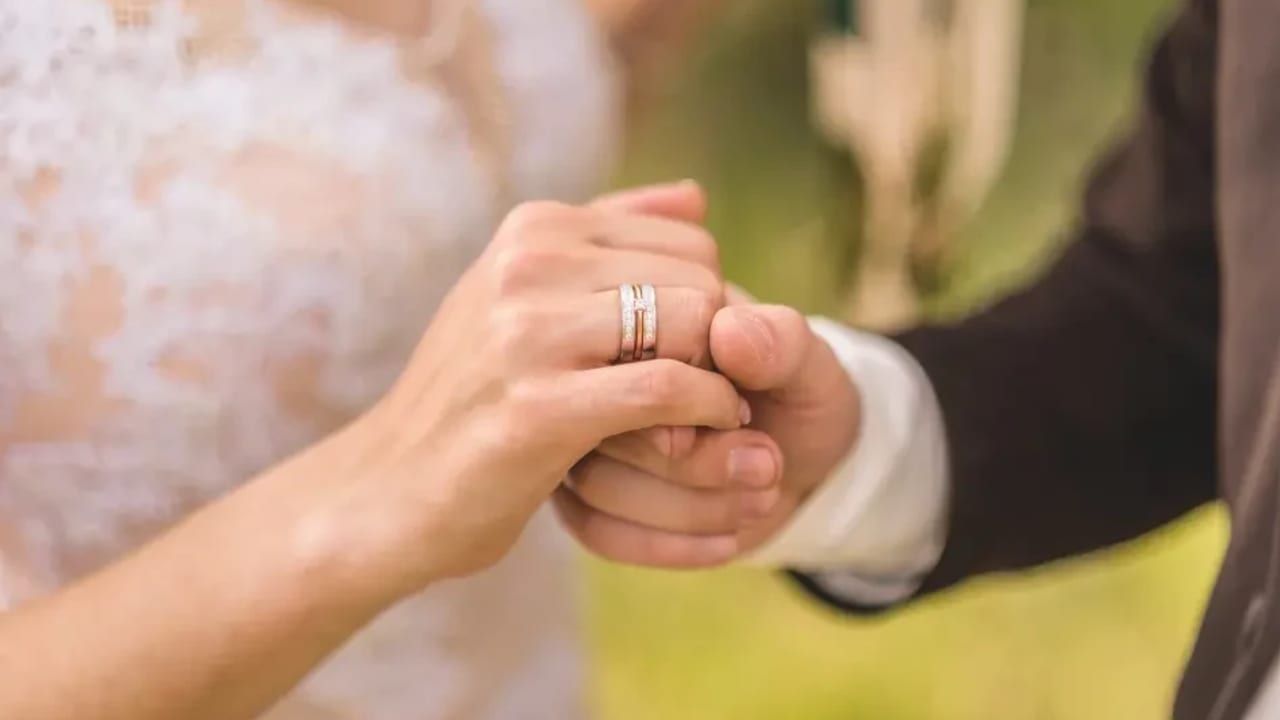
After the big "yes," comes the next step on the to-do list for newlyweds - changing their name to become one united family. But it turns out that the younger generation no longer takes this for granted. A new study reveals a surprising trend: Younger women are choosing to keep their last names, and maybe it's time we understand why.
It always seemed like a natural step - after saying "I do," the next step on the list is a name change to cement the newlyweds' union as a new united family. Among straight couples, tradition dictates that the bride drop her last name and adopt her husband's after the wedding. But trends are changing, and many couples are delaying the process, skipping names, or forgoing a legal name change altogether.
While it's not a requirement of marriage, changing your name can have its advantages - and disadvantages. While becoming a family under one name can create cohesion for couples, the process of changing your name is a bit of a bureaucratic nightmare, causing some couples to delay the legal change just to avoid the paperwork. It can also be tricky for those who know them professionally by their last name to switch to a new last name.
In 2023, a comprehensive study by the Pew Research Center conducted in the United States and published in academic journals showed that 80% of women in heterosexual marriages in the US changed their names as soon as they got married.

The study, which included interviews with thousands of married and single women across the United States, revealed an interesting trend: There are signs that this number may change dramatically with the next generation. However, there are also signs that this number may change with the next generation, as 11% more women under the age of 50 kept their last name than their older counterparts, and only 33% of single women were certain that they would take their future partner’s last name.
The history of changing names after marriage
Changing a woman's name after marriage is a patriarchal tradition that is thought to have originated in medieval England, where women were seen as property passed from father to husband.
As a woman would leave one family to join another through marriage, she would adopt the new family name to which she belonged. This tradition has been preserved over the centuries and has been passed on to other cultures.
In more egalitarian societies today, the practice continues more for the sake of tradition.
While some countries, including the US and Israel, give women the choice of whether to change their names after marriage, others, such as Japan, legally require them to change their names. In contrast, countries such as Italy, Spain, Greece, Belgium and Korea prohibit married women from changing their surnames - they must keep their original names.
The trend for women in the US to keep their maiden names has grown alongside the rise of the feminist movement.
The title "Mrs." entered the English lexicon in the 1960s as women wanted a more mature prefix to go with their maiden names, and more women kept their original surnames for professional reasons.
In recent years, there has been a growing trend for couples to combine their surnames. On a smaller scale, some men will take their wife's name, and other couples will create an entirely new surname once they are married.
Why do some still choose to change their name?
Changing your name after marriage is still the most common practice for couples in the US. Many choose to do so because the shared name not only serves as a symbol of your family uniting together, but also allows future children to have the same last name as both parents.
In conversations with my married friends, it became clear that in many cases, there was a significant emotional impact that pushed them to change their name.
Not all couples change their last names in a legal sense. Some shared that they decided to go by their partner's last name socially, but kept the legal name instead because they had businesses in their own name. Many noted that the paperwork was enough of a headache that they chose to avoid the switch.
The legal process of changing your name has become a little easier with the rise of companies like NewlyNamed and HitchSwitch in the US that streamline the paperwork for you, but it still requires time and a lot of paperwork.
Another solution that is gaining popularity is combining the two names - instead of changing them completely, women choose to add their husband's name to their original name.
Brand strategist Victoria de la Fuente Aires explained why she added her husband's name to her original name: "I thought it was a good compromise. I got married later in life and built a career and reputation under my original name, so it didn't feel right to completely erase it."
In Israel, married women can choose to keep their maiden name, change to their husband's name, or combine the two names. Registration on the ID card allows for great flexibility in switching between these options, unlike in other countries where the process can be more complex.
Vogue's recent bride, Nicole Amreise, changed her name - as did her husband. "Together, we decided to create a new one for our new life together," she said. "We gave ChatGPT information about the etymology of our old last names, and had it generate last name options for us that could relate to our heritage and cultures."
Why do others choose to keep their name?
The decision to keep a surname after marriage really often comes down to showing respect for one's family heritage and the personal history one has associated with their name throughout their life.
As Vogue contributor Angela Tapuya said, "I wanted to keep my sense of culture and identity in my name." She's happy with her decision but added, "It's harder with kids."
Another married friend said she chose to keep her maiden name because her parents only had daughters and wanted their family name to continue.
Several shared that they didn’t take their spouse’s name because of the patriarchal history associated with taking the husband’s name. Most of the women I spoke to said that keeping the name they built in their careers was worth not making the change.
Wedding planner and former HGTV host Tracy Taylor Ward explained, “I used my name for work since I was seven years old and felt very attached to it professionally.”
One woman revealed that she legally changed her name when she got married, but after her divorce, she would avoid doing so again if she remarried in the future. Her short reason why? “I wasted my time.”
What this means for feminism, identity and family
What's in a name? It's often a big marker of a person's identity and family history. It's no surprise that many women feel that changing their name feels like losing a part of their identity. On the other hand, there is a logic to the feminist choice not to take a husband's name, especially given the history of this tradition, which was based on the perception of women as property.
However, there is also logic in choosing to unite under one surname and build a new family identity together. Ultimately, each couple needs to find the solution that works for them - keeping the original names, combining names, or creating a completely new name.
The situation in Israel - between tradition and innovation
In Israel, the situation is particularly interesting. Local studies show that among young secular women, a higher percentage choose to keep their maiden name or combine it with their husband's name. Among the religious and traditional public, the tradition of changing to their husband's name is still stronger, but there too changes are beginning to be seen.
What is unique about Israel is the combination of Jewish tradition, where the family name is of great importance from a religious and genealogical perspective, and the young Israeli spirit that encourages gender equality. Many women say they want to honor their family tradition, especially if they are the first generation in the country or if there is a special family history.
The phenomenon of "name combination" is gaining particular popularity among young couples in Tel Aviv and the center, where you can see creative combined names that combine both heritages. Some couples even choose to create an entirely new last name that combines elements from both sides' families - a trend that is starting to develop here as well.