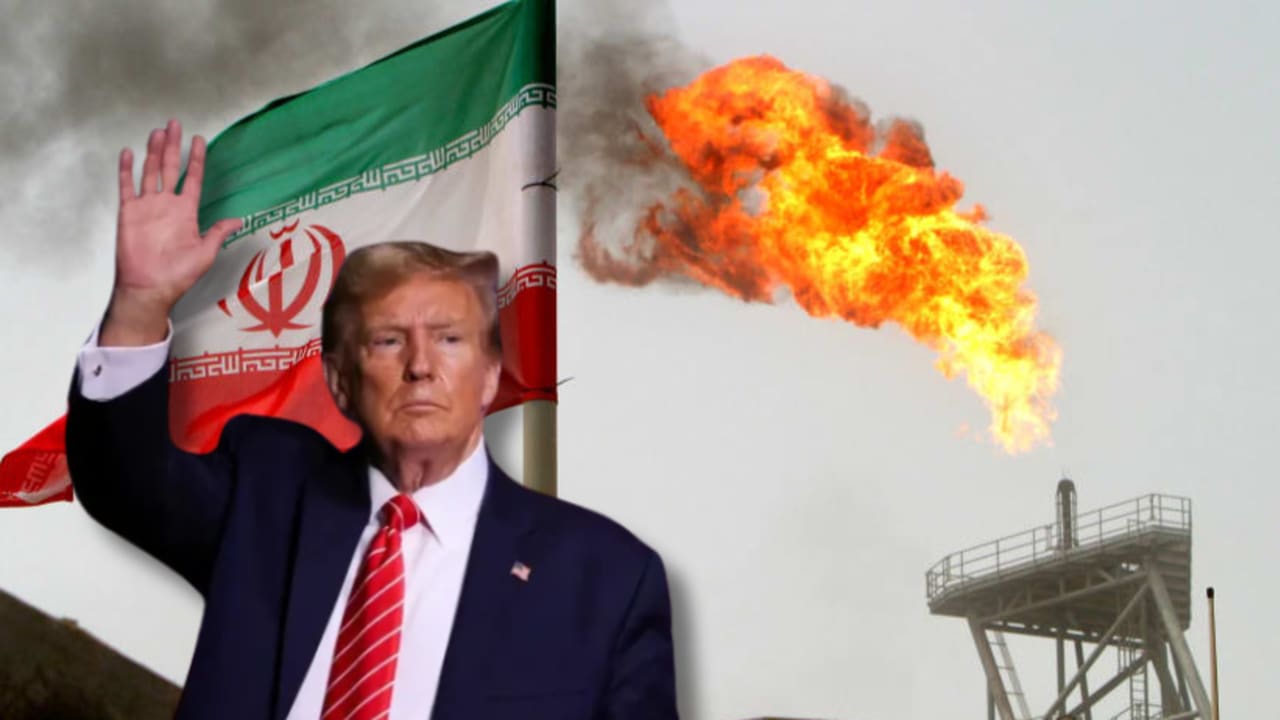
It was only natural that as soon as news broke Saturday night of the skeleton of a deal with Iran, the immediate questions were whether it was good or bad, whether it cemented an American or Iranian victory, and what it meant for Israel.
The problem with answering those questions is that the details of the agreement are so sketchy – and changing so rapidly – that any definitive judgment is premature. There is no written document, only media speculation based on unnamed sources about what may or may not be included.
Another complication is that assessments of the agreement are naturally filtered through the prism of politics. Die-hard supporters of US President Donald Trump and Prime Minister Benjamin Netanyahu are portraying the agreement in positive terms, seeing the glass as half-full. Their opponents, meanwhile, are predictably painting the emerging deal as an unmitigated disaster.
Nevertheless, something is clearly on the table. So is it a good deal or a bad one?
According to Trump’s own social media posts, a Memorandum of Understanding is being discussed. According to various reports, the MoU would extend the current ceasefire by either 30 or 60 days.

During that period, the Strait of Hormuz would reopen without tolls, the blockade of Iran’s ports would end, Iran would be allowed to sell oil again, and talks on Tehran’s nuclear program would commence. The ceasefire would also extend to Lebanon, halting the fighting there.
The New York Times quoted US officials as saying Iran agreed to give up its stockpile of highly enriched uranium. Reuters, however, simultaneously quoted Iranian officials denying any such commitment.
In short, much remains unclear.
What does appear clear, however, is that there is no indication that Iran’s ballistic missile program or its support for regional proxies is part of the agreement.
Does the deal fulfill Trump and Netanyahu's objectives for the war?
So how should the deal be judged?
One useful way is to measure it against the objectives Trump and Netanyahu themselves laid out when they launched the attack on February 28.
Shortly after the joint US-Israel opening strike – which decapitated much of Iran’s senior political and military leadership within minutes – Trump released an eight-minute video on social media saying the operation’s objective was to “defend the American people by eliminating imminent threats from the Iranian regime.”
More specifically, he declared: “This terrorist regime can never have a nuclear weapon.”
That overarching goal still appears aspirational.
Trump has demonstrated seriousness about preventing Iran from obtaining nuclear weapons. But as of now, there is still no definitive resolution regarding Iran’s 460 kilograms of highly enriched uranium.
Various reports suggest different scenarios: some say Iran will relinquish it, others say it will not. And that says nothing about Iran’s lower levels of enriched uranium, which, if not removed or destroyed, could eventually be enriched to weapons-grade.
In other words, while the war has undoubtedly set back Iran’s nuclear program by years – through the killing of scientists and the destruction or severe damage inflicted on facilities such as Fordow, Natanz, and Isfahan – no one can credibly claim the program has been totally eliminated.
Iranian missile program remains functional
TRUMP ALSO said in that original video: “We’re going to destroy their missiles and raze their missile industry to the ground. It will be totally obliterated again.”
Iran’s missile program has indeed been severely degraded, though intelligence estimates vary significantly regarding the extent of the damage. Still, neither Iran’s missile stockpile nor its manufacturing capabilities have been obliterated.
Initial Israeli estimates and some Pentagon assessments suggested that between 50% and 70% of Iran’s ballistic missile launchers were destroyed or disabled, alongside hundreds of stored missiles.
More recent US intelligence reporting, however, indicates that Iran may still retain up to 70% of its missile stockpile and has regained access to much of its underground missile infrastructure.
Severely damaged? Yes. Obliterated? No.
Trump also vowed: “We’re going to annihilate their navy.”
Again, the reality is more nuanced. The US-led campaign severely degraded Iran’s naval capabilities, with US Central Command reportedly assessing that more than 90% of Iran’s largest naval vessels were destroyed.
Yet Iran still retains significant numbers of smaller, highly maneuverable boats that remain capable of threatening shipping through the Strait of Hormuz.
Trump further said one of the campaign’s objectives was ensuring that Iran’s regional proxies could no longer destabilize the Middle East or the wider world.
That objective, too, remains unmet and was left out of the agreement.
While Hamas is still reeling from Israel’s post-October 7 offensive, and the Houthis have remained relatively quiet, Hezbollah continues firing on Israeli forces in southern Lebanon and on Israeli communities near the northern border. Iran has also made clear that any end to the war with Iran must include an end to the fighting in Lebanon.
That would be a bitter pill for Israel to swallow.
After October 7, Israel can scarcely tolerate leaving intact an organization committed to its destruction directly on its border. If Israel agrees to end the fighting in Lebanon while refraining from acting against Hezbollah’s efforts to rebuild and rearm, it risks repeating the pre-October 7 mistake of ignoring an enemy openly preparing for the next war.
No regime change in Iran
Finally, Trump addressed the Iranian people directly in that same video: “To the great proud people of Iran, I say tonight that the hour of your freedom is at hand.”
He stopped short of explicitly calling for regime change, though he added, “When we are finished, take over your government. It will be yours to take.”
Well, that has not happened.
Weeks into the campaign, the Iranian regime remains standing – perhaps one of the war’s greatest disappointments for those hoping military pressure would trigger internal collapse.
That does not mean the regime will necessarily survive in the long term. Iran’s severe economic strain could yet drive large numbers of people back into the streets, as happened in January.
But for now, the goal of regime change – articulated far more explicitly by Netanyahu than by Trump – has not materialized, even as Washington and Tehran appear to be edging toward an agreement.
Netanyahu said the joint US-Israel operation would “create the conditions for the brave Iranian people to take their destiny into their own hands.”
At least for now, this agreement does not create those conditions. Not by a long shot.
“My brothers and sisters, citizens of Israel, a short while ago, Israel and the United States embarked on an operation to remove the existential threat posed by the terrorist regime in Iran,” Netanyahu said on February 28.
Now, on the cusp of some kind of agreement between Iran and the US – with Jerusalem in the uncomfortable position of having little choice but to accept whatever Trump decides – it is clear that Iran has been weakened.
Its nuclear program has been set back. Its military capabilities have been degraded. The existential threat it poses has been reduced. But weakened is not neutralized, set back is not dismantled, degraded is not destroyed, and reduced is not removed.