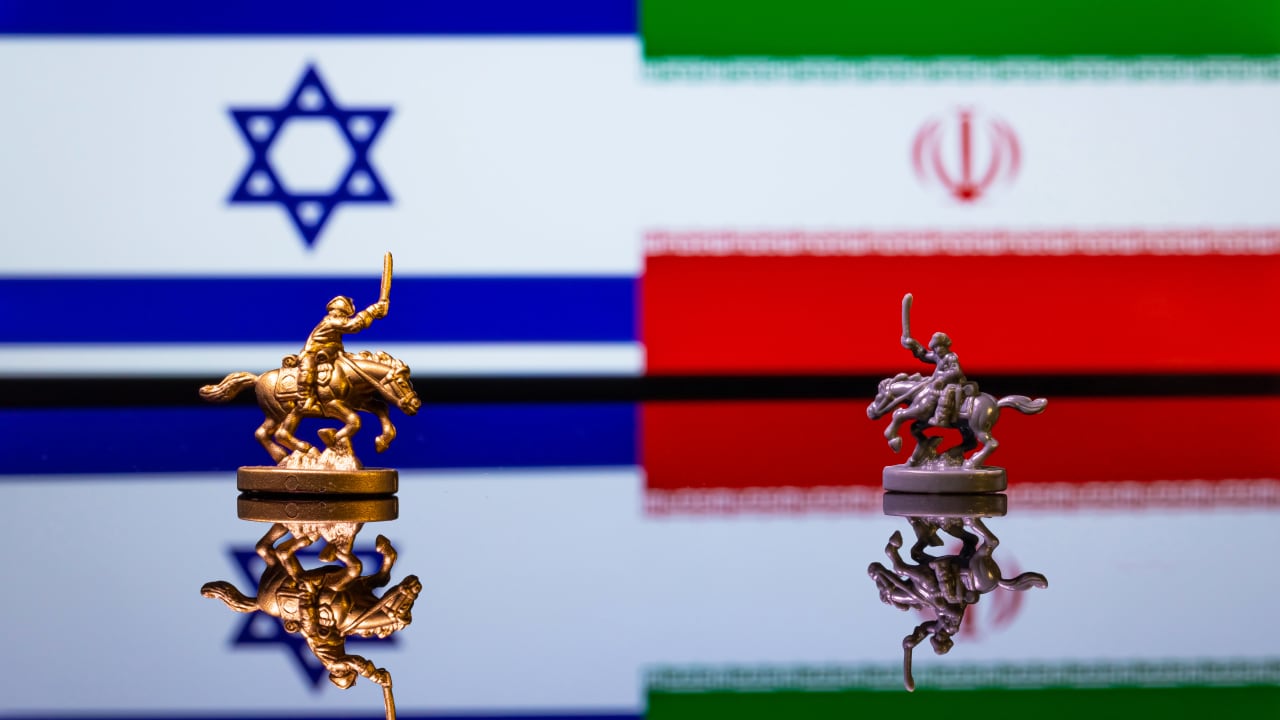
In recent days, Israel has taken deliberate steps to keep Iran out of the public conversation.
Not because Iran has dropped from the agenda, but because the situation has become especially sensitive: a protest movement that is expanding, repression that is intensifying and becoming increasingly violent, and a regime hyper-alert to any external signal it can use to reinforce the narrative it already promotes at home.
According to political sources, the security establishment has asked ministers to curb public comments on the protests and the crackdown, out of concern that every word could within minutes become propaganda material, a pretext for harsher repression, or another brick in the claim that “Israel is activating the street.”
This was not a formal gag order, nor a total blackout. Isolated statements continued, but the direction was clear: caution, restraint, and careful weighing of every word.
On Monday night, improvised silence gave way to institutional discipline. A formal message sheet was distributed to ministers. Until then, the messaging had circulated quietly; now it is official. The small cabinet convened that evening, and the political-security cabinet is scheduled to meet again on Tuesday.
This progression - relatively quiet, a few limited deviations, then formal framing and two high-level meetings - speaks louder than any public address. Israel is recalibrating, not celebrating.

Under pressure, Iran may escalate, not weaken
There is no working assumption in Jerusalem that the Iranian regime is about to fall. Nor is there planning based on optimistic projections. The prevailing assessment is that Tehran’s rulers know how to buy time, survive pressure, and maintain control, even when cracks appear.
This presents the paradox keeping Israeli officials awake: regimes under pressure do not necessarily weaken externally. In moments like these, they tend to search not for solutions- but for enemies.
The fastest way to turn a crisis of legitimacy into a nationalist cause is to manufacture a sense of siege. That need not be a strategic master plan. It can be reactive — a misstep, a show of force, a signal that spirals beyond control.
In this context, the message sheet is not just a public relations tool. It is an X-ray. It adds no new facts, but enforces strict discipline.
On one hand, its tone is clear: the regime in Tehran is portrayed as repressive, and Israel places itself on the side of the “free world.” On the other hand, deterrence is immediately emphasized: any attempt to harm sovereignty or civilians “will be met with force and decisively.”
This is not a proactive declaration, but a response framework. Then comes the anchor that says more than any slogan: an explicit reference to the damage inflicted on the missile industry and the nuclear program during Operation “Am Kelavi.” This is neither nostalgia nor self-credit. It is a dual message: inward, to align ranks and prevent loose talk in tense moments, and outward, to signal to Tehran that there is no hesitation in inviting a “test.”
The most revealing element of the document is what is missing. There is no call to topple the regime and no attempt to portray the protest movement as an Israeli “project.” This is not softness; it is strategic discipline.
Israeli officials understand that the moment the government is seen as leading the Iranian street, the regime receives a gift: a clean narrative that allows it to shift from repression to “national defense.” The chosen formula is precise: empathy for the people, delegitimization of the government, and a deliberate distance from direct involvement in events.
Above all of this looms the United States. The return of the Trump administration to center stage, with a style that blends public pressure and a tendency toward sharp decisions, requires Israel to play a double game: full coordination at every level, without appearing to be the one striking the match.
This is not a matter of diplomatic courtesy, but a clear-eyed reading of past patterns. Even when Washington confronts Tehran, Iran may include Israel in its response, not because Israel initiated anything, but because it is a symbolic and convenient target, and because it suits the regime to frame the confrontation domestically as a war against the US’s “regional proxy.”
Publicly emphasizing the alliance with the US is therefore not merely symbolic; it is an effort to lock in a working framework: coordination, rules of engagement, division of responsibility, and prior understandings about “the day after,” without statements that push the system toward escalation.
This logic also explains the decision to hold two cabinet discussions in quick succession. If there is debate, it is not about “whether,” but about “how,” and how quickly: how to prepare for a graduated Iranian response, how to narrow the room for maneuver of proxies waiting for Tehran to divert attention outward, how to enforce ceasefires without sliding into a broader conflict, and how to build response options that preserve deterrence without igniting new fronts. Hovering over all of this is the most dangerous scenario of all, miscalculation, an event that escalates too quickly because each side assumes the other has already decided to escalate.
This, ultimately, is the evolution of Israel’s position: fewer declarations, more management; fewer sweeping statements, greater discipline and risk engineering. Jerusalem sees the events in Iran not as the end of a regime, but as an earthquake that could shift its behavior - with tremors that reach far beyond its borders.
That is why Israel is doing the hardest and least cinematic thing in policymaking: buying time. Trying to control tempo. Preventing Iran - or its proxies - from dictating the terms and timing of the next round. In moments like these, the side that accelerates often pays the price.