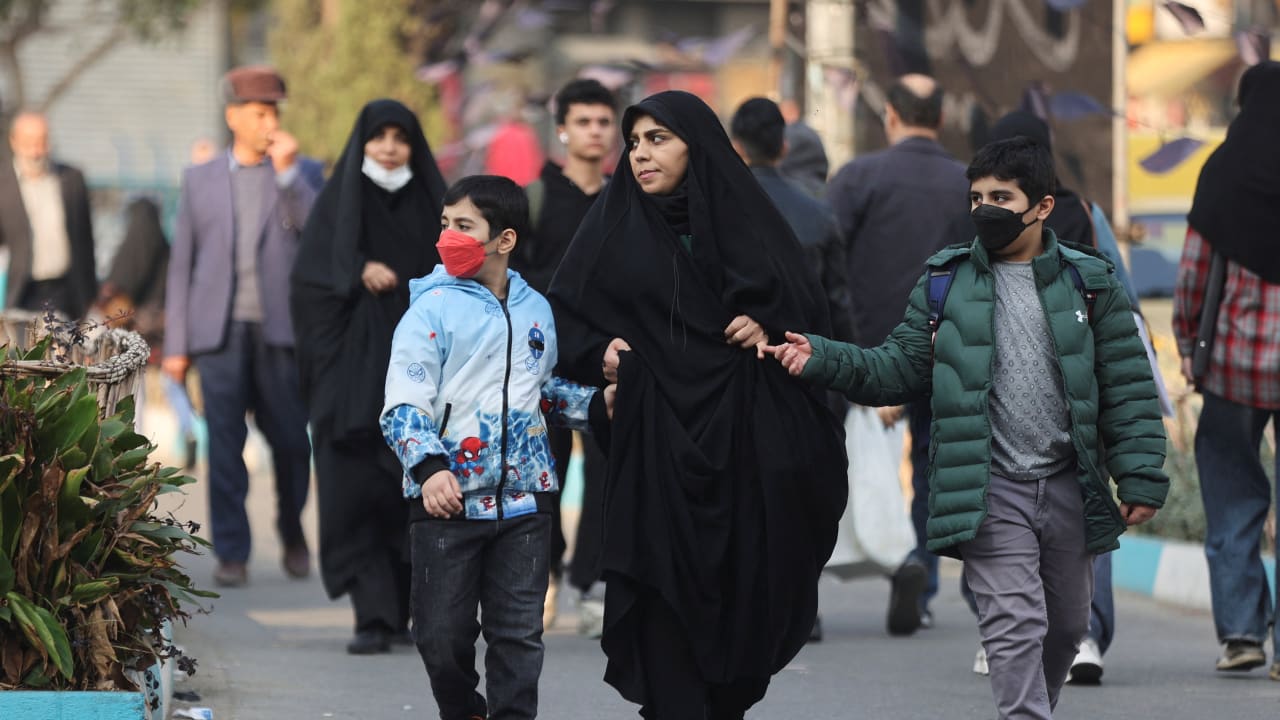
Iran has funneled about one billion dollars to Hezbollah over the past four months through smuggling routes in northern Iraq, Syria, and Turkey, despite an unprecedented domestic water crisis, rolling blackouts, and heavy air pollution, Beni Sabti said on Wednesday.
Sabti is a researcher on the Iran program at the Institute for National Security Studies, an affiliated institute of Tel Aviv University.
He argued the regime remains in “complete denial” after the war and is prioritizing regional proxies over basic services.
The Iranian leadership “did not get the message,” Sabeti said, adding that because the top echelon survived and stayed in power, officials tell themselves they were hit but “nothing happened” and that they can continue as before.
As a result, he said, billions flowing to terror groups are not invested in water, electricity, or pollution relief while ordinary Iranians “carry a heavy burden” without organized opposition leadership to challenge the regime.

In nuclear, terror, and missile arenas
In the nuclear field, Sabti offered limited reassurance, saying several nuclear scientists directly involved in bomb work were killed during the war, creating a serious obstacle to reviving the weaponization track.
“From the nuclear standpoint, we have a bit more time, a bit more calm,” he noted, adding that Tehran “does not dare touch” certain nuclear thresholds because it knows that would be a “red line” for the United States.
By contrast, he warned that Iran is trying to regenerate its missile and terror capabilities, fields he said are not front and center for Washington. Even so, he stressed a key limitation: “They do not have launchers. Producing missiles alone does not work; they cannot fire without launchers.” Public fears about claims of “2,000 missiles” should be kept in perspective, he said.
When it comes to terrorism against Jewish targets abroad, Sabti reveals a troubling picture: “They are constantly exploring these options. For years, they have been gathering information on synagogues, that’s how it was even back in the ’80s and ’90s.”
He noted the attacks in Argentina and explained that “they constantly collect information and wait for the day it’s needed.” The Iranians even “hire local criminals” in various countries - “there was such a case in Denmark, there was one in England.”
Despite this, Israel has managed “to thwart such plots in Turkey, Azerbaijan, Cyprus, Greece, in many places,” including the recent attempt to assassinate the Israeli ambassador in Mexico.
Is this the end of the era of the 'axis of resistance'?
Sabti is unequivocal: “This is not the end of the 'resistance.' Terror will never stop. It’s the only way the Iranians know.” He adds firmly: “Iran without terror is not Iran - it’s a different regime. They can set aside anything else, but terror is something they cannot put aside.”
He says Hezbollah and the other terrorist organizations “have essentially become their own sons.” Although Iran “has weakened in the region over the past year,” it “continues to blindly support them, continues trying to bring them back to life.”
“Weakened, yes - but not giving up. That’s the problem,” Sabti sentenced.