
Iran’s Revolutionary Court sentenced 67-year-old Zahra Shahbaz Tabari to death on the charge of “collaboration with anti-regime groups,” based on highly limited and unreliable evidence, the Human Rights Activists News Agency (HRANA) claimed on Monday, citing her family.
Appearing before the court last week by video conference, Judge Ahmad Darvish was said to have delivered a verdict “with a smile” and without proper process, her family told HRANA.
Describing the legislative process as “symbolic and unlawful,” her child told HRANA that, “The hearing lasted less than ten minutes. My mother had no meaningful access to an independent lawyer. The court-appointed attorney confirmed and signed the verdict without any defense. The whole trial was a show.”
They stressed, “My mother has never had any connection with political or opposition groups; the charges against her are entirely fabricated.”
Tabari was allegedly arrested in April and taken to the Lakan Prison in Rasht.
During a search of the family’s personal devices, police alleged to have found “a piece of fabric bearing the slogan ‘Woman, Resistance, Freedom.”
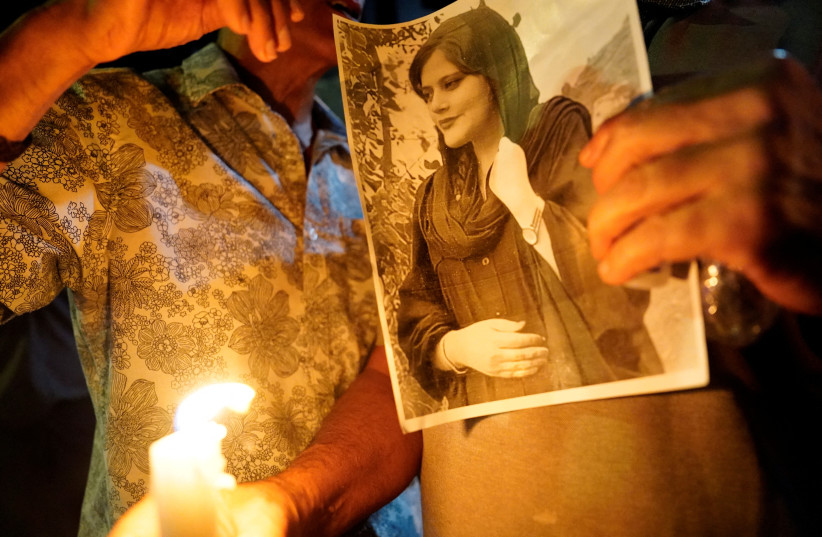
The slogan, which was allegedly found, bears resemblance to the “Woman, Life, Freedom” call, which spread across Iran after authorities murdered Mahsa Amini, a young Kurdish woman, for not wearing a headcovering correctly.
The supposed evidence collected during the search also included “an unpublished voice message,” and her son complained that authorities attempted to lie about her possessing weapons.
Authorities accused Tabari of collaborating with the People’s Mojahedin Organization of Iran (MEK).
Tabari, an electrical engineer, member of the Iranian Engineering Organization, and a graduate of Isfahan University of Technology, had also reportedly previously been arrested and imprisoned for three months for content posted on social media.
In a letter sent by her child to HRANA, they wrote: “She has been detained for about six months or more. The trial was virtual, and the judge announced the death sentence with a smile in a ten-minute session. The appointed lawyer also smiled upon hearing the verdict.”
Tabari’s child described the court process as “another example of human rights violations in the Islamic Republic.”
Iran dramatically increases executions in 2025
Iran has executed at least 1,000 people over the past nine months, the Norway-based Iran Human Rights (IHR) organization shared in September.
The number of executions has reportedly reached a three-decade peak. The executions, mostly hangings, toppled the previous figure of 975 state murders in 2024 and the record in 2015.
“The Islamic Republic has begun a mass killing campaign in Iran’s prisons, the dimensions of which, in the absence of serious international reactions, are expanding every day,” IHR director Mahmood Amiry-Moghaddam told The Telegraph.