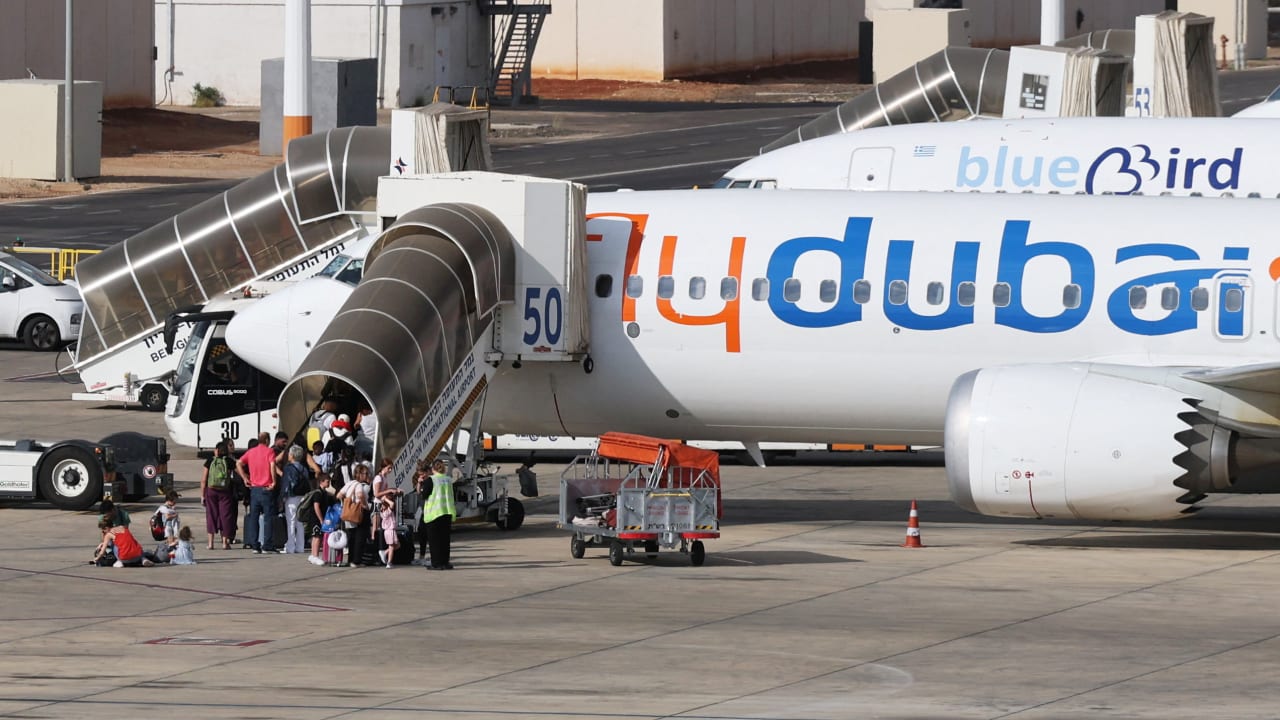
Wednesday’s flydubai saga crammed the new Middle East into a single aircraft.
An Emirati airline carrying Israelis made an emergency landing in Saudi Arabia amid war with Iran – and the incident was immediately drawn into an Israeli election campaign dominated by the question of who can keep the country safe.
Talk about one event bringing everything together.
But beyond the frightening drama aboard the plane, the incident also brought something else into focus: how much the region has changed, and where the limits of that change still lie.
Israelis were flying home on an Emirati airline. When their flight turned into a nightmare, they landed in Saudi Arabia, received medical attention and assistance, and were eventually collected by another Emirati aircraft and brought to Israel.
For all the tensions, wars, and political sensitivities, that sequence is worth noting. The absence of Saudi-Israeli diplomatic relations did not prevent the passengers from receiving help or getting home.
Granted, the Saudis refused to let an Israeli aircraft collect them. That matters and is maddening, especially considering the security and intelligence cooperation that does exist between the two countries. But it need not obscure what they did allow, or turn a story of regional cooperation into a tale primarily about rejection.
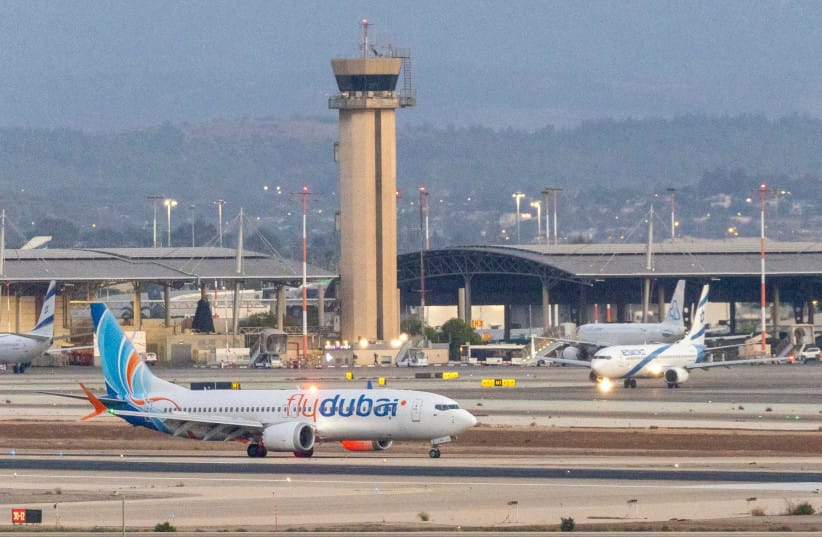
The new Middle East is imperfect. Wednesday showed, however, that it is also real.
A changing Middle East takes shape
TO APPRECIATE the broader picture, connect the dots from earlier in the week.
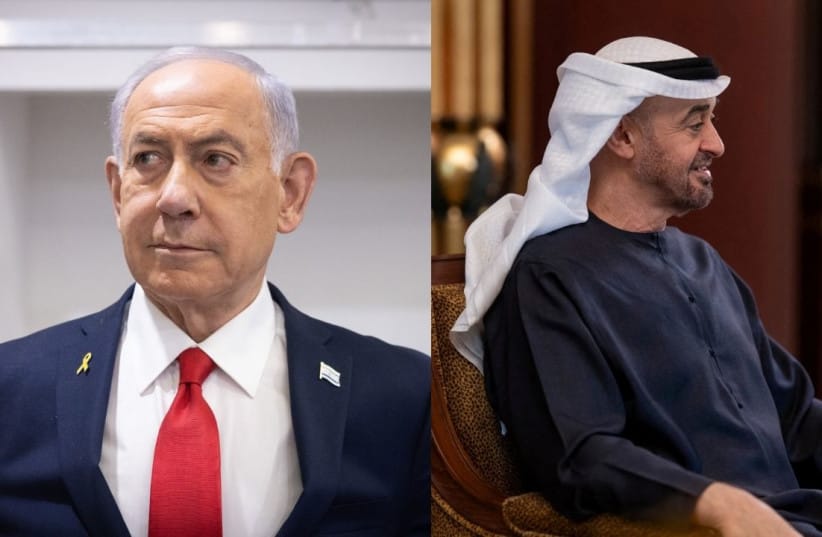
On Sunday, Prime Minister Benjamin Netanyahu flew secretly to Abu Dhabi to meet UAE President Mohamed bin Zayed, known as MBZ.
According to reports, Netanyahu shared intelligence about Iran’s continued nuclear ambitions, including new construction at the deeply buried Pickaxe Mountain site, as well as developments involving the Houthis in the Red Sea.
These are issues on which Israel and the Gulf states have overlapping interests. An Iran rebuilding its nuclear capabilities concerns more than Jerusalem. So do the Houthis threatening Red Sea shipping.
But Netanyahu reportedly brought another concern to the meeting, one rooted in Israel’s election campaign.
AP reported that he asked MBZ to deny the Haaretz account that the Emirati leader had warned him about a looming Hamas threat before October 7.
This report has since mushroomed into several accounts of warnings that Netanyahu allegedly received but did not act on before October 7. And all of this has figured prominently in opposition party attacks on him during the campaign. Netanyahu’s office has denied he received any such warning.
The visit thus carried two possible purposes: discussing threats facing the region now and addressing allegations about what Netanyahu knew back then.
That combination is characteristic of this election campaign. Netanyahu wants the public to focus on what he has done to reshape the region since October 7. His opponents want it to focus on what he failed to prevent on that Simchat Torah morning.
A meeting with an important Arab leader can serve the first argument. Reports that the same leader warned him before the attack feed the second.
The UAE confirmed that Sunday’s meeting took place, unlike in May, when it denied Netanyahu’s claim of an earlier visit. That acknowledgment gave him something to point to: evidence that, despite the wars and international criticism, he could still meet a key Arab leader.
The UAE did not, however, deny that a pre-October 7 call had taken place. Netanyahu came away, therefore, with the proverbial half a loaf: confirmation of Sunday’s meeting, but no denial of the earlier warning.
There were also reports that representatives of other Arab countries attended discussions in Abu Dhabi, including Saudi representatives, though the Saudis denied it.
Then, on Tuesday, MBZ’s brother, UAE Vice President Mansour bin Zayed, traveled to Riyadh and met Saudi Crown Prince Mohammed bin Salman and Saudi Defense Minister Khalid bin Salman.
With the Houthis again threatening Saudi interests, the two Gulf powers had reason to repair ties ruptured by their competing policies in Yemen.
Might the timing – two days after Netanyahu’s meeting with MBZ – have been a coincidence?
It might. But it also might not.
The sequence raises the possibility of wider coordination against threats that concern Israel, Saudi Arabia, and the UAE alike. It does not, however, establish that Netanyahu brokered the Saudi-Emirati rapprochement, or that all three countries agreed on a common policy.
There is enough here to connect some dots. There is not enough to color in the entire picture.
Still, the meetings suggest a region in which governments have reasons to work through their differences because the threats facing them are greater than those differences.
THEN THE flydubai flight FZ1073 took off from Dubai for Tel Aviv.
That flight is the stuff of movies: one pilot stabs another and tries to crash the aircraft before passengers, along with a crew member, intervene and save the day. The plane makes an emergency landing in Tabuk, Saudi Arabia. Passengers later describe receiving medical attention and assistance there.
For those aboard, this was a terrifying brush with catastrophe. Their survival owed much to the people who intervened and helped bring the aircraft down safely.
What happened next carried its own regional significance: a plane carrying Israelis lands in Saudi Arabia, its passengers receive help, and the UAE sends another aircraft to bring them home.
Each part of that sequence may seem practical and unremarkable on its own. Taken together, however, they describe a regional reality that Israelis should not take for granted.
And that is precisely one of the main achievements of the Abraham Accords: making previously extraordinary things – like a flight from the East on an Arab airline over Saudi Arabia – ordinary.
That does not make Saudi Arabia a party to the Abraham Accords. But it does show that the relationships created by the accords can function in a wider regional setting, even where formal diplomatic ties are absent.
The Saudis nevertheless drew a line, rejecting Israel’s request to send a plane to collect the passengers. Another flydubai plane eventually brought them back home.
That refusal understandably irked Israelis who felt that, after what the passengers had endured, getting them home on an Israeli plane so they felt safe should have overridden political considerations.
Tellingly, Netanyahu chose to stress the Saudi willingness to receive the plane and the hospitality shown to its passengers.
Just a week ago at the UN, he chose to call out by name the leaders of France and Turkey whose words and actions harm the Jewish State, proving he is not shy about doing so when he deems it necessary or politically expedient. He didn’t do so with Saudi Arabia.
There was a practical reason for that restraint: publicly berating the Saudis would hardly strengthen the cooperation that already exists and benefits both sides.
There was also a political reason: Netanyahu has an interest in presenting the region as one in which Israel’s relationships have expanded, even if full normalization with Riyadh remains elusive.
In this case, emphasizing the cooperation also reflected an important part of what happened. The assistance the Saudis did provide showed that the lack of diplomatic relations need not prevent practical help.
But the Saudi refusal to allow Israel to send a plane to retrieve the passengers showed how carefully Riyadh guards the boundary between basic humanitarian help – allowing the plane to land – and a visible gesture toward Israel.
Perhaps the approaching election made the Saudis especially reluctant to allow a scene that Netanyahu could then use in his campaign. An Israeli aircraft retrieving passengers from Saudi soil would have made a striking picture.
It would be a stretch, however, to assume that everything becomes easier after October 27. Saudi reservations about public normalization extend far beyond a reluctance to give Netanyahu a campaign gift.
The limits of regional normalization
THE ATTEMPTED hijacking has also been framed as a test of Israel-UAE ties and the staying power of the Abraham Accords.
That is understandable since the Tel Aviv-Dubai air routes are the accords’ most visible, tangible benefits for the average Israeli. A terrifying incident can shake public confidence in flying that route, and passengers will now understandably want to know what is being done to prevent a recurrence.
But the Israel-UAE relationship will certainly withstand this shock. A relationship that has endured October 7 and wars in Gaza, Lebanon and Iran rests on interests that one attempted hijacking will not shake. If anything, the incident shows the threats both countries face, why they need each other, and how they can help one another.
The regional lesson is broader.
The Saudi refusal showed that significant political barriers to normalization remain, and that Riyadh still insists on keeping its relationship with Israel in the back room rather than bringing it into the front room.
The passengers’ safe return showed, however, that even a relationship confined to the back room can produce practical cooperation when it matters.
The Abraham Accords did not produce a Middle East free of hostility, danger, or diplomatic sensitivities. They did, however, help create a region where Israelis forced to land in an Arab country can receive assistance rather than face unbridled hostility.
Wednesday was a nightmare for the passengers and their families. For the region, however, the response offered something encouraging: evidence that the relationships built up in recent years can deliver practical help when it is needed most.